



In the previous post, we divided lifting into three types: facelift, thread lifting, and device lifting .
Today, I plan to separate and organize only device lifting from that.
What kind of device lifting should I get?
This is the very question most frequently asked during lifting consultations.
THERMAGE, ULTHERA, Shurink, Oligio, InMode..
The name sounds familiar, but no matter how many times I look at it, I get confused about what the difference is.
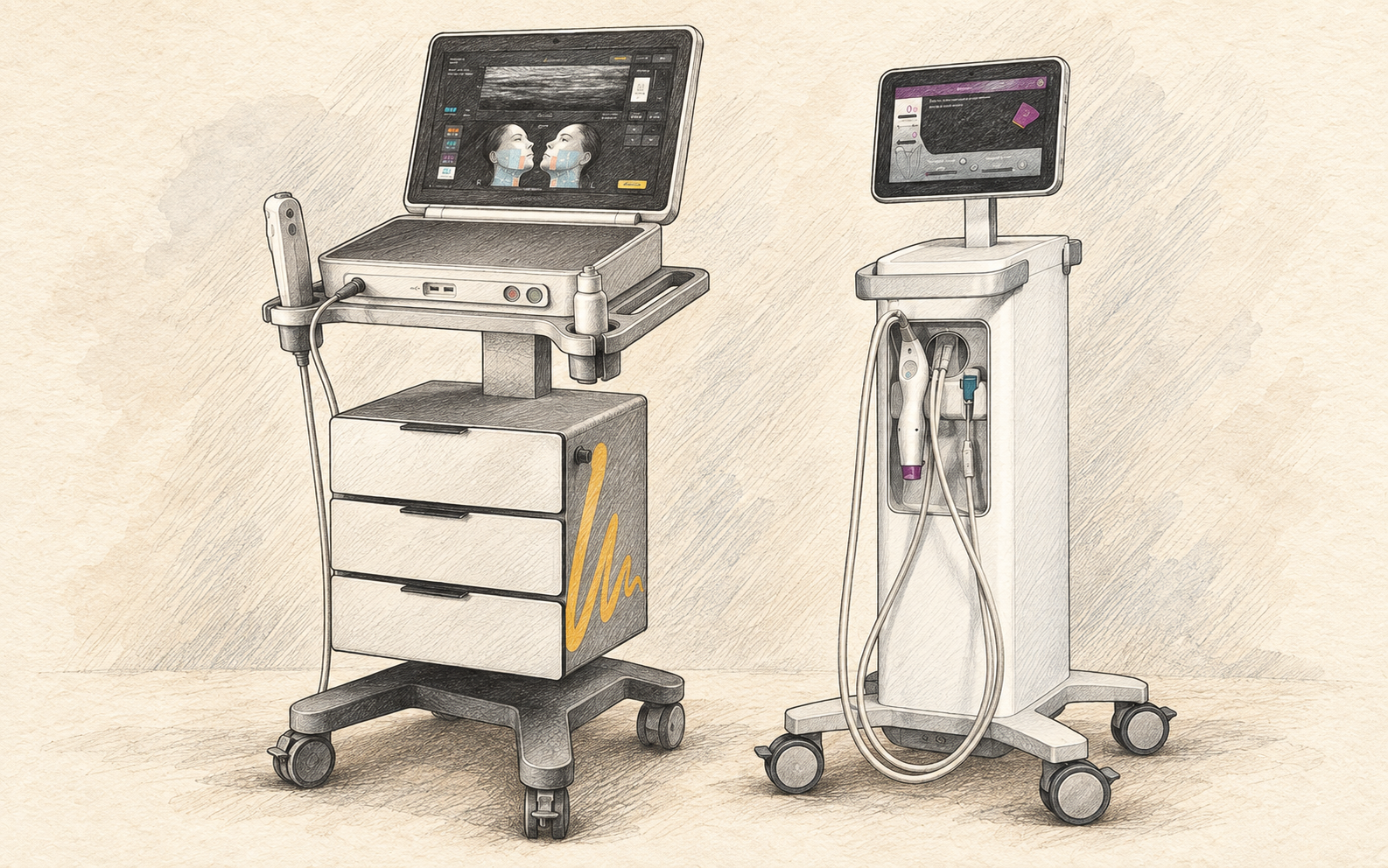 The two giants of device lifting, also known as "Ul THERMAGE"
You do not need to memorize the names of various pieces of equipment one by one.
Purpose, target depth, and treatment interval. Knowing just these three things makes it possible to explain most equipment.
Then, let's get started.
1. Device lifting is divided starting from the purpose.
Device lifting can be divided into tightening or volume reduction depending on the purpose.
There is not just one reason why facial lines become blurred.
There are cases where it sags because the tissue has loosened , and cases where it looks heavy due to an excess of fat .
If your skin is sagging, you need to tighten it, and if there is excessive fat, you need to reduce it.
If you undergo repeated lifting procedures while having a lot of fat, your facial lines may not be sufficiently refined.
Conversely, if skin sagging is the problem, reducing fat may actually make the face look sunken.
So, before choosing equipment, I first identify what my biggest concern is right now .
2. Tightening - Which layer to target?
Tightening can be further divided into three types depending on the depth of energy penetration.
It consists of a shallow layer (epidermis to dermis), a middle layer (dermis to fascia), and a deep layer (muscle layer).
Three Layers of Tightening Viewed from a Skin Cross-Section
The shallow layer mainly uses heat .
Collagen heated by high frequency immediately contracts and is then regenerated over the next few months.
Therefore, the effects tend to develop over time rather than immediately after the procedure.
The middle layer primarily uses HIFU (High-Intensity Focused Ultrasound) technology, which focuses ultrasound waves to a single point.
The points where energy is concentrated cause the tissue to contract, thereby inducing a lifting effect.
The deep layer is a little different.
It directly contracts muscles using electrical stimulation rather than heat.
The target skin layer varies depending on your skin concerns.
3. Treatment intervals vary even on the same floor.
You can classify it one more time here.
Even among devices targeting the same layer, there are devices with long treatment intervals and devices with short intervals .
1 to 2 times a year
Equipment with long treatment intervals
Reliably deliver strong output in a single burst
Equipment with originality
vs
1~3 month intervals
Equipment with short treatment intervals
Divide low-burden output into multiple steps
Equipment that builds effects through repetition
Treatment interval standards recommended by the manufacturer based on clinical results
A long treatment interval means that the output delivered at once is that much stronger .
This equipment features originality and is characterized by its ability to stably deliver strong output.
Equipment with short treatment intervals is less burdensome when receiving treatment in a single session.
Instead, you need to build up the effects by receiving it multiple times.
For reference, this classification is not intended to recommend or discourage specific equipment.
We divided them based on the treatment interval recommended by the manufacturer based on clinical results .
4. Tightening Equipment by Layer
Now, I will explain the examples of actual equipment one by one.
GLX Lifting and Veluti are laser and shockwave-based devices, not radio frequency.
High-frequency equipment primarily targets shallow layers.
It protects the epidermis with cooling while transferring heat to the dermis.
The treatment with the longer interval is usually THERMAGE . I receive it about 1 to 2 times a year.
Oligio and Volneumer are given 2 to 4 times a year, which is somewhere in between.
TuneFace, Potenza DIA, Potenza DDR, InMode FORMA, GLX Lifting, Belutti, etc. are devices used at intervals of 1 to 3 months.
(GLX Lifting and Veluti are laser and shockwave-based, not radiofrequency, but have been grouped together based on the treatment interval.)
The middle layer consists mostly of HIFU equipment.
It focuses ultrasound energy to a single point and delivers it from the fat layer to the fascia layer (SMAS).
Ulthera Prime has a long treatment interval, while Shurink and Linear G have a short interval.
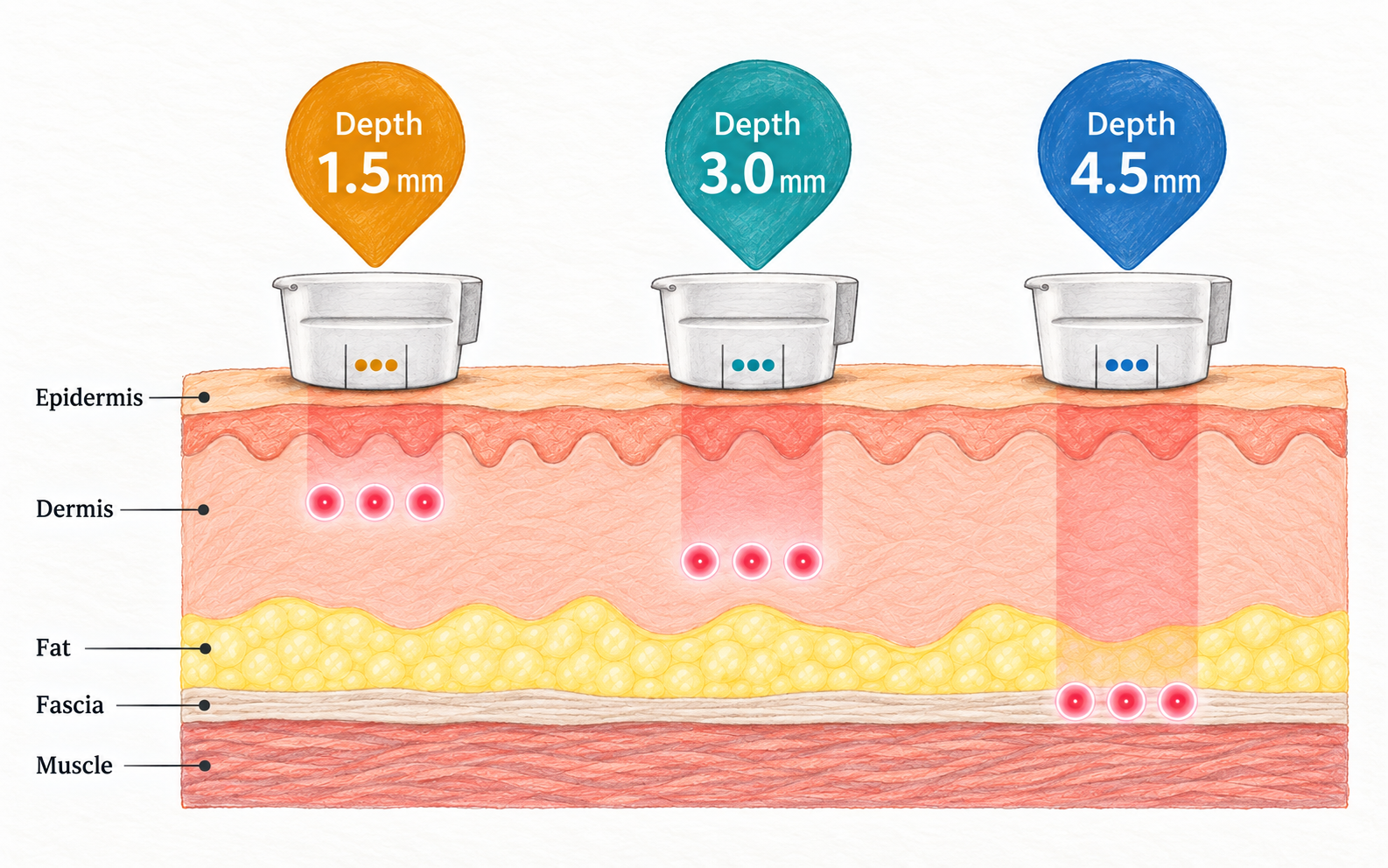 The penetration depth of the ultrasound varies depending on the tip (UltheraPrime 1.5mm, 3.0mm, 4.5mm).
Ulthera Prime performs the procedure while directly viewing the inside of the skin using ultrasound imaging, and
Shrink Universe performs treatments tailored to the area using two methods: dots and lines.
The muscle layer is EMFACE .
You can think of it as a procedure that exercises your facial muscles, just like getting personal training at a gym.
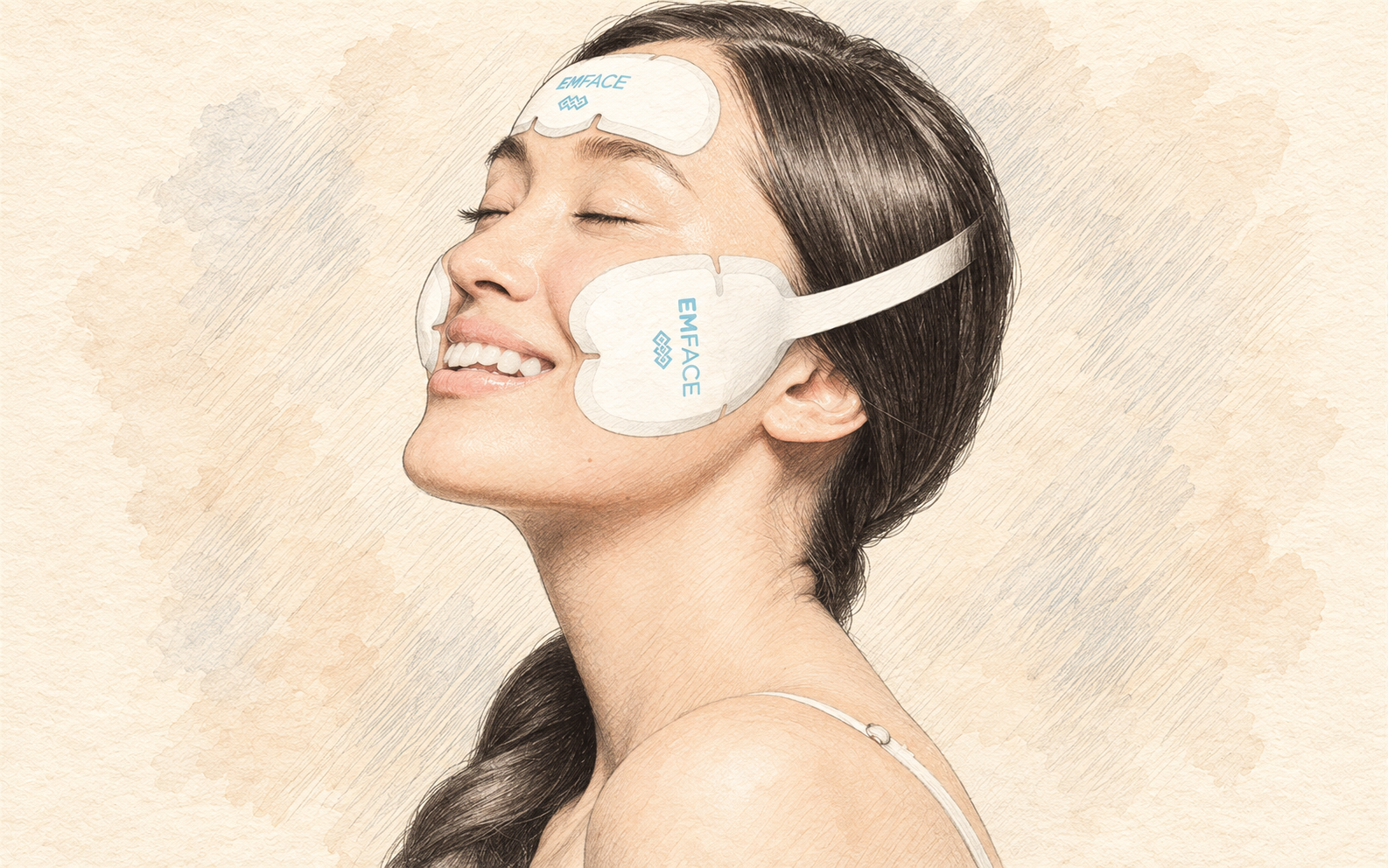 EMFACE, targeting the muscles on the forehead and the outer side of the nasolabial folds.
As we age, not only does the skin sag, but the volume and strength of the muscles also decrease; this strengthens those muscles.
The muscle layer is not yet divided into equipment with long and short treatment intervals.
5. Volume loss - When fat is the cause
For areas where the fat itself is the problem , such as a double chin or deep cheeks, tightening alone has its limitations.
The equipment used in such cases is the high-frequency InMode FX and the ultrasonic TuneLiner .
InMode FX lifts tissue with negative pressure, then heats the fat layer with high frequency and delivers short high-voltage pulses.
However, since it is a lifting method, red marks may remain for about 3 to 7 days.
TuneLiner uses ultrasound.
Longitudinal waves that generate heat and transverse waves that generate vibration overlap and act only on the fat cell membrane.
The advantage is that there is no downtime because it does not affect surrounding tissues.
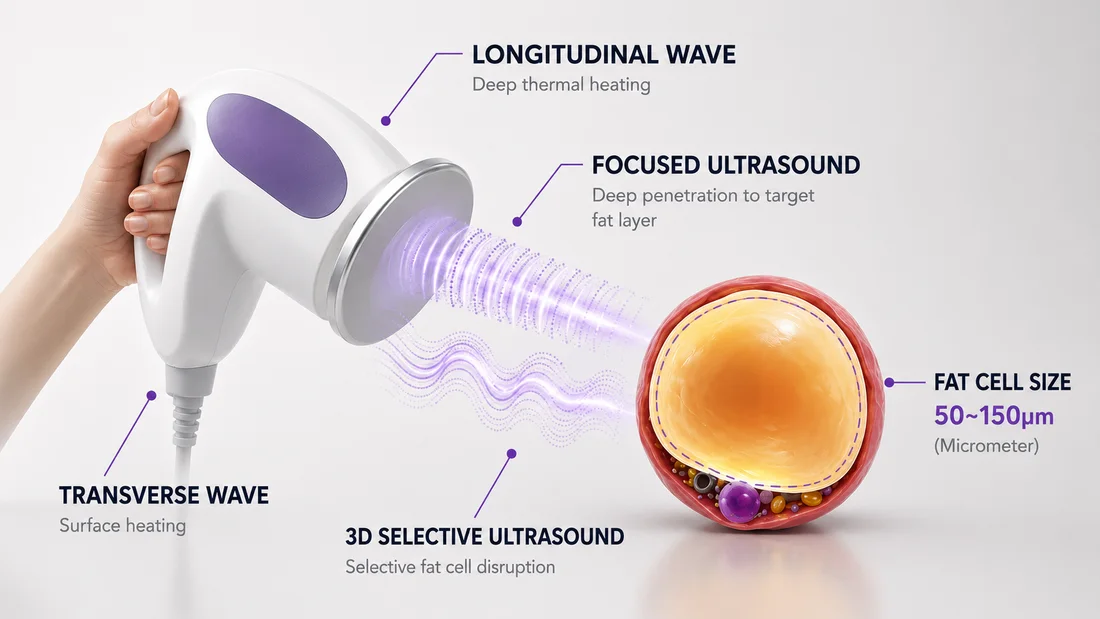 Tuneliner, which acts on fat cell membranes by overlapping longitudinal and transverse waves
Neither of them is a one-time procedure; rather, the effects accumulate through repetition.
6. So, what would be the best thing to receive?
So, let's go back to the first question.
In most cases, device lifting for tightening purposes,
If there are no constraints on procedure time and budget
It is best to use strong equipment for all layers, including the shallow, middle, and deep layers .
(Here, powerful equipment refers to equipment with a long duration, meaning equipment with long treatment intervals.)
shallow layer
high frequency
With equipment that has a long treatment interval
+
middle layer
ultrasound
With equipment that has a long treatment interval
+
deep layer
electric stimulation
Together up to the muscle layer
Tightening when there are no constraints on treatment time and budget
This is because sagging does not occur in only one layer.
Then won't the ball go out?
Of course, you may be concerned about sunken cheeks.
However, if you design it in detail according to your face shape and adjust the number of shots, it will not be a problem.
Areas prone to sagging are avoided or treated gently, while areas requiring tightening are treated with corresponding intensity.
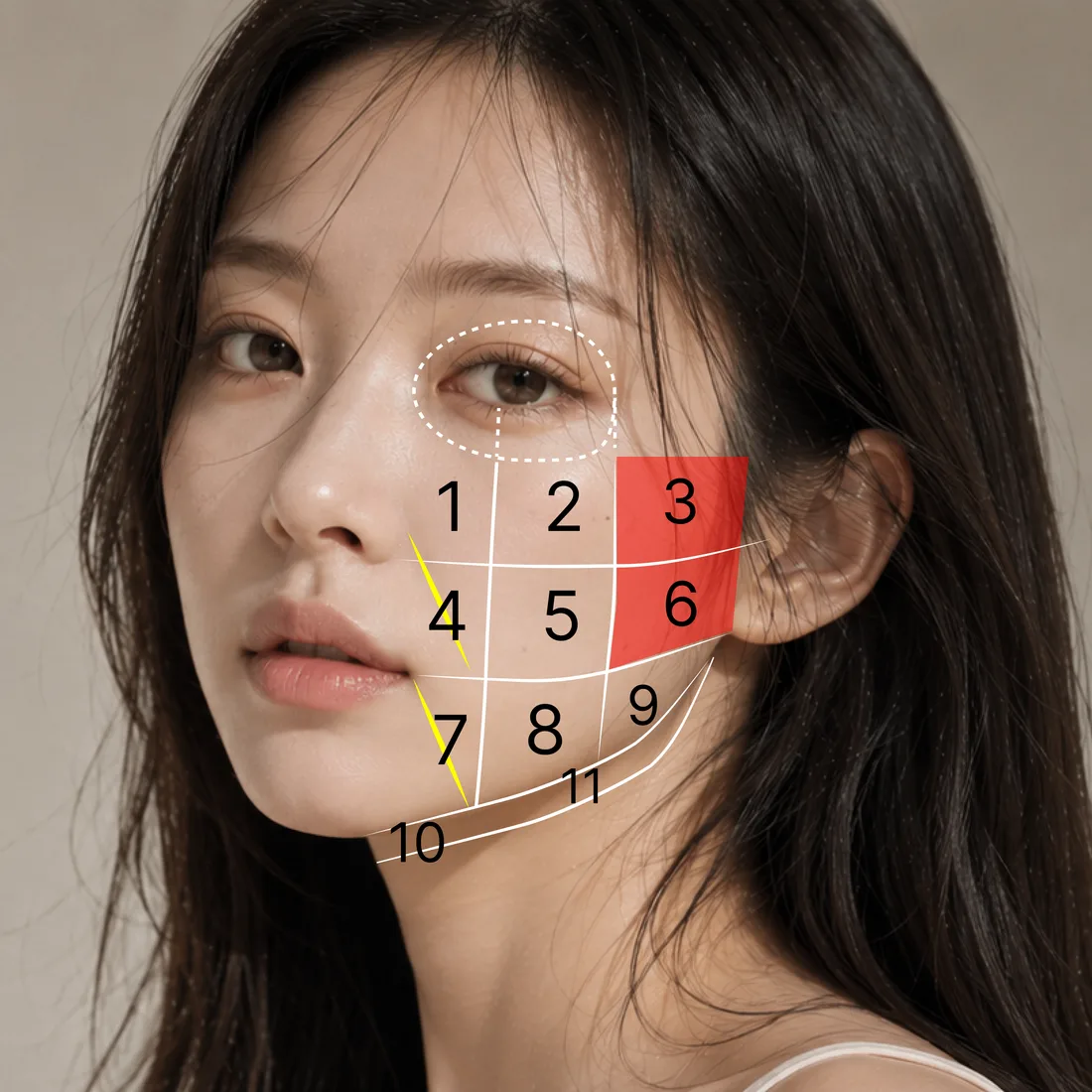 We design by dividing the area according to face shape.
7. However, time and budget are fixed.
However, in reality, both the procedure time and the budget are fixed.
So, it is good to set priorities within that.
Which floor to start with, and whether it is better to use one long piece of equipment or several short pieces of equipment.
I will continue writing about recommended lifting devices based on face shape in the next post !
8. In conclusion..
To summarize, it is as follows.
Device lifting is divided into tightening and volume reduction .
Tightening is divided into shallow, intermediate, and deep layers , and even within the same layer, it is divided into devices with long treatment intervals and devices with short treatment intervals.
For volume reduction, there are the high-frequency InMode FX and the ultrasonic TuneLiner .
Rather than choosing the equipment name first,
I recommend that you first identify the cause and which layer of your face is the problem .
I hope this article helps answer the question , "Which device lifting should I get?"
This has been Seo Min-ho. Thank you for reading.