



Hello! I am Kim Seung-hwan, Chief Director of EPISODE CLINIC .
Now, it's Part 2! The conclusion of Part 1 is There is not just one target.It was. The key point was that the site absorbing laser energy (melanin) and the site actually needing to be damaged (bulge, dermal papilla, etc.) are spatially separated, so the heat needs to spread to reach the target. In that case, naturally, “How far and for how long will the heat be sent?" is becoming important, and this can be seen as a problem determined by the parameters. Therefore, in Part 2, I intend to address this in earnest. To put it simply, the reason there is such an obsession with hair removal—a low-cost procedure compared to other high-end treatments in the beauty market—is entirely to maximize the efficiency of self-hair removal.
If Part 1 was closer to conveying theoretical knowledge, Part 2 will be closer to an introduction to the process of exploring and reviewing the parameter adjustment routine I use daily during hair removal procedures, as well as the analysis of why there are differences of opinion among clinic directors. If I may brag a little... Develop and utilize a system for systematically adjusting and recording parameters.While working at a clinic, I accumulated over tens of thousands of records, including patient feedback on their perceived satisfaction levels for each session. As I attempted to organize a hospital manual based on this data, I wanted to create more accurate, evidence-based guidelines; however, the lack of relevant research proved to be a significant obstacle. Consequently, I delved deeper to determine whether common practice and my own routines were backed by evidence and to identify any aspects that might be overturned.
As with Part 1, I will delve a bit deeper, assuming the audience consists of clinic directors (especially those using 755nm hair removal machines). To begin with, there are numerous variables that influence hair removal results , including pulse width, fluence, wavelength, spot diameter, degree of overlap, number of passes , and even the practical variables discussed later at the end of the article. Since these variables are not independent of one another, it is difficult to analyze them individually, and even if we were to control them all, there are many other obstacles. To begin with, objectively evaluating the outcome is quite complex, as there are multiple indicators to monitor, such as hair loss, reduction in thickness, and the degree and frequency of side effects . However, in this article, I have focused on the two manipulation variables we adjust most frequently: pulse width and fluence .
introduction
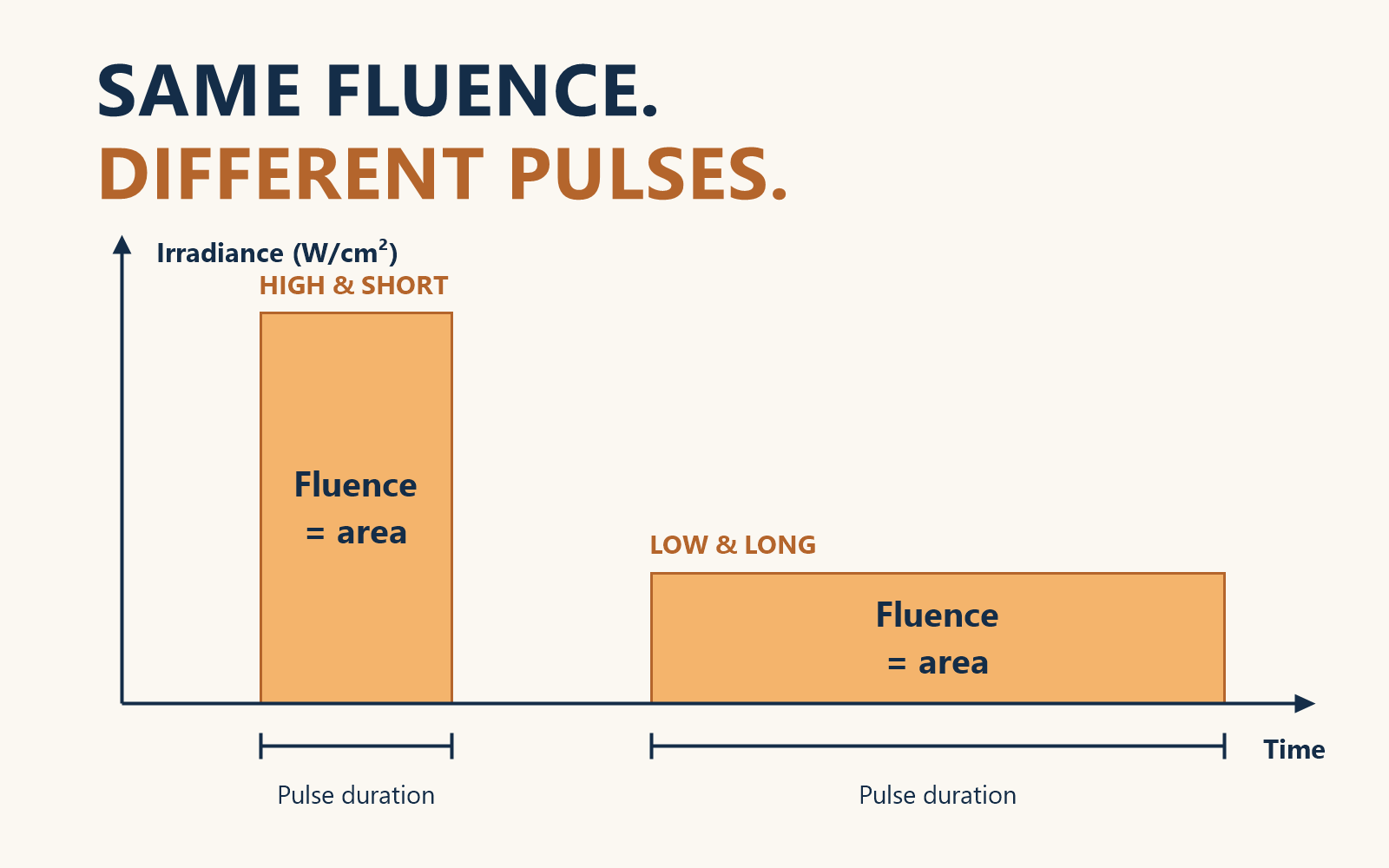 Schematic diagram of a laser pulse (assuming a rectangular pulse). Self-made.
To add a bit of storytelling... as I perform hair removal procedures every day... I often encounter a few situations. To give you an example of a situation I experienced firsthand...
Case 1. A patient who was dissatisfied after receiving treatment at 5ms 13J/cm² in the previous session was satisfied when treated at 10ms 15J/cm². I ponder the reason. Was it hair that required longer heating to respond? Was the higher fluence itself the deciding factor?
Case 2. A patient who started with 10ms at 11J/cm² and increased it to 15J/cm² as the sessions progressed reported that the response was quite disappointing compared to before when administered at 3ms at 12J/cm² in the next session. I ponder the reason. Was the "sweet spot(?)" needed for the remaining hairs around 10ms? Or was the "sweet spot" located on the much longer side, making 10ms simply slightly closer to it than 3ms? Does a pulse width even have a "sweet spot" in the first place?
While going through these experiences, I realized that I needed to deepen my understanding of the field based on a solid theoretical background.
common sense we know
There is something you commonly hear when you first learn about hair removal lasers. Regarding pulse width, “Fine hairs short, thick hairs long.And there is also a phrase that appears in any device manual.When using higher fluence, consider increasing the pulse width.The Zen McPremium Plus we use(Since you all know this, I'll keep it short.. haha) Even in the manual, “Short pulse width = fine hair, Long pulse width = thick hairIt reads as follows. The manufacturer's marketing follows the same direction; if you look at Candela's official product page, they highlight the fact that the Zen Mac Pro Plus allows for the shortest pulse width setting in their lineup—2ms—as a strength, describing this as “for optimal treatment of fine hair...explains. At this point, it seems like an undeniable truth. (As I will explain later, that is not entirely wrong..)
So, what I wanted to examine was whether this way of thinking is correct, and if so, for what reasons, and to what extent it is meaningful.
How should I call a thesis...
I searched for relevant papers hoping to find a clear conclusion. However, there are not many studies that compare results by fixing the fluence and changing only the pulse width at 755 nm. To the best of my knowledge, there was only one peer-reviewed paper (Noormohammadpour et al., 2021) since 2000 that compared results by changing only the pulse width within the 2–10 ms range that we commonly use. While there are a few more for Nd:YAG (1064 nm) or diodes (800–810 nm), what is immediately important to us is 755 nm. I will introduce papers including those from as far back as 1999.
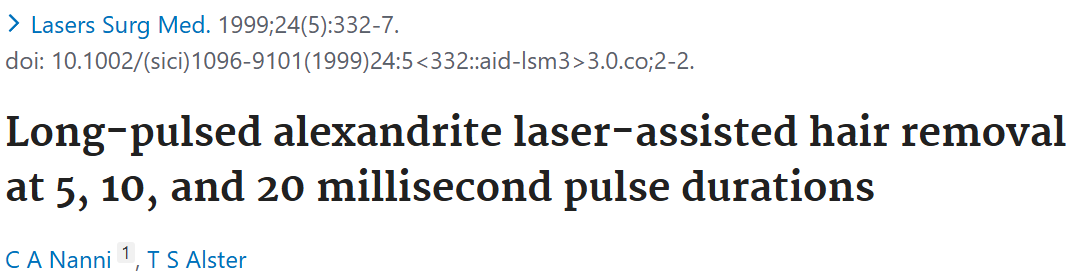 Nanni et al. Article bibliographic information. Source: PubMed, PMID 10406473. https://pubmed.ncbi.nlm.nih.gov/10406473/ (Accessed September 25, 2026)
Nanni et al. (1999) - 36 subjects, 5/10/20ms comparison (average 18J/cm², 10mm spot). There were no significant differences in efficacy or side effects among the three pulse widths. However, a tendency for less erythema and pigmentation after the procedure was observed at 20ms.
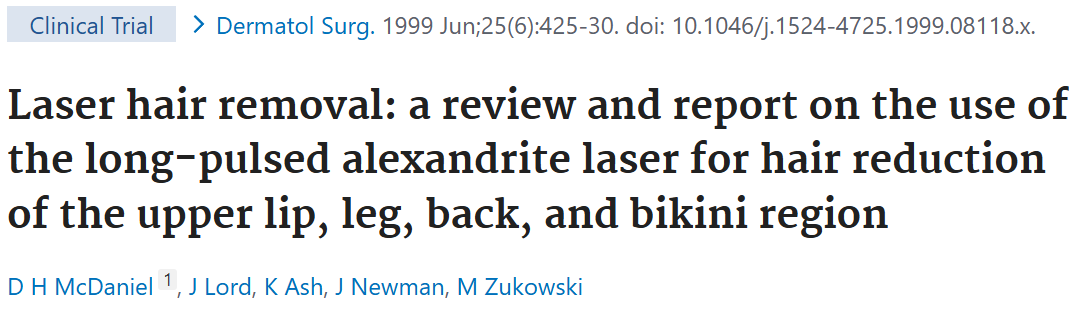 Bibliographic information for McDaniel et al. Article. Source: PubMed, PMID 10469087. https://pubmed.ncbi.nlm.nih.gov/10469087/ (Accessed September 25, 2026)
McDaniel et al. (1999) - Comparison of 31 sites in 22 subjects, 5/10/20ms (fixed at 20J/cm², 10mm spot). They reported the greatest reduction in a single 10ms pulse. However, the sites were mixed, including upper lip 17, legs 9, back 2, and bikini 3, and included only Fitzpatrick I–III.
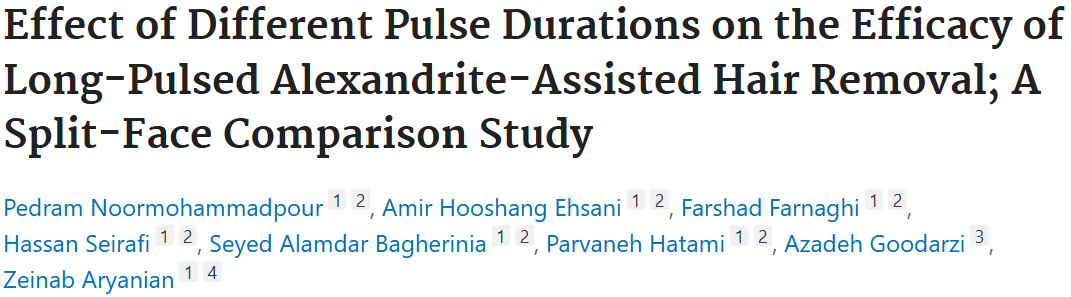 Bibliographic information for Noormohammadpour et al. Source: PubMed, PMID 34733744. https://pubmed.ncbi.nlm.nih.gov/34733744/ (Accessed September 25, 2026)
Noormohammadpour et al. (2021) - 50 women with facial hypertrichosis, 3/10 ms hemifacial comparison. At the 1-month mark, the hair loss rate was 56% vs 56%, with no significant difference.
(For reference, I highly recommend reading this paper. The purpose of my writing and the research background are almost identical.. “..but as far as we know, there are not too many studies for the examination of the outcome of treatment using different pulse durations, although this parameter has been shown to be important.”)
Summarizing the three valuable studies, though few in number, two showed no difference, while one showed a dominance of 10ms. However, it is difficult to interpret these papers as evidence that "pulse width is meaningless." This is because there are several issues regarding their design. None of the studies measured hair thickness or analyzed samples by thickness, and the sample sizes ranged from 22 to 50 people. (With this size, " no difference " might imply that the samples were " incapable of differentiation" rather than that they are "identical.") Additionally, the body parts included in the study were mixed, and the follow-up periods were short.
I could guess why there has been almost no proper research until now, but of course, this is just my personal(!) guess .
With the devices available at the time, it may have been technically difficult to isolate and change only the pulse width. If the device's maximum output is fixed, the maximum fluence achievable with a short pulse decreases. While modern devices offer ample maximum output, the devices of that era had lower power; therefore, I thought it's possible they didn't shoot because it was dangerous, but simply because shooting at a truly high intensity was impossible. In short, even if fluence is fixed as a control variable, the options for the manipulated variable, pulse width, remain limited.
I can also sense that the focus of research has shifted. Most search results consisted of device-versus-device comparisons or comparisons with low-influence, high-repetition strategies. This is because research comparing pulse widths within a single device isn't particularly helpful for selling new devices. (Unless this is for the purpose of promoting a new product that enables pulse widths other machines cannot achieve, haha)
What appears to have influenced this is the 2005 hair removal guidelines of the European Society of Laser Dermatology(ESLD).
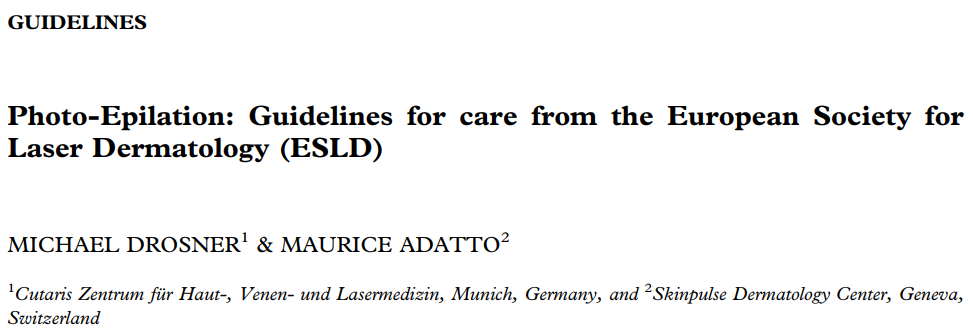 Pulse width section of the ESLD hair removal guidelines. Source: Drosner M, Adatto M. J Cosmet Laser Ther. 2005;7(1):33-38 (PMID 16020215)
The section on pulse width in these guidelines begins with the first sentence: “ There is no difference in efficacy between 10, 20, 30, and 40 ms .” What is interesting is the conclusion of the same paragraph: while advising that shorter pulses carry a greater risk of heating pigmented epidermis and recommending the selection of a pulse width within the 10–40 ms range based on the pigmentation of the skin and hair, it adds, “ The less pigmented and thinner the hair, the shorter the pulse width should be .” Essentially, while claiming there is no difference in efficacy, it defines pulse width as a variable to be adjusted for epidermal safety and hair thickness/color. (Of course, this applies to a range longer than the 2–10 ms range we are interested in, and no clinical studies are separately cited in this recommendation.) By the early 2000s, the debate regarding the 'efficacy' of pulse width could have been treated as a settled issue.
So, I thought it would be difficult to draw a conclusion based solely on the papers. Both the papers and the guidelines stated that there was no difference in efficacy, yet even the guidelines still recommend keeping fine hairs short , and that common sense is still being passed down by word of mouth. I felt that if the basis for this was theory rather than data , I had no choice but to examine the theory directly. Is pulse width really meaningless? Or is it meaningful but simply not visible in these designs? To answer this question, I needed tools outside of the papers.
If we translate the actual operations into numbers...
It’s nothing grand, but I calculated it myself. First, my personal routine(This is by no means a standard recommendation. If you disagree, you are right.)I will explain it briefly. It is not a value recommended by guidelines or manuals, nor is it something I do while performing procedures every day. routines solidified through experienceno see..
Typically, we start with around 5ms at 10J/cm² or 10ms at 11–12J/cm², maintaining or slightly increasing the fluence as the sessions progress. There is a psychological upper limit for each pulse width (for example, we generally avoid using more than 13J/cm² at 3ms). If the results are good and only fine hairs remain, we may try reducing the pulse width to 3ms or 2ms. However, when a significant amount of thick hair still remains, we may consider using a longer pulse width and higher fluence than usual.
In reality, it is difficult to describe precisely in writing how to proceed in specific situations, as I make a complex judgment based on observing the flow of previous sessions, visually monitoring the patient's face, and tracking their progress. However, I have noticed an overall improvement in patients' perceived satisfaction since a routine of adjusting parameters—such as gradually increasing energy or changing pulse width—became established. Therefore, I mathematically calculated whether this was a theoretically reasonable choice.
(To add a side note, people usually increase fluence along with pulse width due to the intuition that keeping fluence the same while only increasing pulse width results in a loss of instantaneous intensity. However, to numerically capture the sensation of considering both factors simultaneously, I have also included " average power density (irradiance) ." It is the value obtained by dividing fluence by pulse width; since actual laser pulses are not rectangular, the instantaneous peak could be higher than this, but I used average power density to avoid complex calculations.)

Again, since this is based on truly subjective criteria (though learned from performing over tens of thousands of hair removal procedures...), please consider why I proceeded this way simply as my personal opinion. Personally, what I particularly wanted to share was a situation like Example 2. When I didn't have much experience in the beauty industry, I considered average power density important (not that I went around calculating it precisely, but rather that I was wary of the instantaneous intensity dropping when increasing the pulse width...). Even when the average output density was nearly halved, the patients' perceived satisfaction was generally better. After that, I wondered if the fluence itself, or the pulse width itself, was important, and since I couldn't quite grasp it, I went back to theory.
Going back to theory...
Recalling the flow summarized in Part 1, the sequence was laser absorption by melanin → heat generation → thermal diffusion → damage to surrounding follicular structures . There are two stages here where pulse width comes into play. First, whether the chromophore (morgan) heats up sufficiently . Since heat leaks out during irradiation, causing it to heat up less, a shorter pulse is advantageous in this regard alone. The reference time for this is the thermal relaxation time (TRT) . Second, whether there is sufficient time for the heat to spread to the target . Since heat requires time to spread, a longer pulse is advantageous in this regard. The reference time for this is the thermal damage time (TDT) .
In other words, since the two stages essentially require opposite directions regarding the pulse width, a single criterion alone cannot provide an answer. The conclusion of the extension theory introduced in Part 1 (“the pulse width must be significantly longer than the target TRT”) is also in the same context. This means that the second stage cannot be ignored because the chromophore and the target are separated. Therefore, we will examine this from two perspectives and overlay them at the end.
Perspective 1) TRT - How hot does Morgan get?
If the pulse width is shorter than the chromophore's TRT, almost no heat can escape during firing. We will call this the adiabatic region . Since the chromophore's TRT is longer anyway, the maximum temperature will be determined by the total amount of energy (fluence) injected.
Conversely, if the pulse width is longer than the TRT, heat already leaks out during the firing process. We will call this the leakage region . Since it becomes less hot when fired with a longer duration even with the same fluence, both the pulse width and fluence are significant in this case.
Now, let's place the Morgan TRT next to the pulse width we actually use. (The source is the paper by Altshuler et al. attached below, which was also cited in Part 1.)
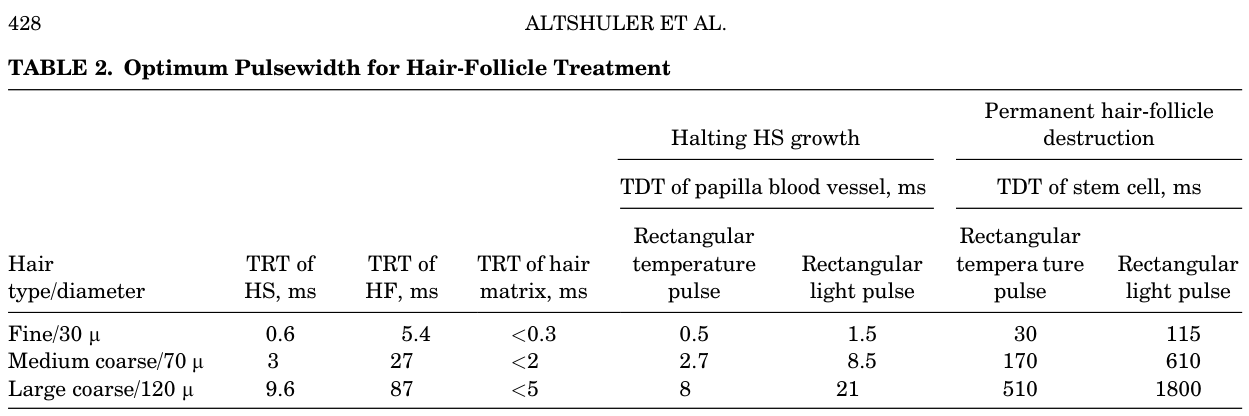 Altshuler et al. Table 2 from the paper. Altshuler et al. Lasers Surg Med. 2001;29(5):416-432 (PMID 11891730)

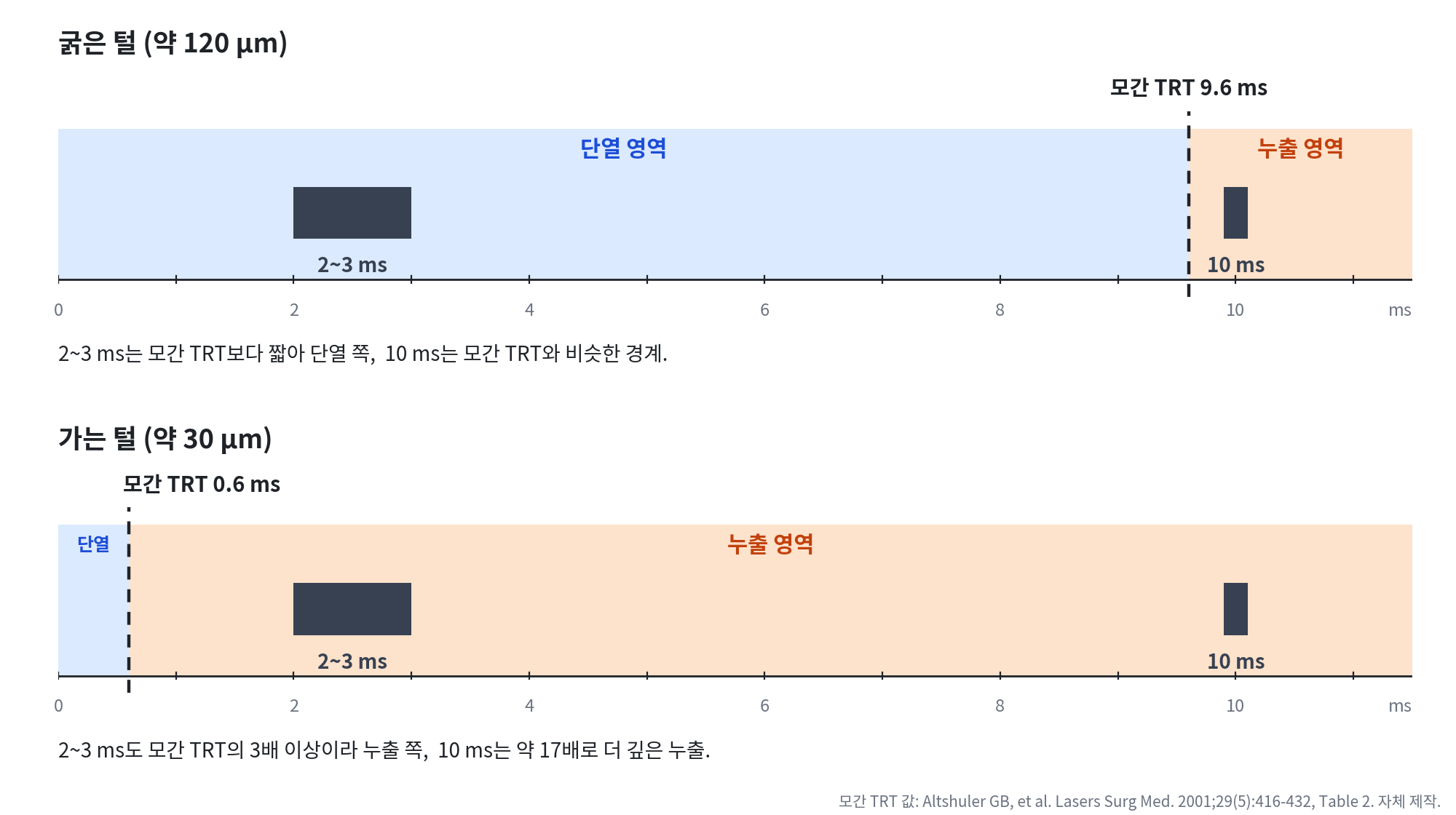 Schematic diagram comparing pulse width and Morgan TRT time. In-house production.
Coarse hairs are mostly insulating in the range we use, while fine hairs are leak-proof at any pulse width. Let me summarize here.
Thick hair : The maximum temperature of the hair shaft is primarily determined by fluence. Increasing the pulse width from 3ms to 10ms does not significantly reduce the heating efficiency of the hair shaft. This means there is physically little reason to worry about "losing instantaneous intensity when increasing pulse width" for thick hair.
Fine hair : Since less leakage occurs the shorter the pulse, reducing the pulse width is the correct approach. However, even 2ms is more than three times longer than the TRT for fine hair. (The fundamental reason for the unsatisfactory hair removal effect on fine hair lies not in the pulse width, but in the fact that the heat source itself is small and cools down too quickly.)
This rule does not apply only to Morgan. The melanin layer of the epidermis also has a TRT; in the literature, 3 to 10 ms is commonly cited based on the entire epidermal melanin layer (approximately 50 µm), while the duration shortens to around 2 ms when considering only the basal layer where melanin is concentrated. Regardless of which approach is taken, 2 to 3 ms pulses offer less time for the epidermis to cool during delivery, whereas increasing the duration to 10 ms provides more room to dissipate heat. Therefore, the intuition of setting the upper fluence limit lower at 3 ms than at 5 or 10 ms was correct, but the reason was not that the "instantaneous intensity increased."
Perspective 2) TDT - Is there enough time for heat to spread to the target?
As mentioned in Part 1, heating the hair shaft itself is not the objective; the heat must spread to the surrounding Non-pigmented structures. Table 2 shows the calculated TDT for two targets. One is dermal papillary vessels aimed at halting hair shaft growth, and the other is stem cells aimed at permanent hair follicle destruction. When viewed in relation to a rectangular light pulse, it looks like this.
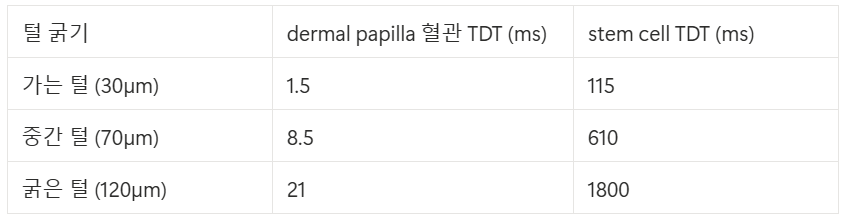
If we place the two columns next to the 2–10ms range we use, their characteristics differ. The TDT of dermal papillary vessels overlaps with or is close to our pulse width range, so the pulse width we select varies in length—whether it is shorter or longer than that—depending on the thickness of the hair. On the other hand, the TDT of stem cells is tens to hundreds of times longer than 2–10ms for any hair. Since they are always on the same side, "much shorter than the TDT," regardless of whether we use 2ms or 10ms, it is difficult to identify what changes occur in the stem cell region when the pulse width is adjusted within our range using only this model. Therefore, we used the TDT of dermal papillary vessels as the standard for comparison.
In any case, looking at the TDT of dermal papillary blood vessels, the thicker the hair, the longer it becomes. This essentially means that the common sense notion that "fine hairs are short, and thick hairs are long" points in the same direction as, at least, the calculations of this model.
If we combine the two perspectives...
I will place the criteria of Perspective 1 and the criteria of Perspective 2 side by side for each hair.
Fine hair : Hair shaft TRT 0.6ms, dermal papillary blood vessel TDT 1.5ms. Both standards are shorter than the shortest pulse width (2ms) available to us . Both perspectives point in the same direction, that is, toward the shorter side.
Thick hair : Moral TRT 9.6ms, dermal papillary TDT 21ms. Even if the pulse width is increased to about 10ms, there is little loss from Perspective 1, and Perspective 2 actually desires a longer pulse . Therefore, increasing the pulse width becomes an operation that results in minimal loss and gain.
medium hairMorgan TRT 3ms, dermal papillary TDT 8.5ms. Since Perspective 1 wants 3ms or less, and Perspective 2 wants around 8.5ms,, this is the section where judgment is most ambiguous.. (I suspect this might be the range where clinic directors are divided between the 5ms and 10ms camps... haha...)
So, the conclusion that can be drawn from the theory is...
Let's consider the upper limit as fluence, and the pulse width as a variable that raises that upper limit.
While it is correct to set a low upper limit for short pulses, the standard is fluence, not average power density. Increasing the pulse width creates margin in the epidermal area, allowing for the use of higher fluence.
Reducing the pulse width on fine hair is theoretically the right direction. However, the expected range may not be significant.
Whether viewed in terms of TRT or TDT, the shorter pulse is the correct choice. However, the clinical evidence is weak. Data suggesting that 2ms is better than 3ms is limited to content sponsored by manufacturers. Furthermore, it is difficult to overcome the fundamental disadvantage of fine hair having a small heat source solely through pulse width.
In thick hairs, fluence determines the temperature to be reached, and increasing the pulse width is a “low-loss operation.”
Since it is an insulating zone, the efficiency of heating the pubic hair does not drop significantly. At the same time, it provides epidermal clearance and time for heat to spread to the dermal papilla and other areas. (This could explain why Example 2 was effective earlier (5ms 15J/cm² → 10ms 16J/cm²), but I believe it is also possible that it was due to other factors that will be discussed later.)
Limitations of calculation
Now, let's talk about the anticlimactic part... Up until now, it has been the realm of mathematical content and calculation, but these calculations do not become reality exactly as they are. There are various reasons for this...
Pulse waveform - The actual pulse will not be rectangular. (The manufacturer would know the exact pulse, though.) The average output density is literally just an average value I calculated, and the TDT in Table 2 from Altshuler et al.'s study is also a calculation based on the assumption of a rectangular pulse.
Model Calculated Values – TRT and TDT are model-calculated values, not actual measurements. They are values based on simplifying the hair follicle into a cylinder and assuming a specific diameter, but the cross-section of the hair shaft is elliptical, not circular. Therefore, even the same hair will have a slightly different diameter depending on how it is measured. In a study published in a domestic academic journal comparing scalp hair using micrometer calipers and phototricograms, the average diameter differed by a factor of 1.4 (approximately 77 µm vs. 109 µm). However, electron microscope comparisons revealed that the caliper measures the single axis. Since TRT is proportional to the square of the diameter, a 1.4-fold difference in diameter translates to approximately a 2-fold difference in TRT.
Variables other than hair thickness —such as hair melanin content, follicle depth, effective depth based on spot size, and cooling method—continue to overlap with variables that change results other than thickness.
Time Dependence of Damage – Tissue damage is determined not only by the temperature reached but also by how long that temperature is maintained, and the influence of temperature is much steeper. Therefore, I attempted to calculate the temperature distribution at the end of the pulse, but the heat conduction calculations became too complex and the text seemed to be going off track, so I excluded it this time.
Why do every director have different experiences?
This might be the most important point. (Or perhaps the most anticlimactic.) Apart from this analysis, even when performing the same procedure, every clinic director's experience will differ. Even when I ask my colleagues while working, their stories are often all over the place, and even I find myself thinking, "It is a bit unfortunate that the judgment is ultimately based on the patient's subjective feeling." Fundamentally, there are many confounding factors that cannot be excluded from hair removal results in the field. I intended to write a brief summary, but I ended up listing everything that came to mind.
What comes from the temporal structure
Cumulative Effect - By default, the amount of remaining hair decreases as the number of sessions increases. Even if you do not change the parameter, it is highly likely that later sessions will look better.
Regression to the Mean – The situations in which we change parameters are mostly for subjects whose response in the previous session was minimal. This bias is essentially embedded in the decision rule itself: "Change if the response is unsatisfactory." If they were just unlucky before, there is a high probability that things will look better this time even if nothing is changed.
Delayed Effect - The response to hair removal manifests over the shedding and re-entry phases. If a patient visiting at the typical clinic-level schedule every four weeks feels that the response is "minimal," it could actually be that the effects of the previous session have not yet manifested. Conversely, the improvement seen in the next session could be the delayed result of the previous one.
The subject changes
The remaining hair is different hair —if we consider why the hair remained in the previous iteration... it could be that it was less heated because it was thick, received less heat because it was deep, or was not a target in the first place because it was not an anagen at that time. Therefore, it is safe to say that in the next iteration, we are not using different parameters on the same hair, but rather using different parameters on different hair. This means that the control variables are not fixed.
What comes from people and measurements
Subjective bias - Since we did not conduct an RCT, we cannot exclude the expectations of the patients and the biases of the evaluators (our clinic directors).
Unconscious changes in routine – If increasing the pulse width was effective, you cannot immediately conclude that the parameter was truly advantageous. You might have felt a bit more relaxed thinking that the burden on the epidermis was lighter, leading you to perform more overlaps or stack one or two more times during the pass.
Differences by institution/director - Post-care guidelines will also vary from hospital to hospital and doctor to doctor. It's a bit of a trade secret, but... I tend to be more thorough with aftercare, so I think that may have allowed me to make slightly bolder choices focused on improving effectiveness rather than preventing side effects.
Differences in Patient Tendencies - This is something I particularly notice with the male patients who make up the majority of our clinic's hair removal clients; satisfaction varies significantly beyond just the effectiveness. While some patients write that they were disappointed because of one or two remaining hairs even though they felt significant hair reduction had occurred, there are occasionally those who write that the results were good because they were moved by the kindness of the clinic staff, even though they honestly felt the effects were not that great.
conclusion
This post was long. I apologize. To summarize, it is as follows.
In thick hair, the temperature reached is mainly determined by fluence, and the margin of the epidermis and the time for heat to spread are mainly determined by the pulse width.
The statement “fine hairs are short, thick hairs are long” points in the same direction as the calculations of the extension theory. However, there is a lack of clinical studies verifying this by hair thickness.
Furthermore, since there are many variables that obscure this direction in the field results, the experience with the same operation is bound to differ among the directors.
Therefore, as I wrap up this post, I regret that I cannot provide a definitive "recipe" of "this value for this situation." However, I believe this can be helpful for understanding what the dial is moving when adjusting parameters. In particular, there is a tip that might be helpful for getting a better feel for it.
For patients who are disappointed with the response, let's ask them one more time what they found lacking!
Most people think about the density of the remaining hair, but there are some who are disappointed that "while it grows less now, the hairs that do grow are still thick." Since the dial adjustments for the next session may differ depending on whether the issue is density or thickness, I consider this a fairly important question. After that, I think it is advisable not to hesitate to adjust the pulse width and fluence; you should understand what those adjustments affect and make judgments at your own discretion. Haha.
References
Candela Gentle Pro Series product page. https://candelamedical.com/products/gentle-pro-series/ (Accessed September 25, 2026)
Nanni CA, Alster TS. Long-pulsed alexandrite laser-assisted hair removal at 5, 10, and 20 millisecond pulse durations. Lasers Surg Med. 1999;24(5):332-337. (PMID 10406473)
McDaniel DH, Lord J, Ash K, Newman J, Zukowski M. Laser hair removal: a review and report on the use of the long-pulsed alexandrite laser for hair reduction of the upper lip, leg, back, and bikini region. Dermatol Surg. 1999;25(6):425-430. (PMID 10469087)
Noormohammadpour P, et al. Effect of different pulse durations on the efficacy of long-pulsed alexandrite-assisted hair removal; a split-face comparison study. J Lasers Med Sci. 2021;12:e21. (PMID 34733744)
Drosner M, Adatto M. Photo-epilation: guidelines for care from the European Society for Laser Dermatology (ESLD). J Cosmet Laser Ther. 2005;7(1):33-38. (PMID 16020215)
Altshuler GB, Anderson RR, Manstein D, Zenzie HH, Smirnov MZ. Extended theory of selective photothermolysis. Lasers Surg Med. 2001;29(5):416-432. (PMID 11891730)
Stangl S, Hertenberger B, Drosner M. Does pulse duration influence efficacy of photo-epilation? Med Laser Appl. 2004;19:205-211. doi:10.1078/1615-1615-00144
Kono T, Shek SY, Chan HHL, Groff WF, Imagawa K, Akamatsu T. Theoretical review of the treatment of pigmented lesions in Asian skin. Laser Ther. 2016;25(3):179-184. (PMID 27853342)
Chui CYC. Evaluating the efficacy of 2-millisecond versus 3-millisecond pulse duration in laser hair removal using a 755 nm alexandrite laser. The PMFA Journal. 2023. (Sponsored content, Candela) https://www.thepmfajournal.com/features/features/post/sponsored-content-evaluating-the-efficacy-of-2-millisecond-versus-3-millisecond-pulse-duration-in-laser-hair-removal-using-a-755-nm-alexandrite-laser (September 25, 2026 check)
Park JH, Ho YH, Manonukul K. Hair diameter measurement methods: micrometer caliper versus phototrichogram. Arch Aesthetic Plast Surg. 2023;29(2):97-101. doi:10.14730/aaps.2022.00423
Bayramoglu A, Erdogan K, Urhan O, et al. Hair diameter measurements for planning follicular unit extraction surgery (FUE): is there a correlation between the micrometer caliper and scanning electron microscopy (SEM) findings? J Cosmet Dermatol. 2022;21(3):1086-1092. (PMID 33905616)