



Hello! I am Kim Seung-hwan, Director of EPISODE CLINIC .
This is a time when interest in hair removal treatment is exploding among people of all ages and genders, whether for a neat appearance, hygienic benefits, or for various other reasons. It makes one wonder if demand has ever been this high. While everyone starts by trying shaving or waxing, I believe it is a natural progression that they eventually settle on laser hair removal due to the inherent limitations of these methods.
However, as you clinic directors likely realize, treatment results vary significantly from person to person. While I believe other factors, such as patient compliance and aftercare, play an important role, I feel that the practitioner factor cannot be ignored either. Personally, much like EBD lifting, I consider hair removal to be "easy to start, hard to master." I understand the circumstances where factory-style clinics have no choice but to prioritize safety over effectiveness—or rather, are forced to be extremely safety-oriented—from the very beginning of parameter setting. However, for those who are a bit more interested, I wonder if you haven't given some thought to what hair hair removal it operates on, what effects it aims for, and how to reduce the number of sessions and increase satisfaction, even slightly. (As someone who has tried self-hair hair removal over 200 times, I am more interested than anyone) I would like to share what I have researched.
With the audience in mind of clinic directors, I intend to delve a little deeper into the things we usually take for granted. I plan to verify what is commonly known. Let me start by mentioning the topic of Part 1.
Q. What is the target of the hair removal laser?Really, only bulge?)
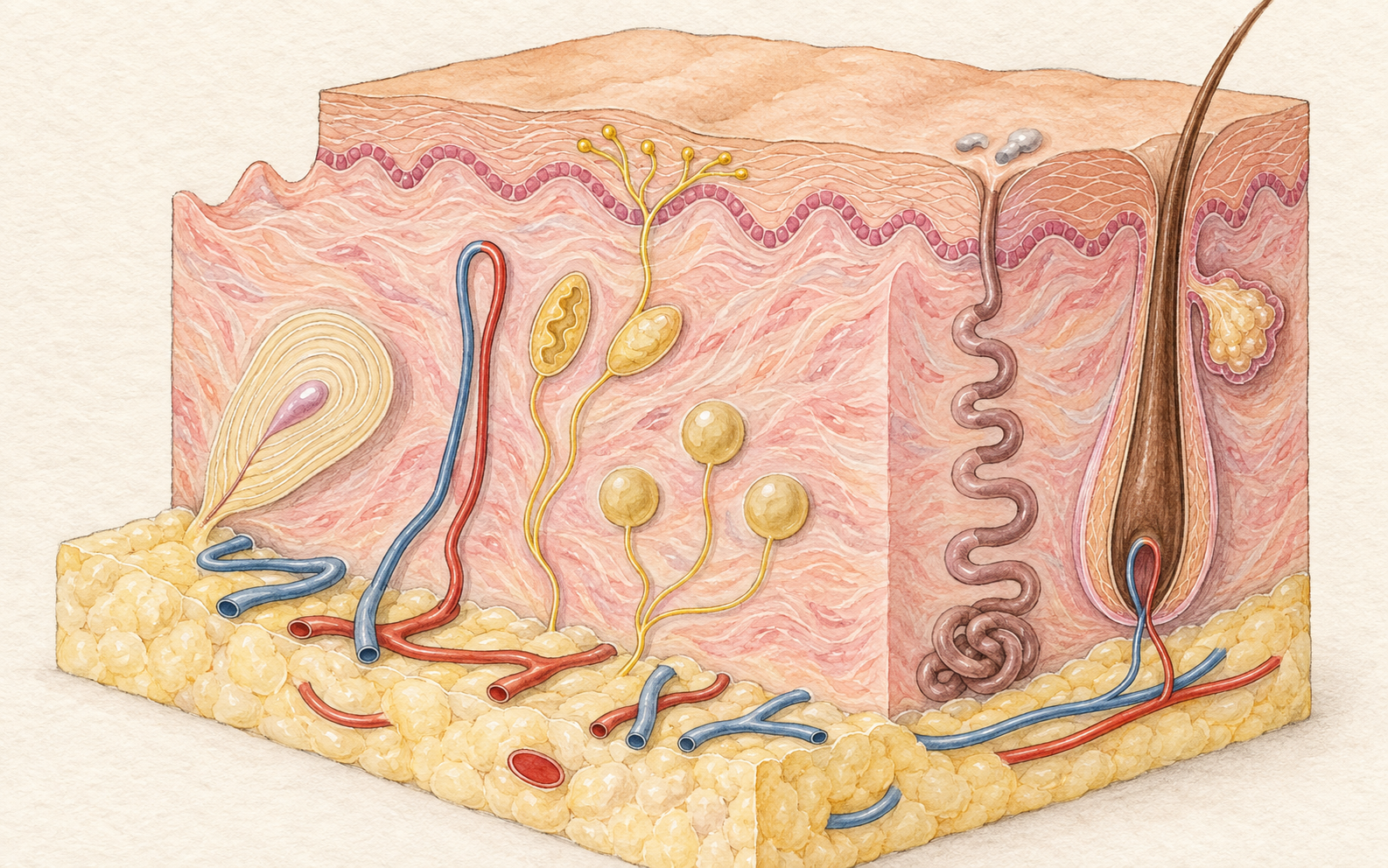 Structure of skin and hair follicles. Image provided by Servier Medical Art (https://smart.servier.com), licensed under CC BY 4.0 (https://creativecommons.org/licenses/by/4.0/).
I will cover the details below, but to start with the conclusion...
Traditionally, follicular stem cells in the hair removal have been regarded as the ultimate therapeutic target for hair removal; however, it has not been established whether actual clinical permanent hair reduction necessarily implies the direct destruction of bulge stem cells . While one might oversimplify this by saying, "The target is the follicle, not the hair," I believe it is necessary to understand the principles of laser hair removal more accurately. We need to distinguish between what absorbs the laser and which structures must actually be damaged to cause long-term hair reduction.
So, before getting into the main topic, I will briefly go over the relevant anatomy and theories.
Anatomy explanation (Skip if you aren't interested..)
(For reference, a significant portion of hair follicle biology has been elucidated through mouse models, so some of the schematic diagrams below are also based on mouse data. While the compartment composition itself is not significantly different from humans, there are interspecies differences in size, cycle length, and the expression of certain markers, so I will address the problematic points as they arise.)
Hair is largely composed of the visible hair shaft and the hair follicle , an accessory structure that produces it . Anatomically, the hair follicle can be divided into three main parts: the infundibulum, the isthmus, and the inferior segment. To highlight just the important structures...
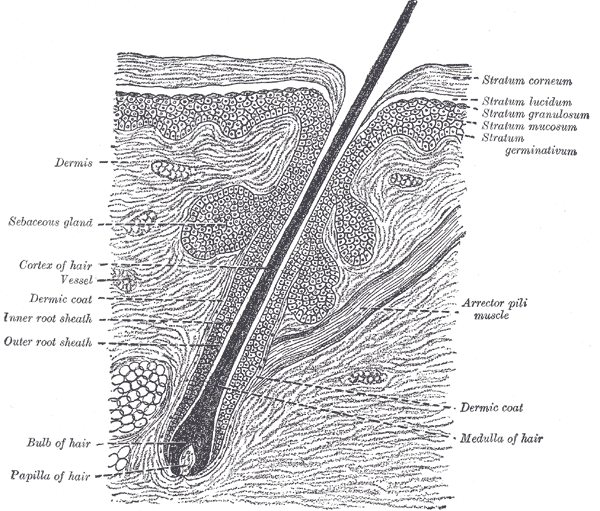 Skin and Appendages. Source: Henry Vandyke Carter, Gray's Anatomy (1918). Public Domain, via Wikimedia Commons.
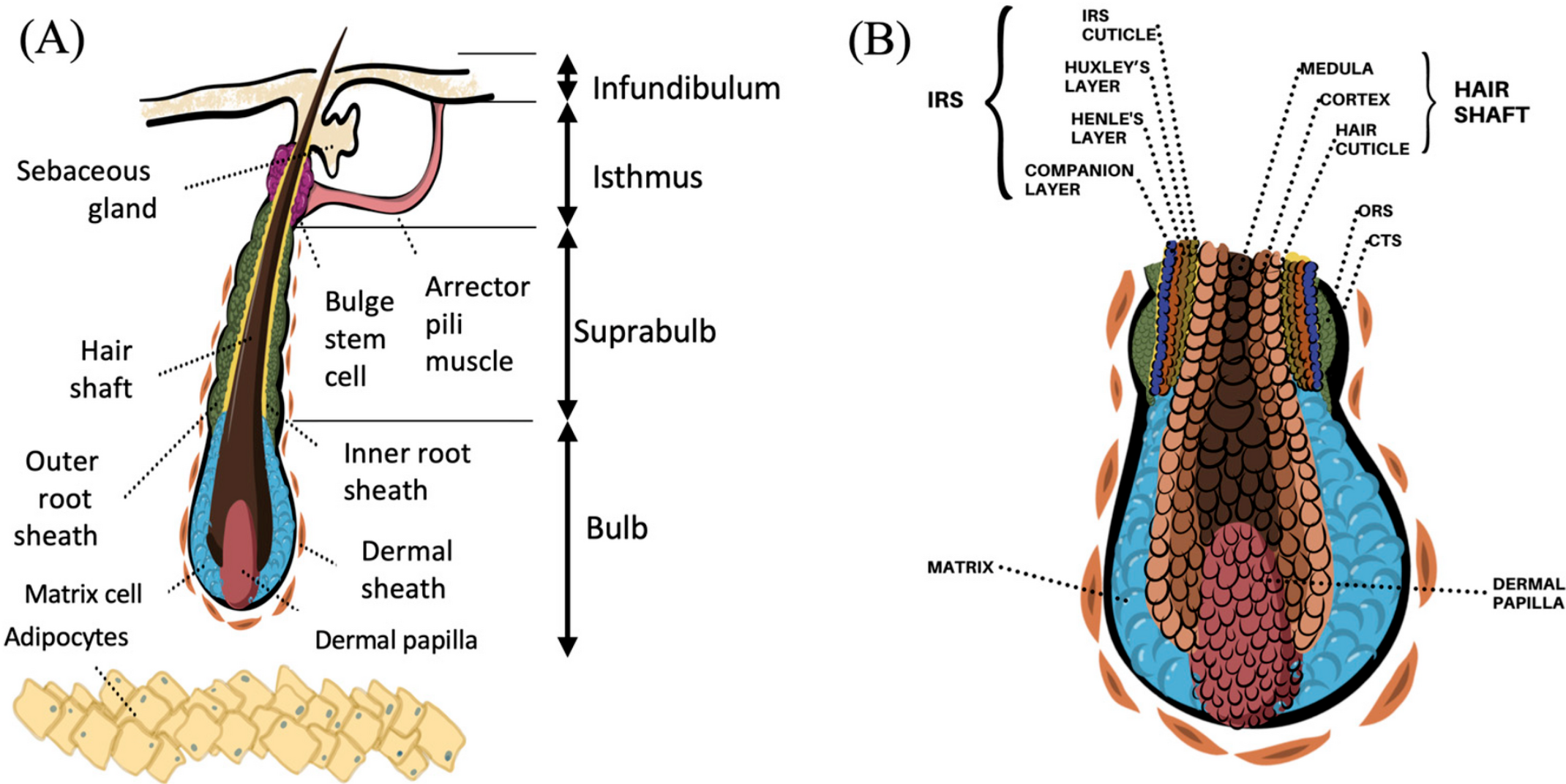 Schematic diagram of the anatomical structure of a hair follicle. Source: Figure 1 of Cuevas-Diaz Duran R, et al. Int J Mol Sci. 2024;25(5):2542. © 2024 by the authors, licensee MDPI. CC BY 4.0. Via Wikimedia Commons.
The area corresponding to the outermost layer of the outer root sheath in the section extending from the isthmus, that is, the opening of the sebaceous gland, to the attachment of the arrector pili m. bulgeIt is defined as follows. (However, in human anagen hair follicles, a distinct morphological protrusion is not observed in this area.) It is known that follicular epithelial stem cells, which are important for hair follicle regeneration, exist here. Furthermore, not only these epithelial stem cells but also the melanocyte stem cells present in this area are Non-pigmented. In other words, the bulge is essentially a compartment that possesses almost no pigment. (The fact that it's amelanotic will be important later..)
Next, the lower part is the main component of the anagen hair follicle, forming a rounded structure called the hair bulb as it descends . Protruding from the inside of the hair bulb is the dermal papilla , a vascularized connective tissue, which plays an important role in regulating hair growth and function. Additionally , matrix cells are present in the hair bulb; these cells actively proliferate during anagen to actually produce hair. Finally, the dermal sheath surrounds the dermal papilla , and the stem cell population in this area is known to be involved in the regeneration of the dermal papilla and the hair follicle.
In other words, the hair follicle does not simply contain a single mass that produces hair,
The matrix is involved in actual hair production.
Dermal papillae are involved in growth signaling and regulation.
The stem-cell compartment of the bulge is involved in the regeneration of hair follicles.
There are various cell populations and structures that perform different roles. And as these structures interact, the hair follicle growth cycle [ anagen → catagen → telogen → (repeat…)] is determined.
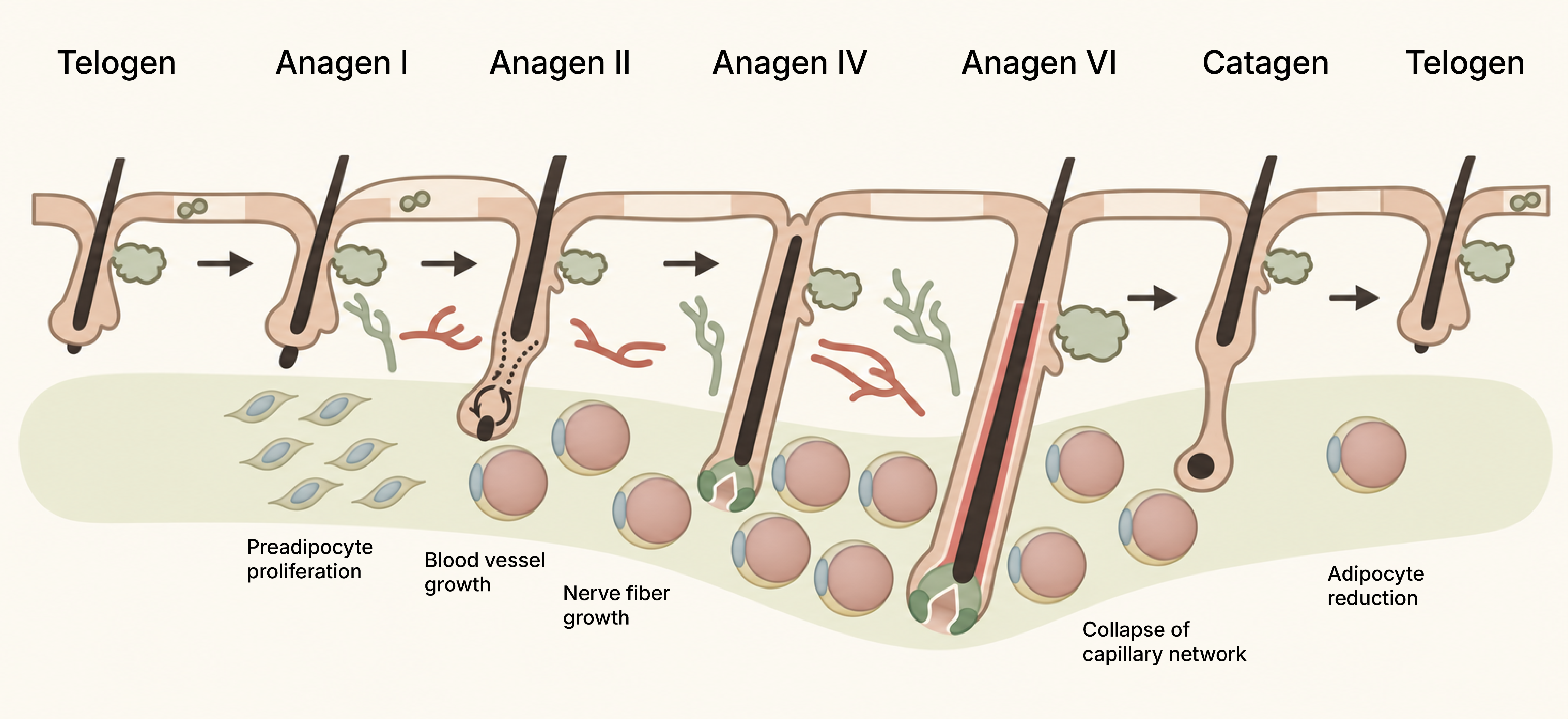 Hair growth cycle. In-house production.
Now, an explanation of the related theory (Extended Theory of Selective Photothermal Decomposition)..
When explaining the principles of traditional laser hair removal, the concept that the follicular stem cells of the bulge are the final treatment target is particularly emphasized. However, there is a problem here... The primary chromophore that actually directly absorbs laser energy is melanin . Melanin is mainly found in the melanogenic compartments of the hair shaft and anagen hair bulb; conversely, the stem-cell compartment of the bulge, which we have considered the final treatment target, was described earlier as Non-pigmented structure, wasn't it? Haha... To understand what is happening, what you need to know is,
The chromophore and the therapeutic target are spatially separated!
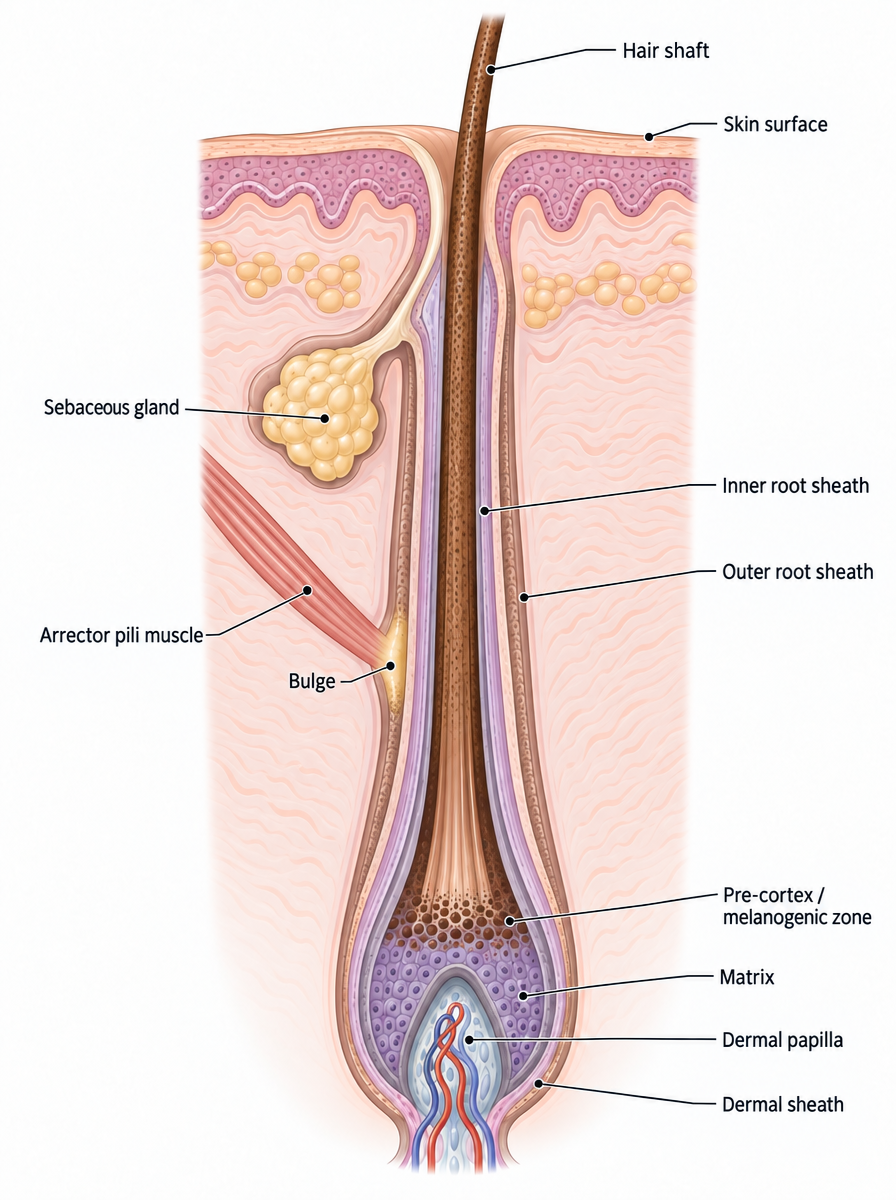 Composition of each compartment of the hair follicle. In-house made.
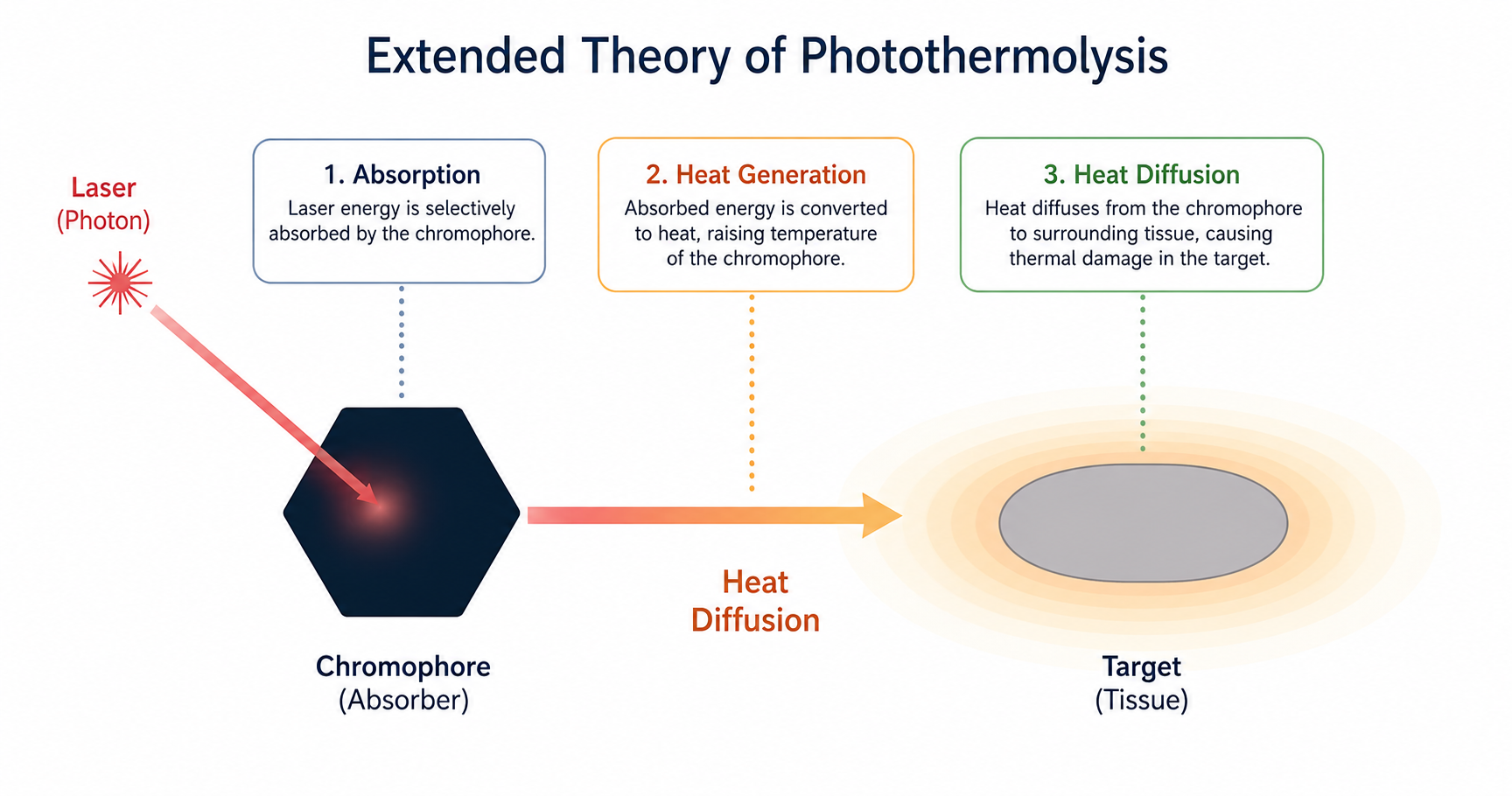 Conceptual schematic diagram of the extended theory of selective photothermal decomposition. Created in-house. Conceptual source: Altshuler GB, et al. Lasers Surg Med. 2001;29(5):416-432 (PMID 11891730)
This is quite important when understanding laser hair removal: the key point is that the heat generated as the laser is absorbed by melanin does not necessarily act only at that spot, but diffuses into surrounding tissues, potentially causing thermal injury to adjacent Non-pigmented structures. Simply stating that "where melanin is located is destroyed" is insufficient to adequately explain the long-term effects of hair removal. You shouldn't say, "The fur burned up and flew away, so it's not coming out."
For example, if the matrix is damaged, the production of current anagen hair may cease, but if the follicular regenerative compartment is preserved, there is a possibility that the hair follicle will function again in a subsequent hair cycle. Therefore, if we consider it important to transmit damage to the stem-cell compartment of the bulge, we must also consider the process by which heat generated from the chromophore diffuses to the Non-pigmented target . It is at this point that it becomes necessary to extend the existing 'selective photothermolysis theory.'
The existing ‘selective photothermal decomposition theory’ is fundamentally centered on selectively heating a target while minimizing heat diffusion to surrounding tissues. Common knowledge you will constantly see when first studying pigment lasers.. In other words, the relationship between the target's TRT (thermal relaxation time) and pulse duration is an important concept. However, actual biological targets are not simple structures with uniformly distributed pigments; particularly in laser hair removal, since the melanin-containing hair structure and the follicular structure intended to be damaged are located in different positions, the process of heat generated from the chromophore diffusing to the surrounding Non-pigmented structure is important.
To explain this problem, Altshuler et al. proposed the "extended theory of selective photothermolysis . " The core argument of this paper is that in structures where pigments are non-uniformly distributed and the pigmented region and the actual target are spatially separated, the temperature rise in the pigmented region should be limited, while the thermal diffusion from the pigmented region to the target region should be actively utilized. The conclusion of the paper also states, "the treatment pulsewidth for non-uniformly pigmented targets is significantly longer than the target thermal relaxation time (TRT)," arguing that the pulse width must be significantly longer than the target's TRT. In other words, rather than simply looking at the TRT of the target itself, the process of heat transfer from the heated pigmented hair to the surrounding Non-pigmented target and the time required for this are considered together; in this context, the concept of TDT (thermal damage time) is subsequently used.
TRT: Time it takes for the target itself to cool down
TDT: The time it takes for heat generated from the chromophore to diffuse and cause damage to the target.
I think I shared a bit of TMI... Ultimately, the reason for explaining all of this will soon appear. To simplify the explanation so far...
Laser absorption by melanin → heat generation → thermal diffusion → damage to surrounding follicular structures
It is the process of..., and here
“Ah, so if you transfer the heat generated in the melanin to the bulge and destroy its stem cells, hair removal happens!”
This is the traditional model .
Getting to the main point...
then "Is directly destroying bulge stem cells really absolutely necessary for hair removal? That is what I intend to ask today. This part is not proven as clearly as expected. (As mentioned in the paper by Chiu et al. to be discussed later, "the exact mechanism of permanent hair reduction remains unclear.") I will cover the related papers.
 Orringer et al. Article Bibliographic information. Source: PubMed, PMID 16908343. https://pubmed.ncbi.nlm.nih.gov/16908343/ (Accessed September 9, 2026)
In a study published in JAAD in 2006, Orringer et al. analyzed human hair follicles immunohistochemically after laser hair hair removal . The study involved a left-right comparative design targeting underarm hair, where one side was treatment with an 800nm diode and the other with a 1064nm Nd:YAG laser. In serial biopsies performed at multiple time points after a single laser irradiation, The hair shaft was thermally denatured, but the immunohistochemical pattern remained largely unchanged in a significant portion of the hair follicle, including the bulge.Of course, there are clear limitations. This study only covered acute immunohistochemical changes following a single treatment using specific parameters, and the 755nm alexandrite that we primarily use was not included in the study.(Chiu's research coming up later is 755nm..)The fact that there was no change in bulge at 1064 nm, where melanin uptake is relatively low, is not in itself a major surprise. Moreover, since the maintenance of immunohistochemical patterns cannot be guaranteed to equate to functional preservation, we cannot conclude from this alone that “bulge stem cells have no relation to hair hair removal,” but... we can ask this question.
Clinical hair reduction might not necessarily mean direct histological destruction of bulge stem cells...?
(For reference, the conclusion of the authors of this paper is that "laser hair hair removal does not appear to work through the explicit destruction of hair follicle stem cells, and other mechanisms, including functional changes in these cells, may be the basis of its clinical effects.")
In other words, there is a possibility that the traditional model of “bulge stem cell destruction = permanent hair removal” alone may not be sufficient to fully explain the actual phenomenon.
 Bibliographic information for Chiu et al. Article. Source: PubMed, PMID 35289409. https://pubmed.ncbi.nlm.nih.gov/35289409/ (Accessed September 9, 2026)
There is another interesting study; let's look at the research published by Chiu et al. in Lasers in Surgery and Medicine in 2022. (However, the subjects were mice, not humans.) When anagen was irradiated onto hair follicles, hair miniaturization was observed in the subsequent anagen. Histologically, melanin-containing cells in the precortex region suffered thermal damage, and necrosis caused by thermal diffusion was confirmed in the adjacent dermal papilla cells. Dermal papilla cells decreased by approximately 24%, while the number of bulge stem cells quantified by FACS remained unchanged. (In fact, CD34, which is generally used as a bulge marker in mice, labels the ORS below the attachment site of the arrector pili m.—which was previously defined as the lower limit of the bulge—in humans. Conversely, CK15 labels the area above that attachment site. In other words, the same marker points to different locations depending on the species, so it is difficult to directly apply these results to humans.) Nevertheless, this result suggests at least one possibility.
Could hair size in the next hair cycle change solely due to damage to other compartments, such as the dermal papilla, without a significant decrease in the number of bulge stem cells?
(To add to that...) One clever aspect of this study is that it also investigated telogen follicles under the same conditions. The melanin precortex, which was attached right next to the dermal papilla in anagen follicles, was absent in telogen follicles. Consequently, no thermal necrosis, cell reduction, or miniaturization of the dermal papilla was observed, even though the same laser was applied. In other words, this demonstrates that dermal papilla damage is not the result of the dermis being heated overall by the laser, but rather due to heat transferred from the adjacent chromophore. This can be seen as the point where the spatial separation and thermal diffusion mentioned earlier were experimentally confirmed. I am mentioning this in case someone asks, "Is the necrosis of the dermal papilla really due to heat from the adjacent melanin? Since a laser was used, the entire dermis could have been heated, or couldn't it be a secondary result of an inflammatory response?")
Of course, we cannot suddenly conclude that the dermal papilla is the true target of laser hair hair removal based solely on this study. Rather, the important question here is whether it is appropriate to specify the target of hair removal as only a single structure. In reality, as mentioned earlier, hair follicles contain several closely interconnected functional compartments: the bulge/stem-cell compartment, matrix, dermal papilla, dermal sheath, and even the surrounding follicular microenvironment (including the perifollicular vascular network). Therefore, it is more reasonable to understand laser hair hair removal not as a process of independently destroying just one of these structures, but rather as a process in which heat generated by melanin acting as a chromophore causes varying degrees of thermal injury to various structures within the hair follicle, resulting in the long-term inhibition of the follicle's regenerative capacity and hair cycling .
In a sense, there is no need to obsess over "destruction," as the clinical endpoint required by regulatory agencies is not histological destruction in the first place. The U.S. FDA's 510(k) Indications for Use standardly includes wording defining "permanent hair reduction" as "a long-term, stable reduction in the number of regrowthed hairs measured at 6, 9, or 12 months after the completion of treatment."
 Phrase for Indications for Use related to "Permanent hair reduction." Source: U.S. FDA 510(k) Summary, K201111 (GentleMax Pro Plus, Candela Corporation), approved May 26, 2020. https://www.accessdata.fda.gov/cdrh_docs/pdf20/K201111.pdf (Accessed September 8, 2026)
(In fact, that is why hair removal device companies should say "FDA 510(k) cleared" rather than "FDA approved." The FDA uses the term "approval" only for premarket approval of Class III devices, and since hair removal lasers are Class II, they do not fall under that track in the first place. This applies to all hair removal lasers, not just a specific company. Of course, the hair removal Mag Profl that we all use was also "cleared" under K201111. But that is a separate topic, so I will stop here.)
Therefore, the effect of laser hair removal may also be better understood from the perspective of thermal injury occurring in multiple follicular compartments and the resulting follicular regeneration and long-term inhibition of the hair cycle , hair removal than from the model of “completely destroying a single specific structure.”
conclusion
So, what is our conclusion?
Let's not specify just one core target! Haha..
In other words, the existing very simple explanation,
Laser absorption of melanin → follicle destruction → hair removal
The idea is to refine it a bit more.. (To summarize..)
Laser energy absorption of melanin-containing structure
→ thermal injury + thermal diffusion
→ Thermal injury to multiple follicular compartments
→ Functional changes in matrix, dermal papilla, stem-cell compartment, etc.
→ Inhibition of hair regeneration and normal anagen cycling
→ long-term/permanent hair reduction
To this extent, you know...
It seems like this post has gotten too long, but... I wrote this because I felt I should use slightly more precise expressions when explaining things to someone. And once you understand that there isn't just one target, but that it is located in a spot where heat needs to diffuse to reach, eventually "How far and for how long will the heat be sent?"Go soon parameters It becomes an issue. So, I'm sure you're more curious about how to actually adjust parameters, ranging from pulse width and fluence to spot diameter! I'll cover that in Part 2... haha...
References
Anderson RR, Parrish JA. Selective photothermolysis: precise microsurgery by selective absorption of pulsed radiation. Science. 1983;220(4596):524-527. (PMID 6836297)
Altshuler GB, et al. Extended theory of selective photothermolysis. Lasers Surg Med. 2001;29(5):416-432. (PMID 11891730)
Ohyama M, et al. Characterization and isolation of stem cell-enriched human hair follicle bulge cells. J Clin Invest. 2006;116(1):249-260. (PMID 16395407)
Orringer JS, et al. The effects of laser-mediated hair removal on immunohistochemical staining properties of hair follicles. J Am Acad Dermatol. 2006;55(3):402-407. (PMID 16908343)
Poblet E, et al. The immunohistochemical expression of CD34 in human hair follicles: a comparative study with the bulge marker CK15. Clin Exp Dermatol. 2006;31(6):807-812. (PMID 16981909)
Rahmani W, et al. Hair follicle dermal stem cells regenerate the dermal sheath, repopulate the dermal papilla, and modulate hair type. Dev Cell. 2014;31(5):543-558. (PMID 25465495)
Geyfman M, etal. Resting no more: re-defining telogen, the maintenance stage of the hair growth cycle. Biol rev Camb Philos Soc. 2015;90(4):1179-1196. (PMID 25410793)
Chiu HY, et al. Depilatory laser miniaturizes hair by inducing bystander dermal papilla cell necrosis through thermal diffusion. Lasers Surg Med. 2022;54(6):916-927. (PMID 35289409)
US FDA 510(k) summary document (K201111). https://www.accessdata.fda.gov/scripts/cdrh/cfdocs/cfpmn/pmn.cfm?ID=K201111. Indications for Use related to "Permanent hair reduction". Retrieved September 8, 2026.