



Hello, I am Park Geun-hee, Chief Director of EPISODE CLINIC .
As pigmentation on your face gradually starts to become noticeable, you naturally become interested in toning.
I have blemishes on my face. What kind of procedure should I get?
“It’s my first time doing this, and I feel a bit overwhelmed having to do it 10 times. Can’t I just do it once?”
I think you probably have a lot of concerns like this.
However, during consultations, it is not easy to explain everything about pigmentation treatment within a short amount of time.
This is because there are various types of pigments, and the type of laser and treatment method used vary accordingly.no see.
So, I would like to organize my thoughts and talk about this in writing.
I would like to give you an explanation about the laser right away, but Pigmentation treatment begins with an accurate diagnosis.do.
So, before we talk about lasers, let's first discuss why pigmentation occurs and what types there are.
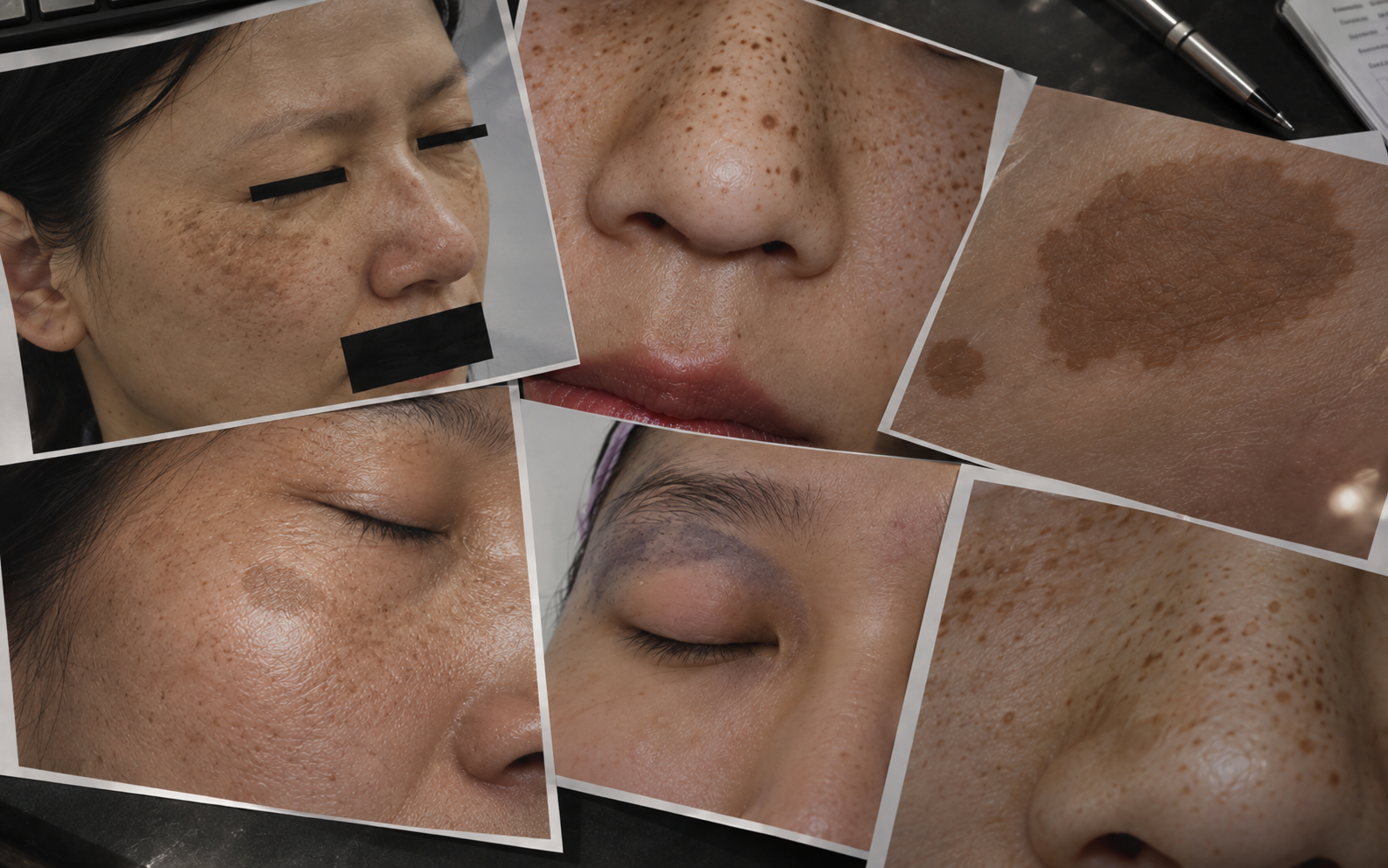 These are the various pigmented lesions to be examined in the main text (Source: Jong-Young Jung, *Clinical Skin Care*)
1. Melanin that determines skin color
The most important factor determining skin color is... Melaninno see.
Melanin is a pigment produced by melanocytes located in the epidermis of the skin.
big Eumelaninclass PheomelaninIt can be divided into.
Pheomelanin causes light skin tones, while eumelanin causes dark skin tones.
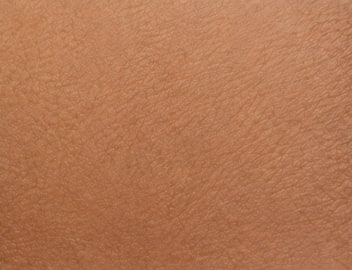
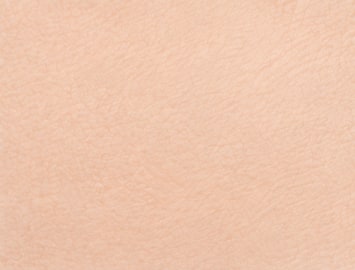
The fact that everyone has different skin colors Types, amounts, and distribution patterns of melaninThis is because they are different from each other.
2. Melanin Synthesis Process
Then, why does melanin exist, and why is it produced?
This time, let's take a look at the process of melanin production.
OR TRIP-2
Melanin biosynthesis (Source: Lee Jae-dong, *Parameters and Selection of Skin Lasers*)
The human body increases melanin production to protect the skin from sunlight.
Exposure to sunlight generates free radicals in the skin and activates various biological substances.
tyrosinase Enzymes TyrosineIt acts on [it] to produce melanin pigment.
The generated melanin is transferred to surrounding keratinocytes to give the skin color.
Ultimately, the skin color we see depends on how much melanin produced in this way is present in the skin.
From our body's perspective, to protect the skin from ultraviolet rays A very normal defense processas,
This defense process is sometimes Pigmentation I want to get rid ofIt can also become.
3. Hypopigmentation and Hyperpigmentation
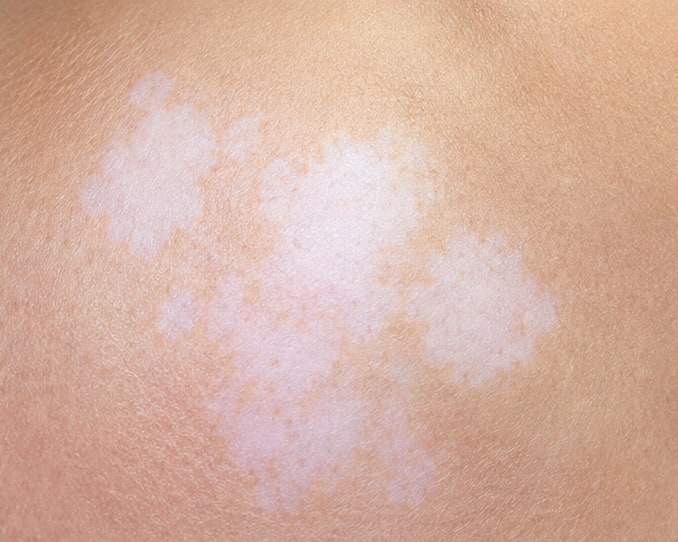
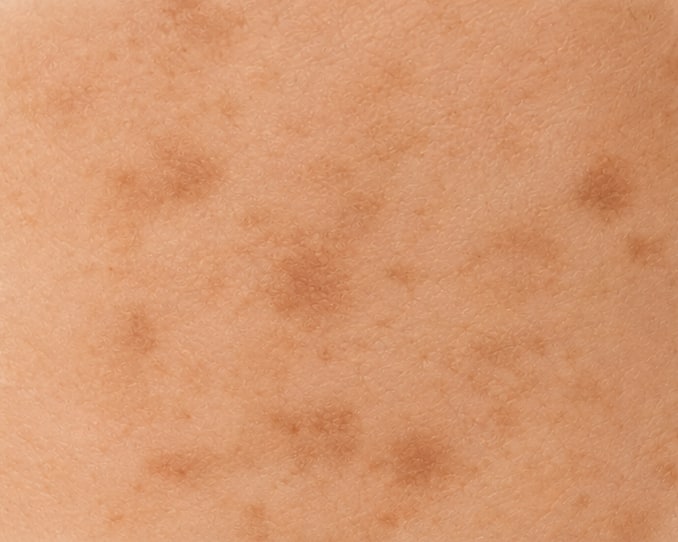
When talking about pigments, people often only think about the increase in pigments.
Conversely, there are also cases where the skin color becomes lighter as less melanin is produced than normal or is lost from the skin.
This HypopigmentationIt is called.
If melanin is not produced normally during the recovery process following skin trauma such as burns, blisters, infections, or chemical damage, the skin color of the damaged area may become lighter than the surrounding area or become patchy.
There are also cases where the skin turns white as the melanocytes themselves are lost, the most representative of which is vitiligoThere is.
Vitiligo is an autoimmune disease characterized by the loss of melanocytes, appearing as white patches with relatively distinct boundaries from the surrounding skin.
Now, what we commonly talk about HyperpigmentationLet's take a look.
Hyperpigmentation literally refers to a condition in which the skin color darkens as more melanin is produced or accumulated in the skin than normal.
Continuous exposure to ultraviolet rays is the most common causeno see.
In addition to this, there are genetic factors, and hormonal changes also have an effect.
In some cases, pigmentation may darken due to medications such as birth control pills or hormone replacement therapy.
In addition, pigmentation may remain after inflammation or wounds occur on the skin.
This Post-inflammatory hyperpigmentation (PIH)It is said that a typical example is the brown marks left behind where acne has passed.
Irritation from cosmetics or medications can also cause pigmentation.
Ultimately, skin pigmentation is There are fewer cases than you might think that can be explained by only one cause.
And within this broad category of hyperpigmentation, one of the conditions we commonly encounter in clinical practice is... signno see.
4. Why do melasma occur?
Sunlight is a major factor that causes or worsens melasma.no see.
However, just as explained earlier that hyperpigmentation can be caused by a combination of various factors, the same applies to melasma.
Not only ultraviolet rays, but also estrogen and progesterone, etc. female hormonesIt is known to further promote melanin production when exposed to ultraviolet rays.
Therefore, there are cases where melasma develops or worsens in relation to pregnancy, taking birth control pills, or hormone replacement therapy.
In addition to this, thyroid dysfunction or ovarian disease can also have an impact,
Genetic factors, physical stimulation, and stress can also have an effect.
In melasma, due to these various factors Melanin synthesis becomes active, or the number of melanocytes increasesAs you do this, the amount of melanin pigment in the skin increases.
Also, in the melasma areas Increase in microvessels and inflammatory responseThis also appears together.
If you have redness along with melasma or if blood vessels are visible on the skin surface Vascular melasmaYou can suspect this.
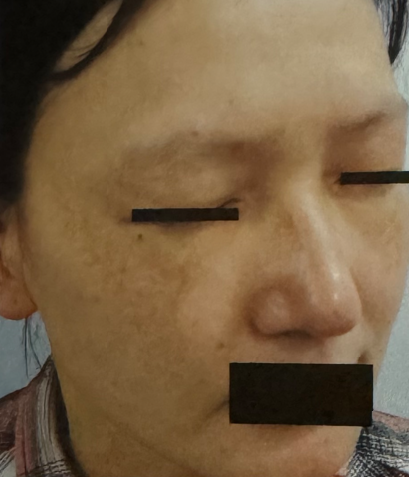
Depending on the depth at which melanin pigment is located in the skin Epidermal melasmaand Dermal melasmaIt can be divided into.
In normal skin, melanin produced by melanocytes is transferred to keratinocytes.
However, due to causes such as ultraviolet rays or inflammation, the space between the epidermis and dermis basement membraneIf this is damaged, melanin can move down to the dermis.
As melanin descends into the dermis in this way, dermal macrophages engulf it, leaving pigment in the dermis.
Epidermal melasma is mainly brownIt appears as, and dermal melasma is bluish-grayIt often takes on a certain appearance.
In addition, there are cases where pigments exist together in the epidermis and dermis, and this Mixed type melasmaIt is said that.
Freckles Whether the pigment is located at a certain depth in the skin, or whether it is accompanied by redness or blood vessels We will examine the back together and decide on a treatment method.
For other pigment disorders as well, the treatment method is selected by considering both the depth of the pigmentation and the characteristics of each condition.
5. Differential diagnosis of melasma
There are really many cases where patients come into the clinic saying, "I have developed melasma," but
If you actually look closely at the skin Cases where it is not melasmaThere is also, When melasma and other pigments are present togetherThere is also.
Although skin blemishes all look similar, they are all different.
The diagnosis may vary depending on whether the color is dark or light, whether the boundaries are distinct, what shape it appears in, and where on the face it occurs.
and Whether it is a pigment present from birth or a pigment newly formed laterIt also serves as a clue for differential diagnosis.
Below, we will summarize the common characteristics of each pigmented lesion.
However, rather than concluding that “this pigmentation is a specific type of lesion” based solely on these characteristics, I would appreciate it if you could view them simply as indicators to suspect the lesion when they appear.
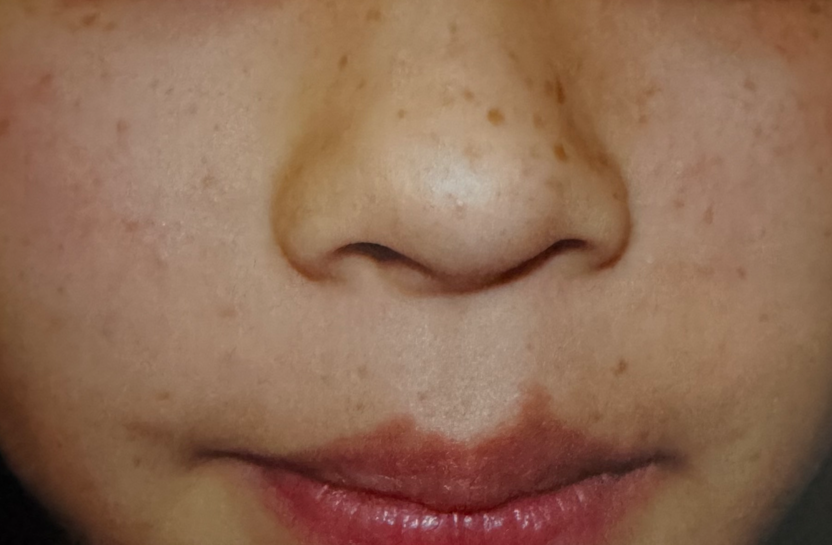
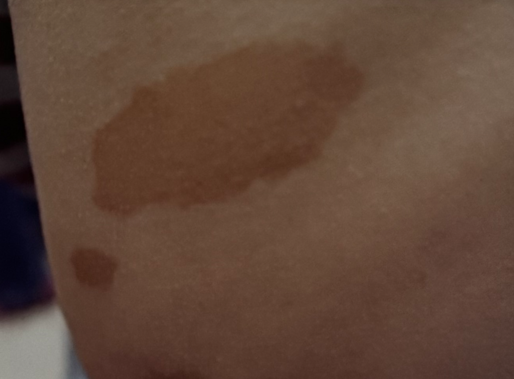
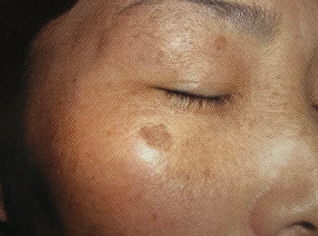
Freckles, café au lait spots, and sunspots are Epidermal melanocytic lesionIt corresponds to.
It occurs as melanin synthesis increases in the epidermis or the number of melanocytes increases.
dermal melanocytic lesionThere is also.
This refers to cases where pigmented lesions appear because melanocytes fail to migrate normally to the epidermis during fetal development and remain in the dermis; while the terminology may sound complicated, it is actually an example familiar to us. Mongolian spotThere is.
Below, we will examine representative dermal melanocytic lesions that require differentiation from melasma.
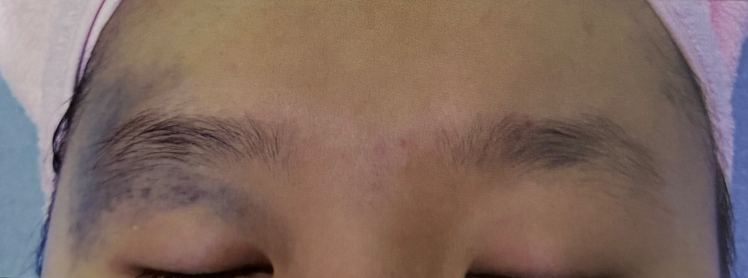
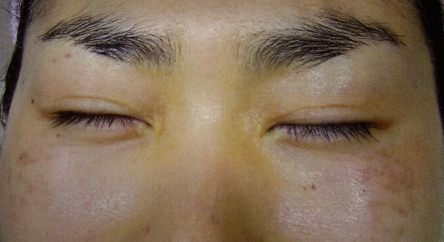
There are quite a few other factors to consider, but... I will stop the introduction here!
6. Conclusion
In this article, we looked at everything from what melanin is, the reasons why pigmentation occurs in the skin, hypopigmentation and hyperpigmentation, to pigment disorders that need to be differentiated from melasma.
The darkening of skin pigmentation is ultimately related to melanin produced by melanocytes.
The melanin produced Which layer of the skin it exists inThe visible color on the skin and the treatment method vary depending on the condition.
Whether it is pigment in the epidermis or pigment deep in the dermis,
Whether melasma is present alone or accompanied by other pigmentation disorders
Distinguishing these The first step of pigmentation treatmentno see.
So in the next post, I will explain how to treat it, laserLet's talk about...
Thank you for reading this long post!