



I intend to share content that delves into an in-depth exploration of acne .
If you read carefully, you will find out why you get acne , what the types are, and what to do to prevent them.
I will explain it so that it is easy to understand at a glance . Please concentrate and read for just 5 minutes !!
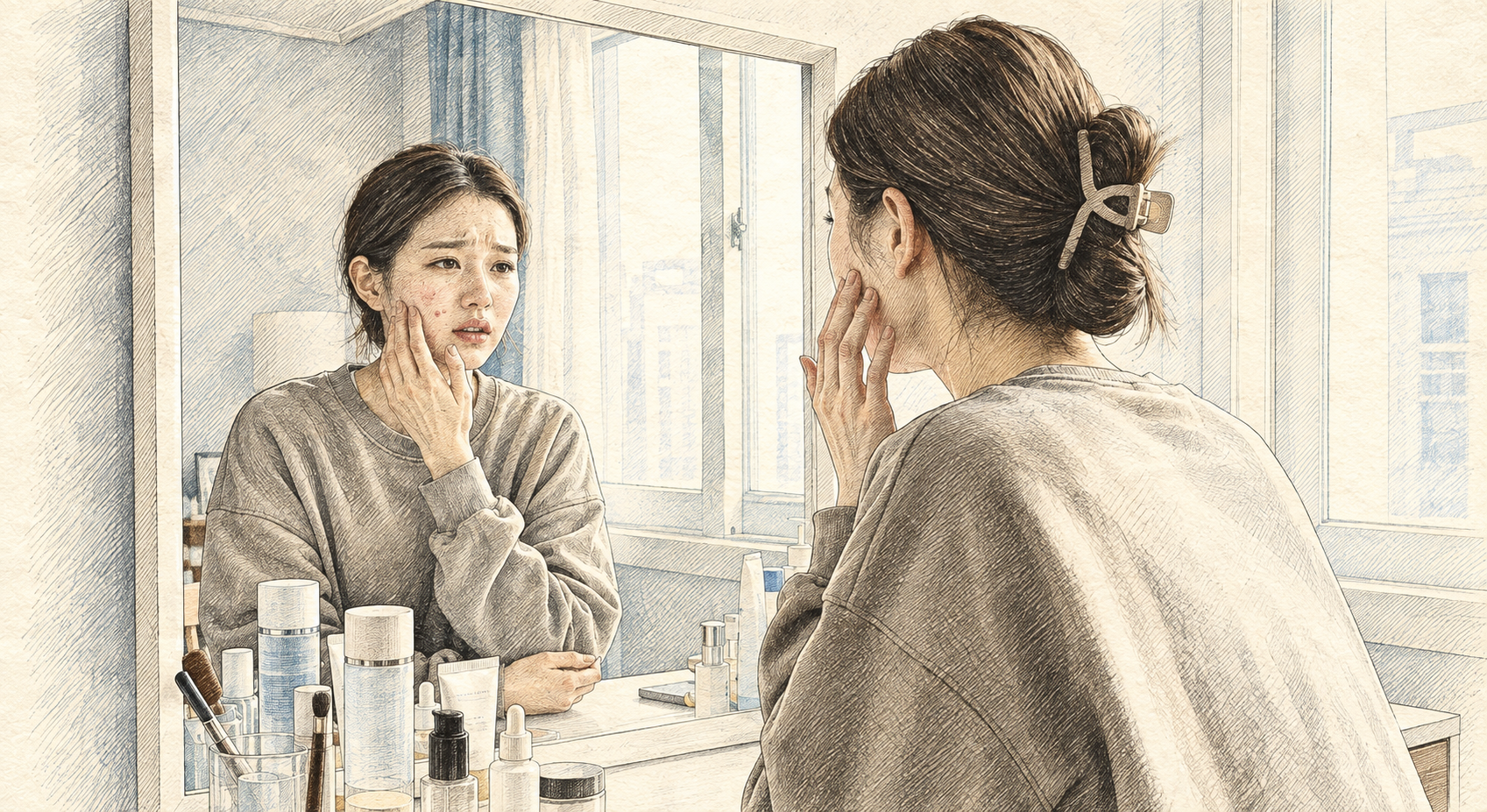 Suddenly getting skin trouble in the morning is always stressful.
1. Why on earth does acne occur?
That annoying acne... Why on earth does it happen?
It is common to think that acne is simply caused by "too much sebum."
However, in reality, it is a skin disease that manifests through a much more complex process .
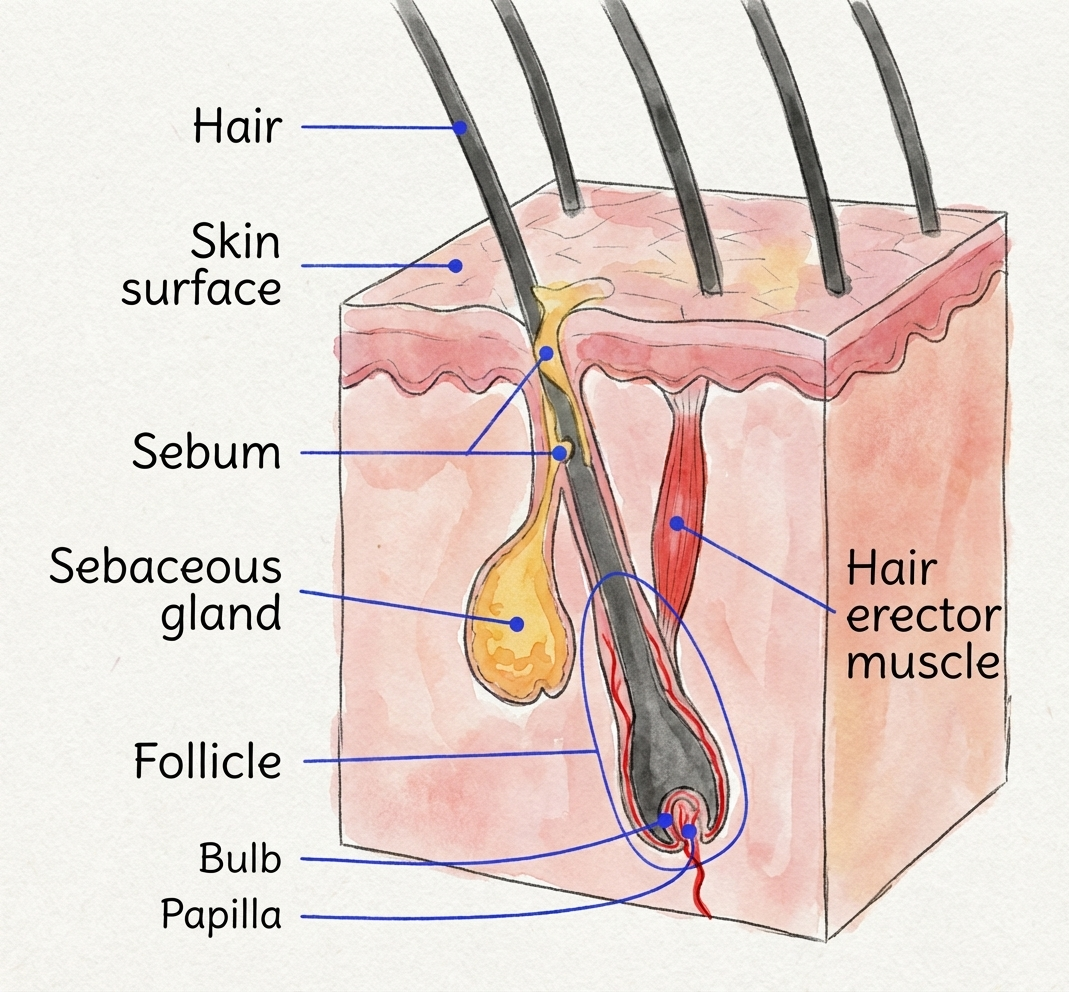 Structure of the sebaceous gland
New dead skin cells are produced inside the skin every day, and sebum is secreted from the sebaceous glands .
This sebum is a substance originally necessary to protect the skin and keep it moisturized.
However, if dead skin cells fail to shed normally at the pore opening for various reasons and accumulate,
Sebum cannot be expelled and remains inside the pores .
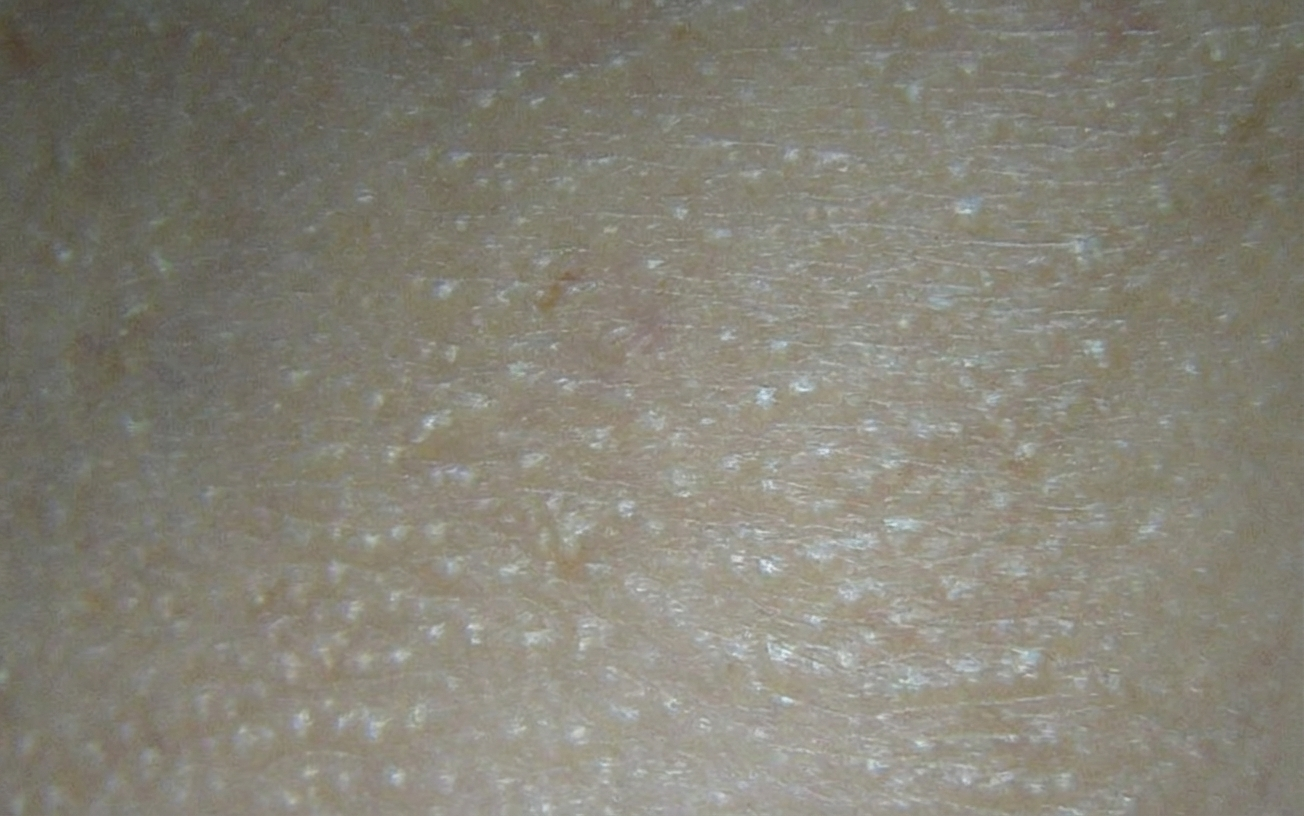 Microcomedone (a mass of sebum and dead skin cells that cannot escape due to a blocked opening)
In Dermatology, this condition, where sebum and dead skin cells begin to accumulate little by little inside the pores, is called microcomedone .
In fact, this stage is the very beginning of acne.
When pores become clogged in this way, an environment is created where acne bacteria (Cutibacterium acnes) can easily multiply.
As the bacteria multiply, an inflammatory response occurs, developing into the red acne or pus-filled acne that we commonly see.
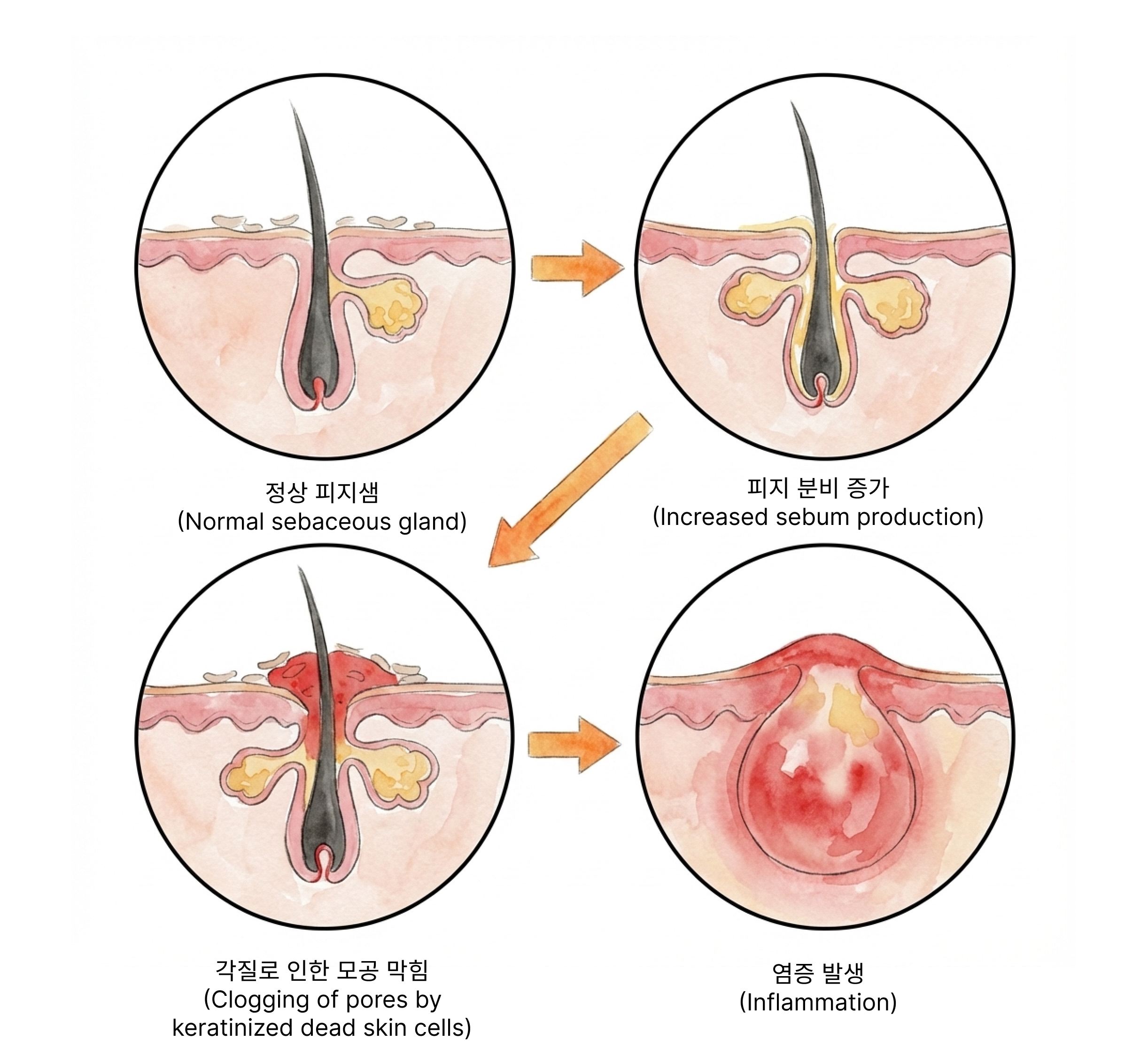 Increased sebum secretion -> Blockage of dead skin cells at the pore opening -> Proliferation of acne bacteria -> Inflammatory response
2. What are the types of acne?
Sebum accumulates in clogged pores, acne bacteria grow, and full-blown acne begins.
Non-inflammatory acne that has grown in size but has not yet developed an inflammatory response develops one step further into inflammatory acne once an inflammatory response occurs.
Let's learn about the types of acne .
1) Non-pustular acne
(1) Whitehead
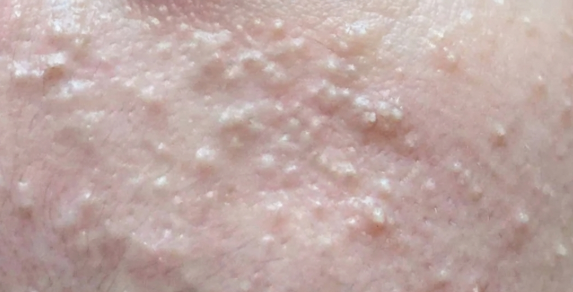 Closed comedones, which are pores that are closed and filled with sebum.
( 2) Blackheads
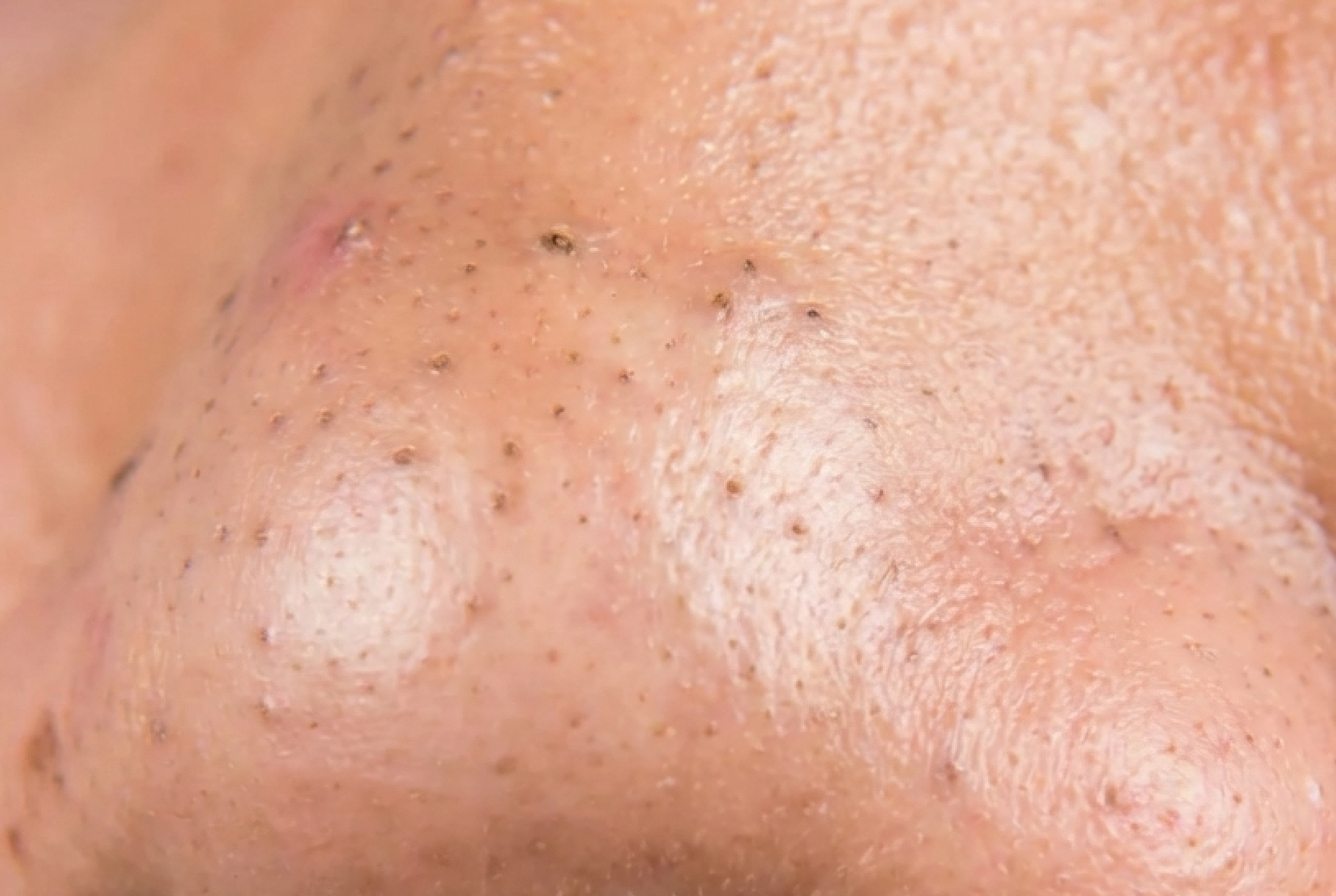 Open comedones, which appear black when sebum comes into contact with air after the pores open.
Up to this stage, it is acne without inflammation ( comedonal acne ). This is the stage commonly referred to as milia .
However, if an inflammatory reaction begins to occur inside, it develops into what we commonly call pustular acne .
2) Pustular acne
(1) Papule acne
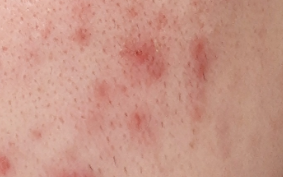 Intermediate form between acne lesions and non-inflammatory acne lesions
A papule is an inflammatory, hard lump of skin with a diameter of about 0.5 cm to 1 cm.
It appears as a small, hard, red lesion without pus inside.
(2) Pustule acne
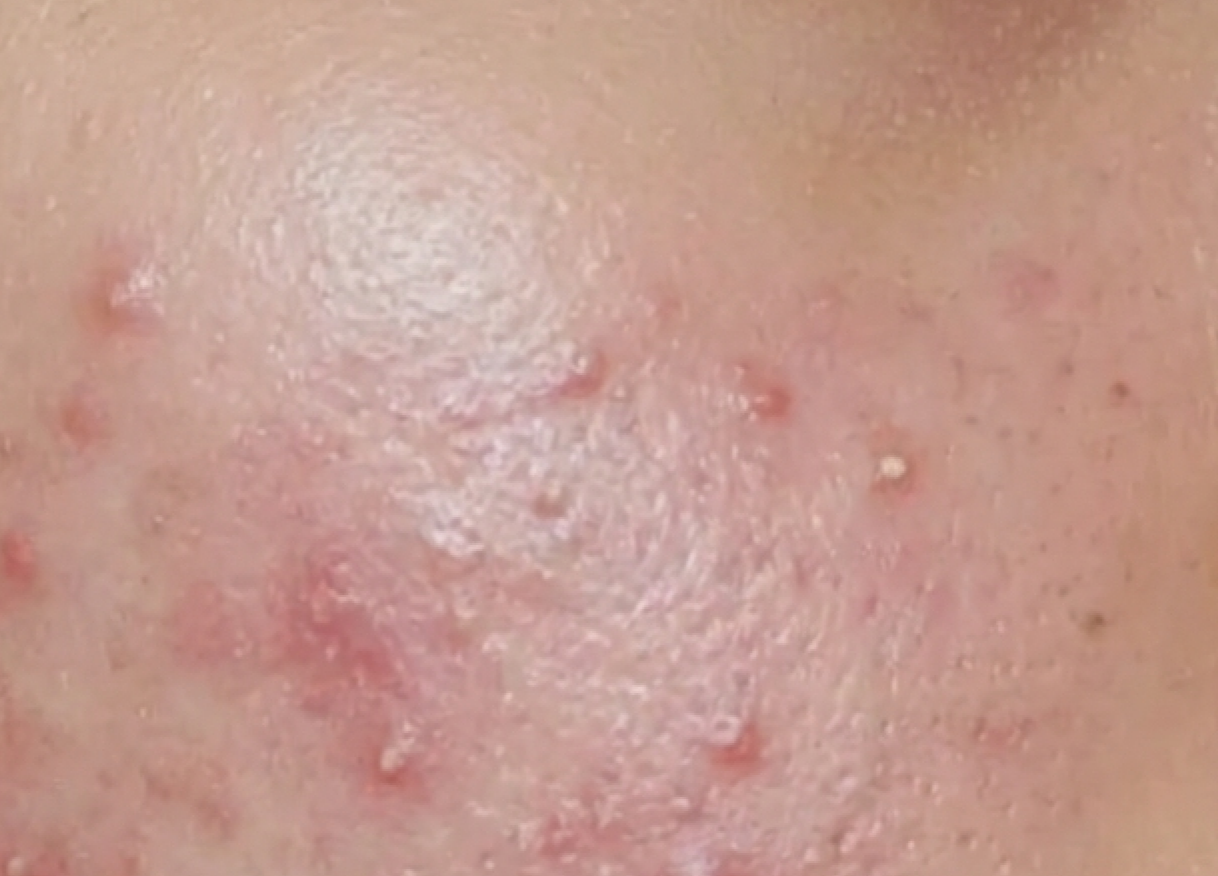 A raised pocket filled with pus from an inflammatory acne lesion
A pustule is small and round in shape, similar in size to a papule, which is the precursor to a pustule, but
The difference from a papule is that it contains pus inside.
It is best not to touch pus-filled acne, as squeezing it yourself can cause more severe inflammation.
( 3) Cystic acne (cyst)
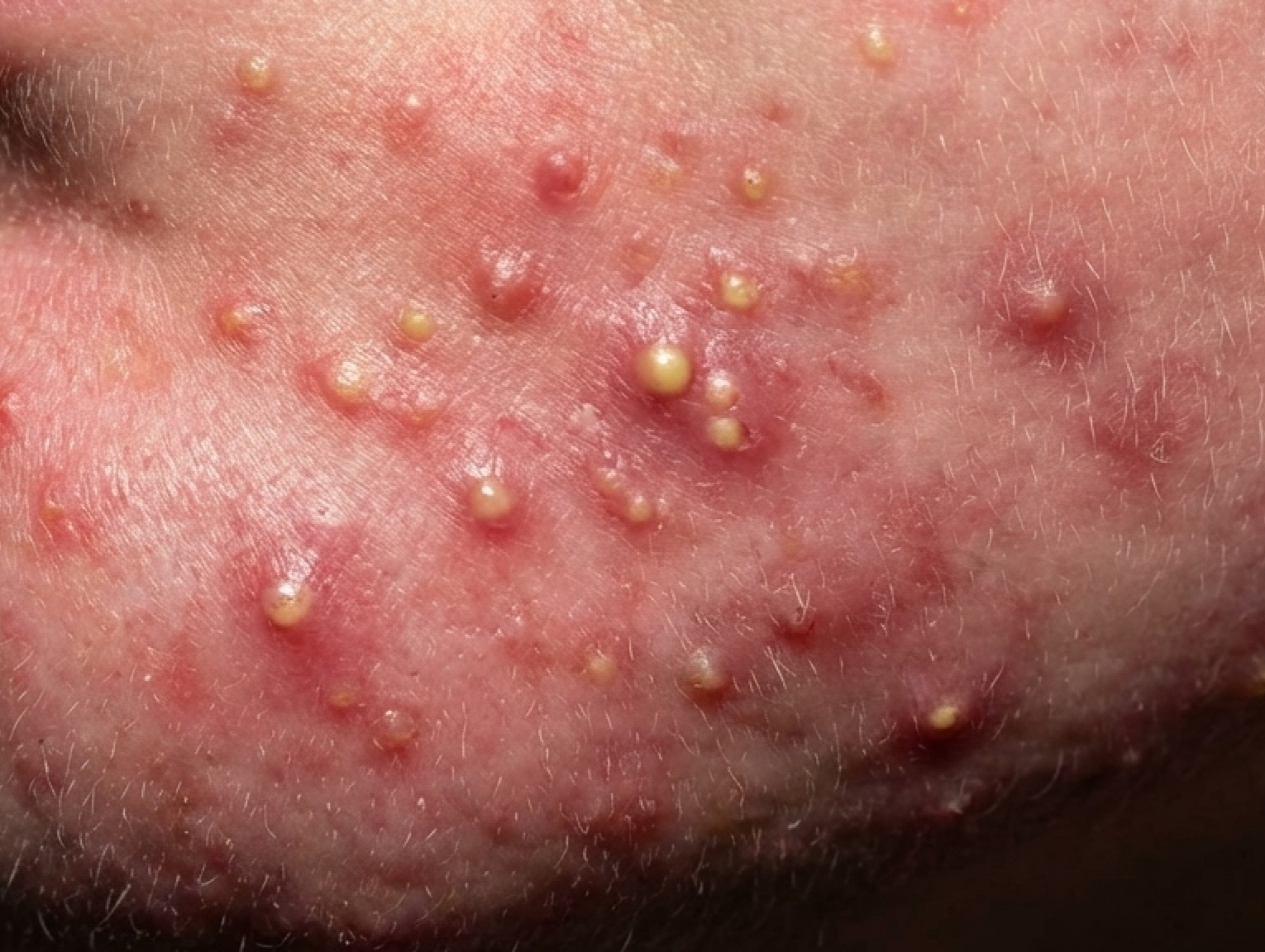 One of the deepest and most inflammatory forms of acne
Cystic acne refers to a condition in which large inflammatory lumps and pus pockets (cysts) form inside the skin.
Active treatment, such as antibiotics and inflammation control, is necessary.
(4) Nodule acne
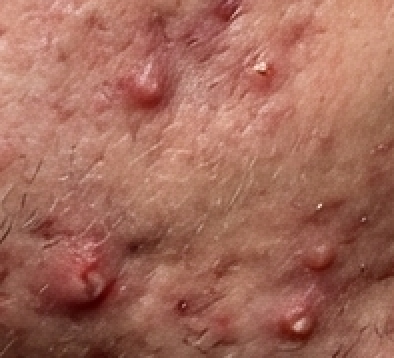 Severe inflammatory acne in which hard, inflammatory nodules form
Nodular acne is a form that is usually deeper and larger in inflammation than regular acne, is painful , and is highly likely to leave scars .
3. The progression of acne
Microcomedone → Non-inflammatory acne (whiteheads / blackheads) → Inflammatory acne (papular / pustular / cystic / nodular)
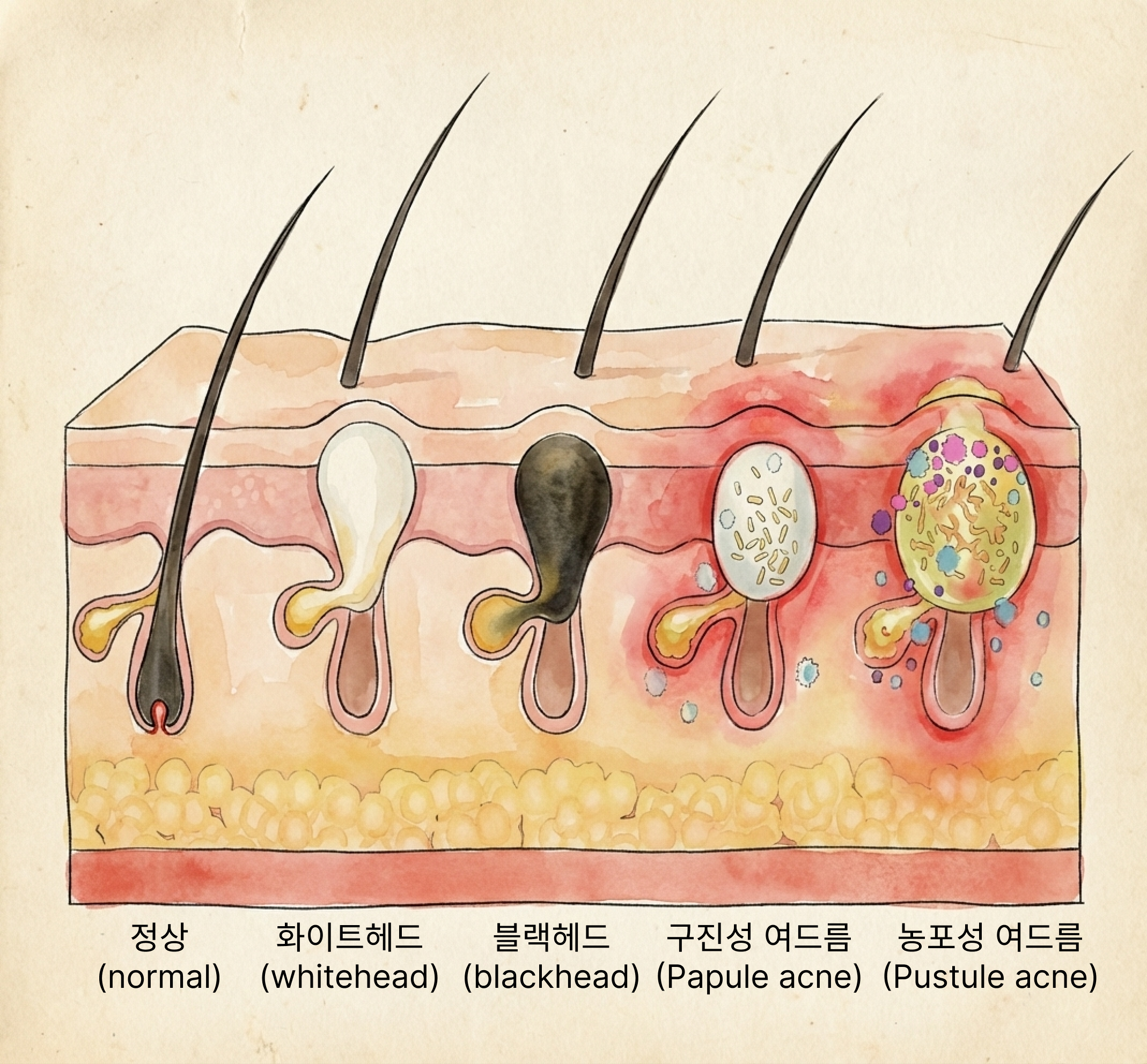
Therefore, in acne treatment, it is not simply about treating visible acne, but,
It is very important to manage the process of clogged pores well before this stage.
4. Summary
Now that you know the reason why acne occurs
In the next post, we will look into ways to prevent acne .