



If your acne has worsened due to fitness supplements, how should you supplement your protein?
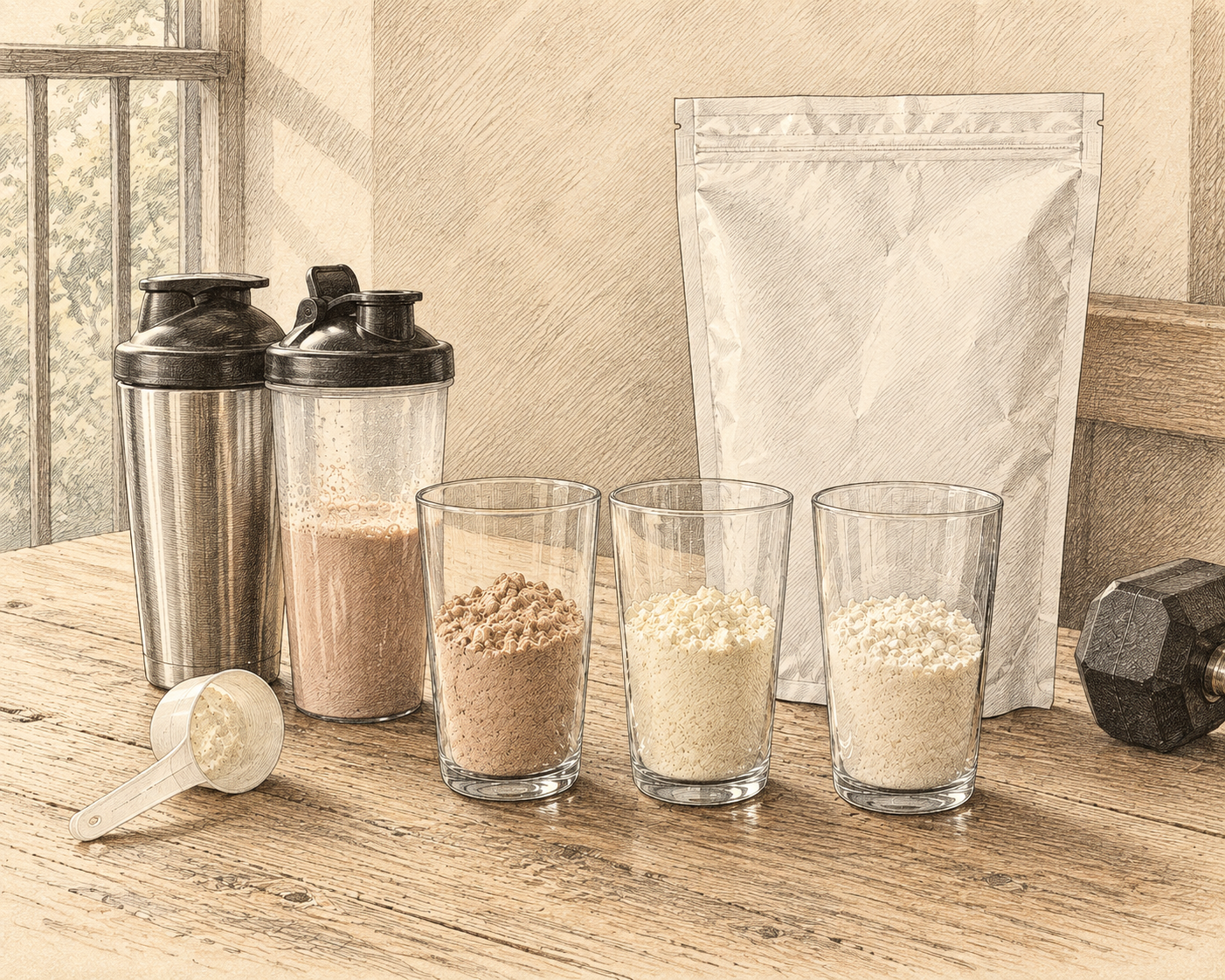 Protein powder that tastes really good these days
When treating patients who are struggling with acne, I frequently receive questions about cases like this.
I started taking protein supplements while working out, and my acne suddenly got worse.
Can protein supplements cause acne?
To start with the conclusion
Some protein supplements can actually worsen acne.
But even so,
You cannot give up protein supplementation itself.
In most cases, simply changing the type of protein can significantly reduce skin problems.
today
1. The relationship between protein supplements and acne
2. Differences between Whey Proteins (WPC, WPI, WPH)
3. Protein recommended for people prone to acne
Let me summarize these three points.
1. The relationship between protein supplements and acne
The main problem is
It is whey protein .
Whey protein increases sebum secretion through a series of processes in the body and causes acne (explained in detail in the previous post!!).
But isn't there no protein source as efficient as fitness supplements...?
In that case, what method should I use?
2. Types and Differences of Whey Protein
Whey protein is also divided into three types.
1) WPC (Whey Protein Concentrate)
2) WPI (Whey Protein Isolate)
3) WPH (Whey Protein Hydrolysate)
The names are complicated, so let's gather them and take a look.
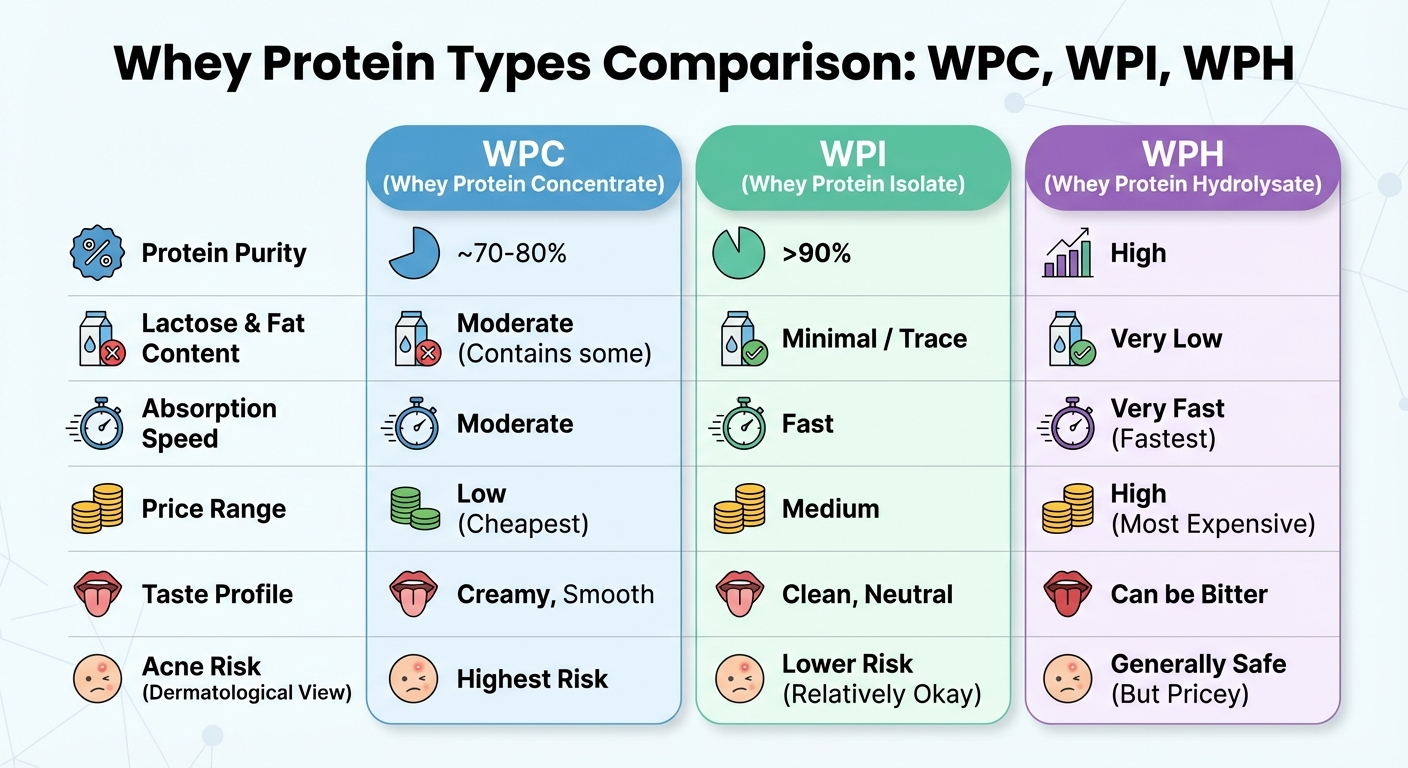
Among these, the one most closely related to acne is WPC.
1)WPC (Whey Protein Concentrate)
It is the most basic form of whey protein .
It is produced by separating the whey and undergoing a relatively simple filtration process.
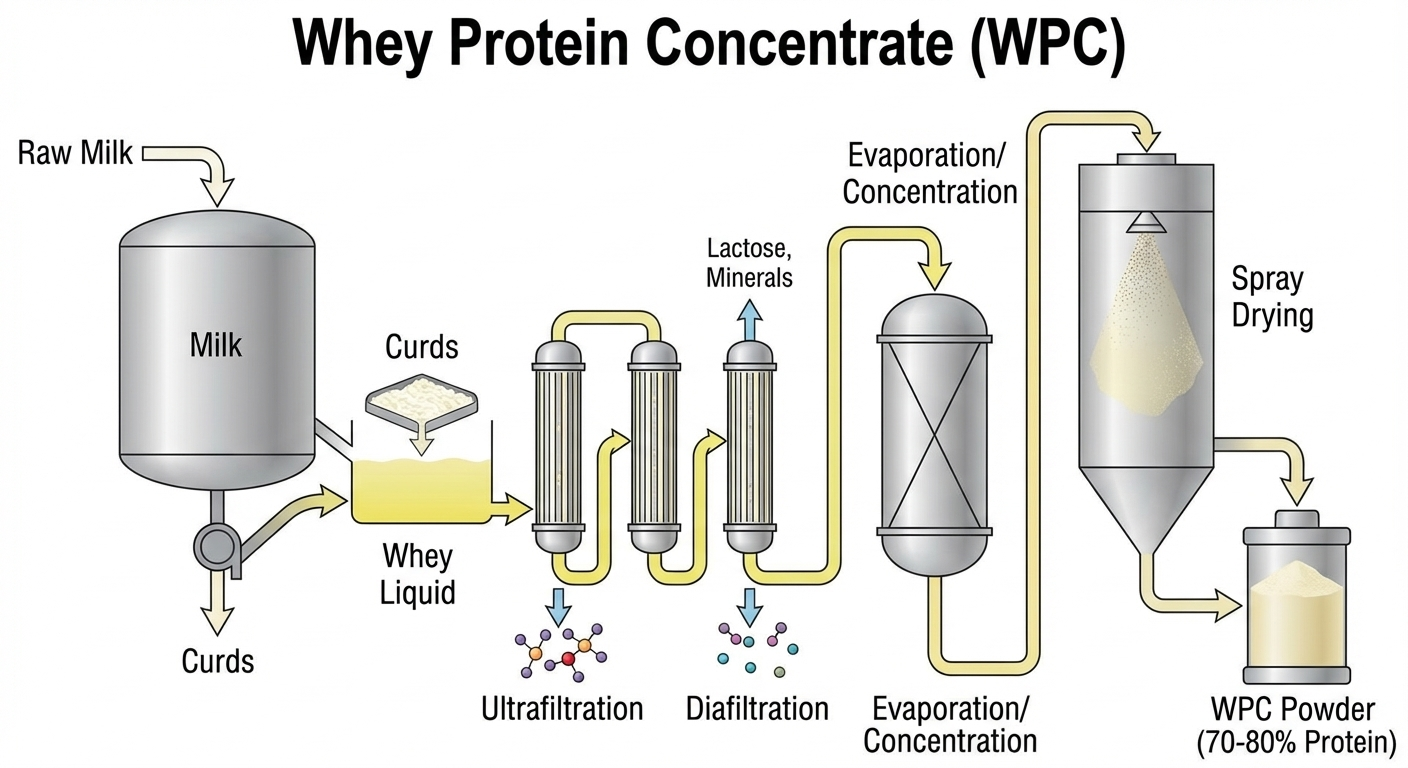 WPC manufacturing process. Raw milk undergoes a process to become WPC powder.
So, in addition to protein, lactose and fat
Some remains.
The protein content is usually around 70 to 80 percent.
The advantage is
- The cheapest price
- It has a slightly sweet taste , so it goes down smoothly.
no see.
However, because lactose remains, symptoms such as abdominal bloating and diarrhea may occur after consumption
Side effects may occur.
Also, from a skin perspective...
WPC is the type that causes the most problems for people prone to acne.
So if your acne got worse after taking supplements
It is recommended to first check if it is a WPC product.
2)WPI (Whey Protein Isolate)
WPI is a protein obtained by further purifying WPC.
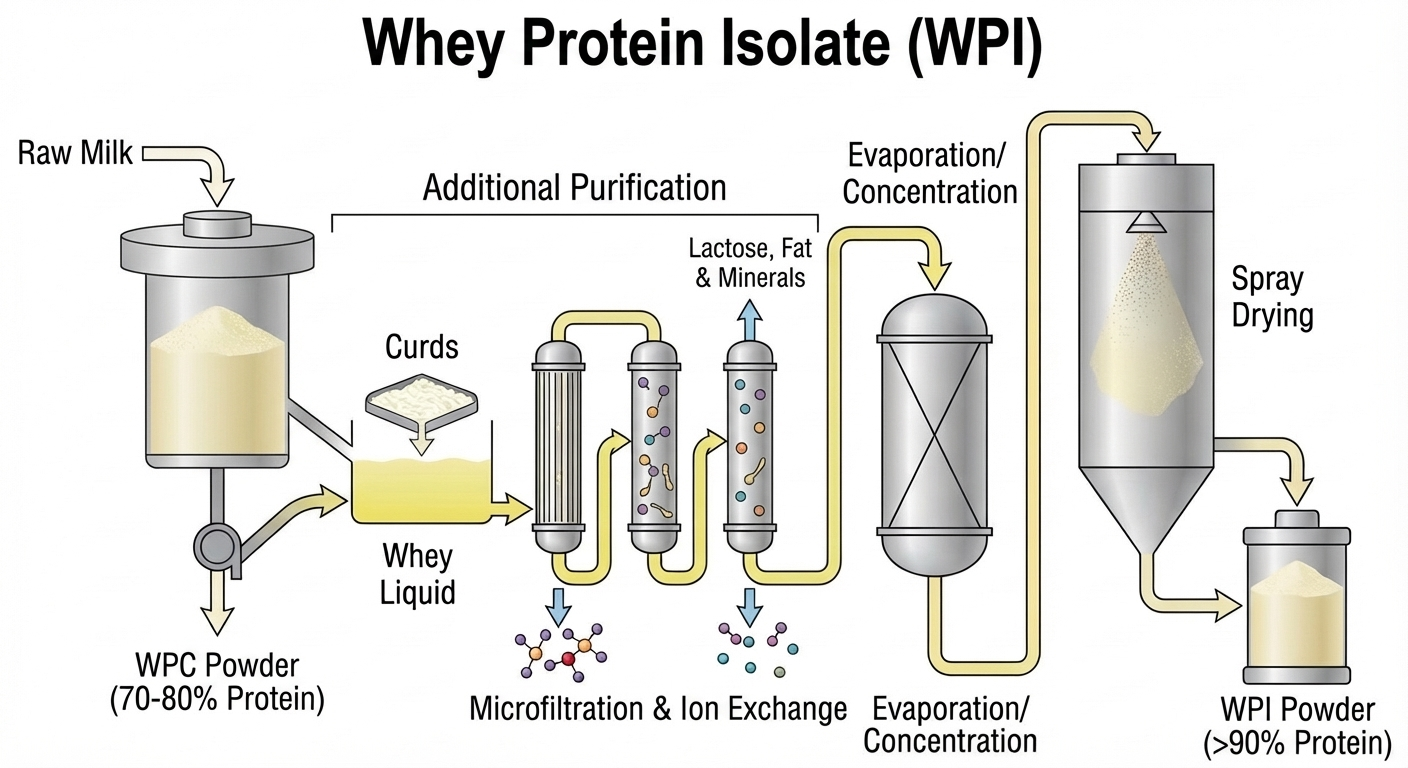 WPI manufacturing process. The purification process becomes more complex, resulting in a higher protein content.
After undergoing an additional filtering process
Removes most of the lactose and fat .
So, the protein content goes up to over 90% .
So, even people with lactose intolerance can eat it relatively comfortably.
Also, from a skin perspective
In some cases, switching from WPC to WPI can reduce acne .
So, for those who are worried about their skin
I recommend switching to a WPI product first.
3)WPH (Whey Protein Hydrolysate)
WPH is a form of whey protein that has been pre- digested by enzymes .
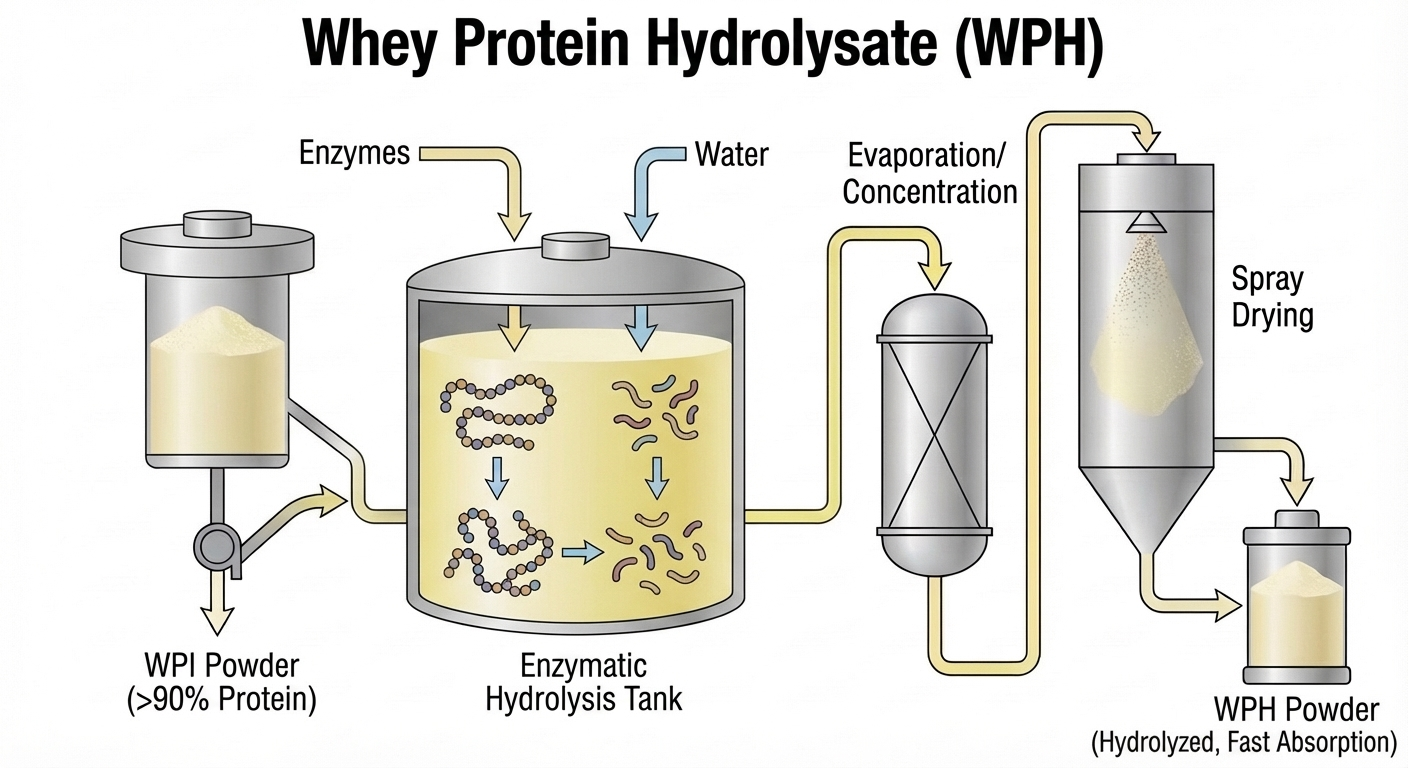 WPH manufacturing process. Filtration is performed after decomposition using enzymes.
Simply put, it is a state where the protein has already been cut into small pieces.
Therefore, it is absorbed the fastest and places less strain on the stomach.
To speed up protein absorption immediately after exercise
It is widely used in high-end sports supplements . (You can think of it as premium gasoline for cars.)
However, the price is the most expensive.. It doesn't taste good.(May taste slightly bitter)
3. Protein recommended for people prone to acne
If whey protein does not agree with you
You can consider the following proteins.
1) Plant-based protein
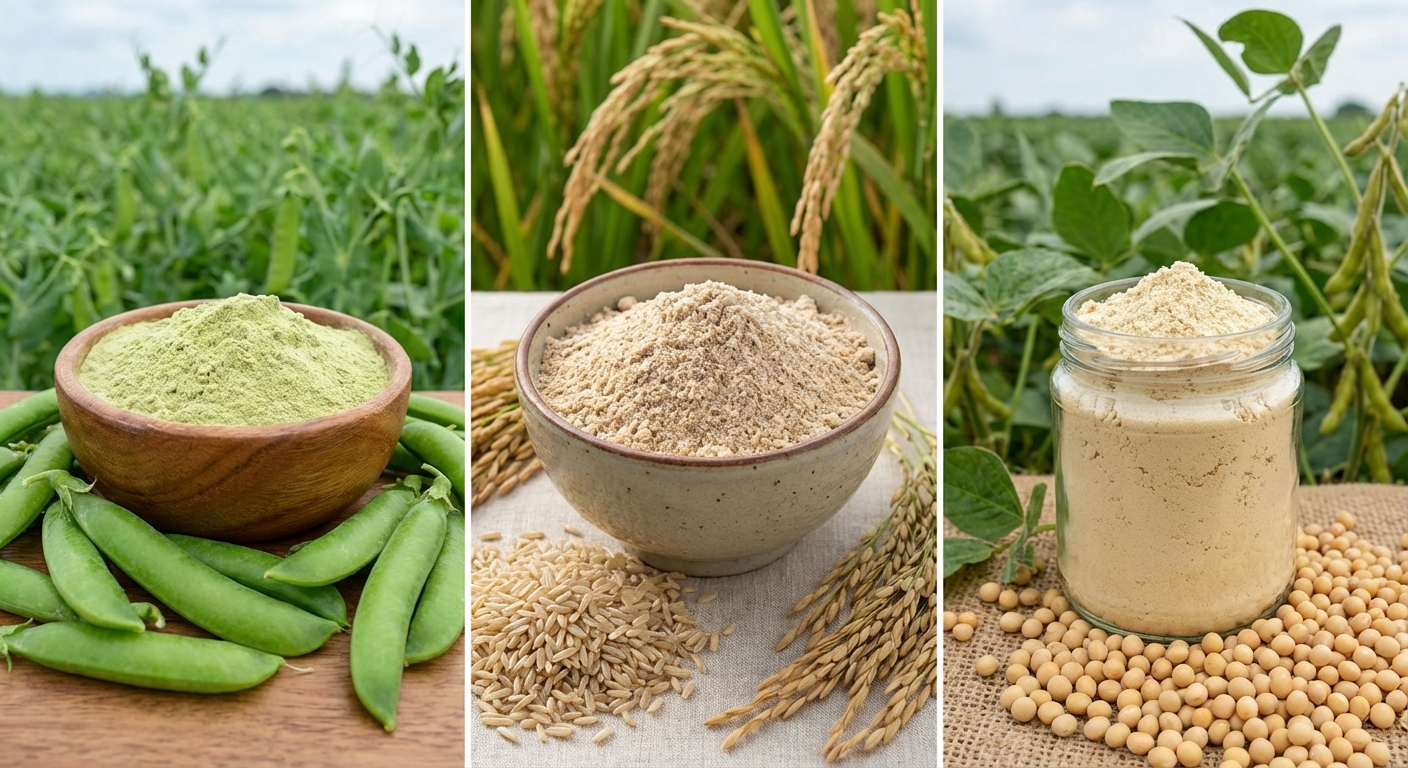 Plant-based protein that looks healthy just by looking at it
Representative examples include pea protein , brown rice protein , and soy protein .
The advantage is that it causes less IGF-1 irritation, so it is less likely to trigger acne, but you shouldn't expect much in terms of taste.
2) Egg protein
It is an egg white-based protein.
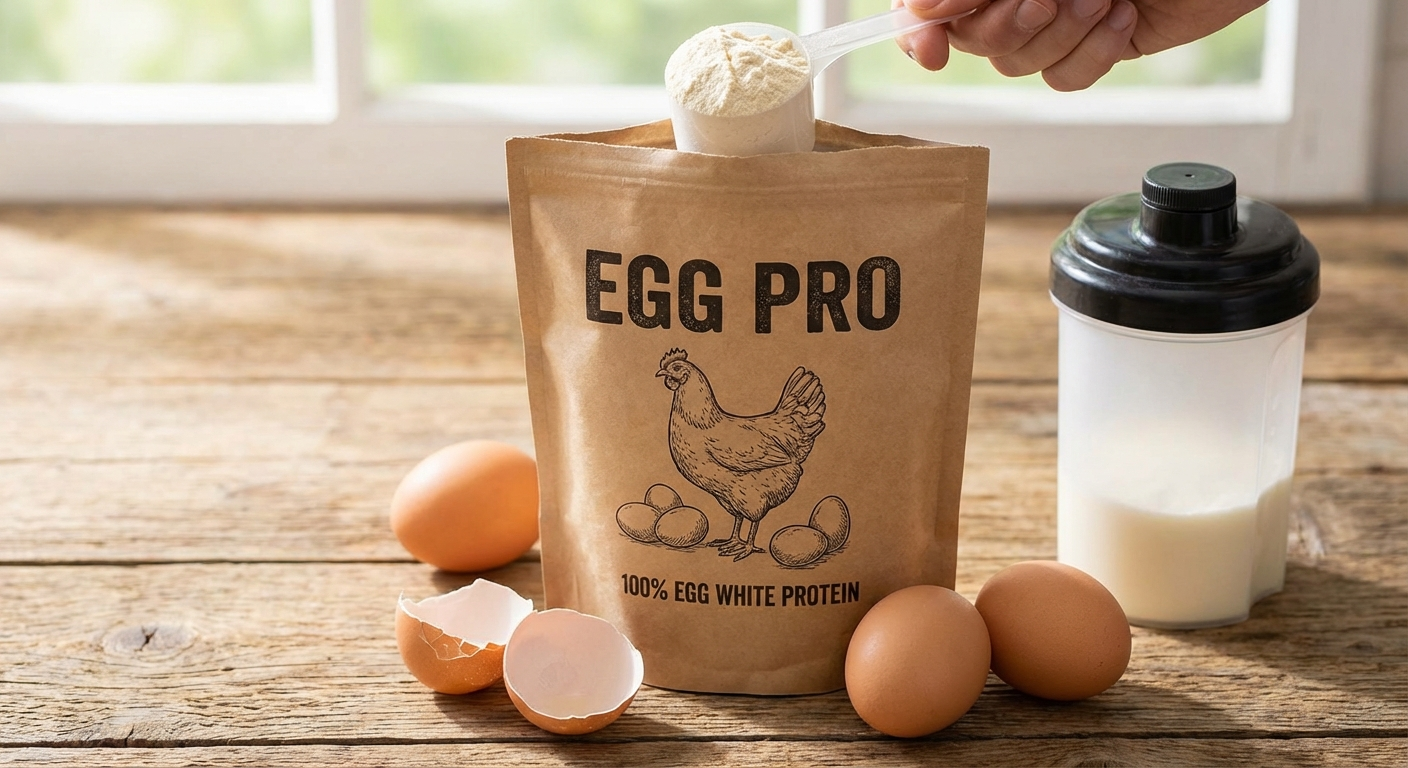 Egg protein available on the market
Egg protein available in convenient powder form
It has an excellent amino acid composition and low IGF-1 stimulation . However, the high price is a drawback.
If you don't want to skimp on protein supplementation and your health , I highly recommend this.
3) Casein protein
This product is another type of milk protein, although it is a bit out of fashion.
It is absorbed more slowly than whey protein and causes less insulin stimulation.
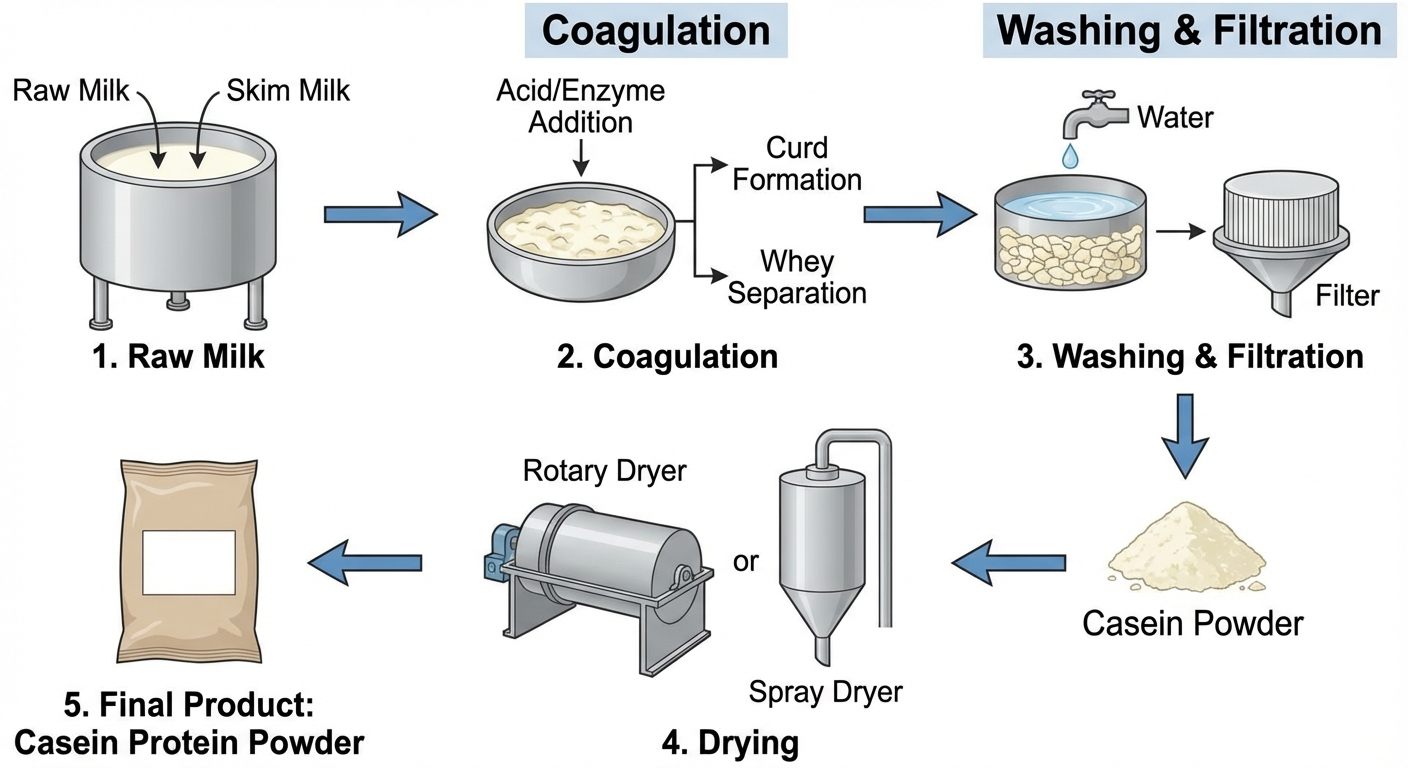 Milk contains 20% whey protein and 80% casein protein.
However, people who are sensitive to milk itself may develop acne.
Personally, I don't really recommend it.
4) The best protein is natural food★★★
Actually, even if you don't necessarily need to take protein supplements
You can get enough protein from food.
for example
- Chicken breast (23g per 100g)
- Eggs (13g per 100g)
- Fish (23g per 100g)
- Tofu (8g per 100g)
- Greek yogurt (10g per 100g)
It is the same food.
Natural protein is safer for the skin than processed protein powder.
However, there is a major problem. It is expensive and troublesome to make .
5. Summary
If your acne has worsened due to fitness supplements
I recommend changing the order as follows.
1) Change WPC → WPI
2) If acne still persists, switch to plant-based protein.
3) Consume protein from natural foods if possible.
If your acne suddenly worsened after you started exercising
Not just a simple skin problem
There is also a possibility of protein supplement acne, specifically whey protein acne.
In such cases, simply changing the type of protein often improves the skin.
Until the day we all have healthy bodies and healthy skin!!
Thank you for reading this far.