


Juvelook Volume
Juvelook Volume
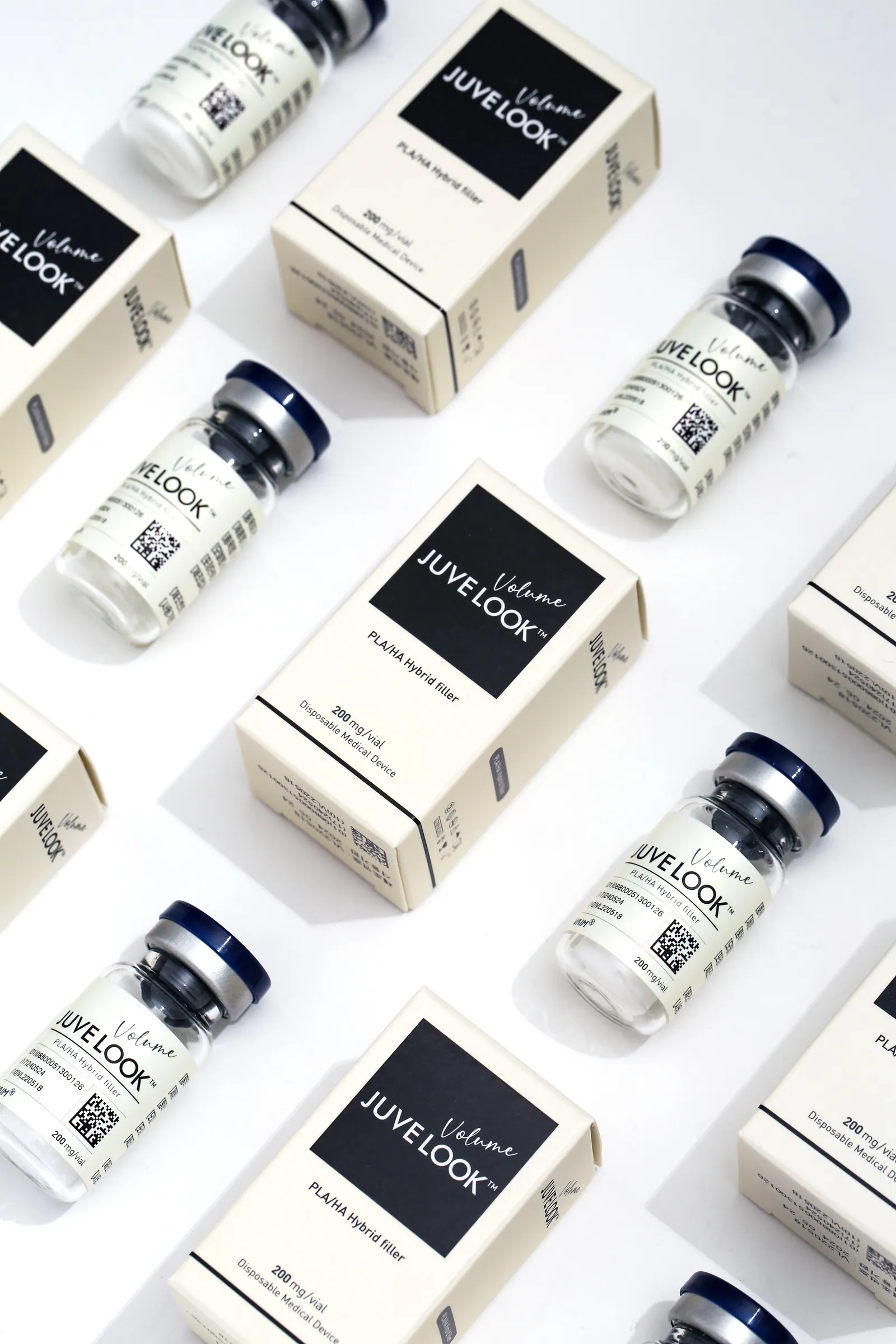
As my collagen grows, the volume increases.
Juvelook Volume
Juvelook Volume
If your face looks sunken even though your body weight remains the same, the support underneath the skin This may be because the supporting strength has weakened due to a decrease in collagen.
The Juvelook volume is PDLLA 170mg and hyaluronic acid 30mgIt is a tissue repair material injected into the subcutaneous layer, which stimulates the growth of collagen and elastin around the particles. It creates volume in a different way than hyaluronic acid fillers, which fill volume immediately upon injection.
So it doesn't change drastically all at once, It gradually fills up over time.





About Juvelook Volume
PDLLA, the main ingredient of Juvelook Volume, is
What is the component, and how does it work?
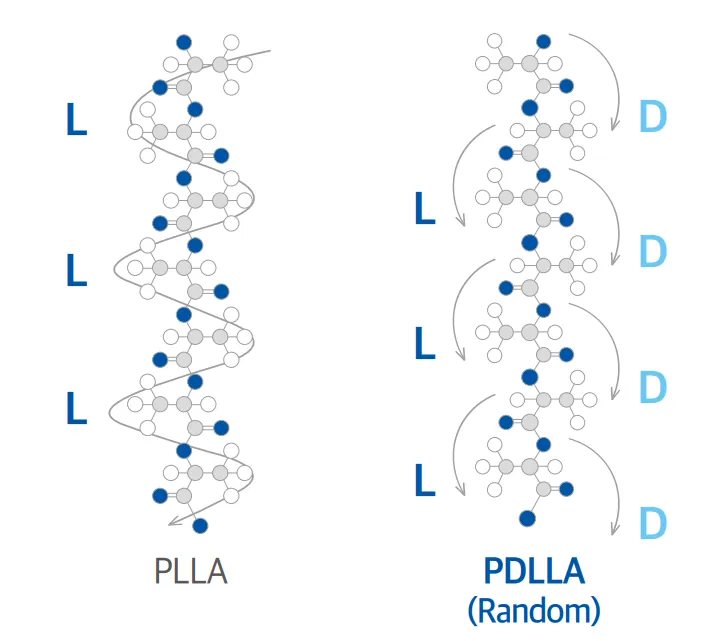
What is the ingredient PDLLA?
The main ingredient of Juvelook Volume PDLLA is poly-D,L-lactic acidIt is. It is a polylactic acid derivative that breaks down in the body, but the D and L forms combine randomly. Amorphous that does not form a decisionThe difference is that... The particles have a hollow, porous network structure.
PLLA has a crystallinity of 37% and takes more than 24 months to decompose, while PDLLA is amorphous and takes 12 to 16 months. The manufacturing technology for the network structure is registered as a patent (No. 10-1725279).
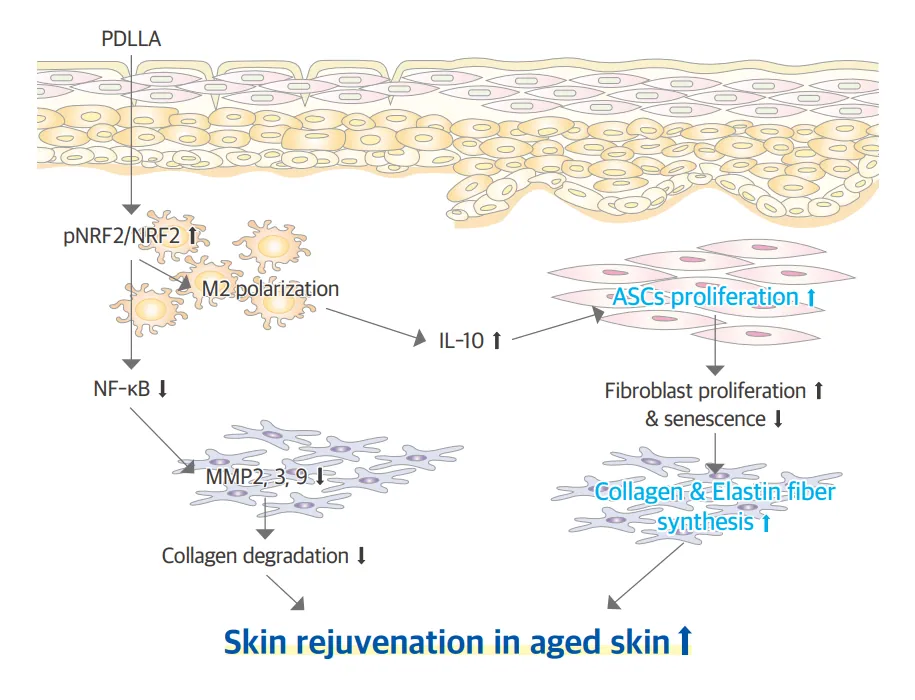
It works in two ways.
PDLLA lowers collagen-degrading enzymes (MMP2, 3, 9) To minimize the breakdown of existing collagen And, by increasing the fat stem cells so that new collagen and elastin fibers are created Helps.
It works differently from hyaluronic acid fillers, which fill volume immediately upon injection. We recommend different options based on your desired results.
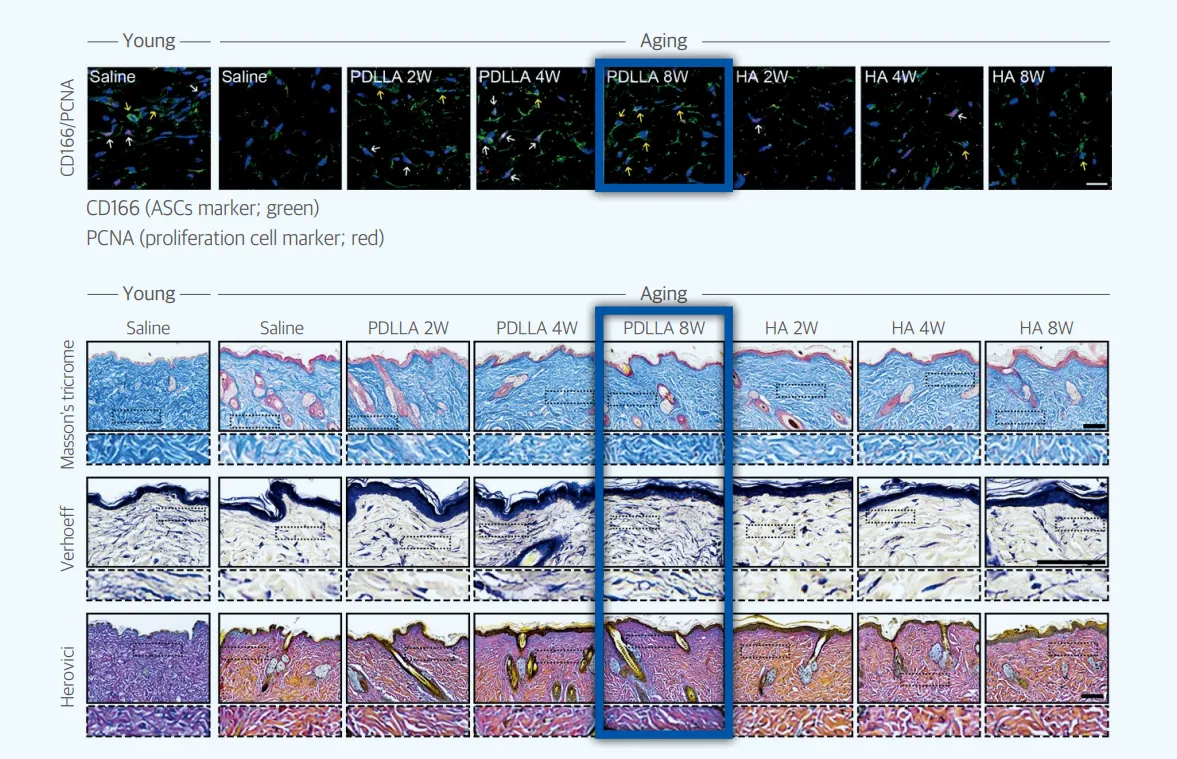
The changes are most pronounced around 8 weeks.
In a study in which PDLLA was injected into the dermis of aged experimental animals, the density of adipose stem cells, collagen, and elastin fibers Starts to increase from week 2 and is most pronounced at week 8 It has increased.
Results in humans may differ from those of animal experiments, and individual differences exist depending on the number of trials and the course of the process.
How It Works
Juvelook Volume Working Principle
After completing the PDLLA, transfer it to a cannula.
Precise injection into the subcutaneous layer (Sub-Q)
With MMP inhibition and adipose stem cell proliferation
New collagen and elastin fibers are generated
PDLLA degrades over 12 to 16 months.
The newly created organization remained in its place
Treatment Areas
Juvelook volume treatment area
Divide the sunken area into sections and inject.
The injection depth and volume vary depending on the site.
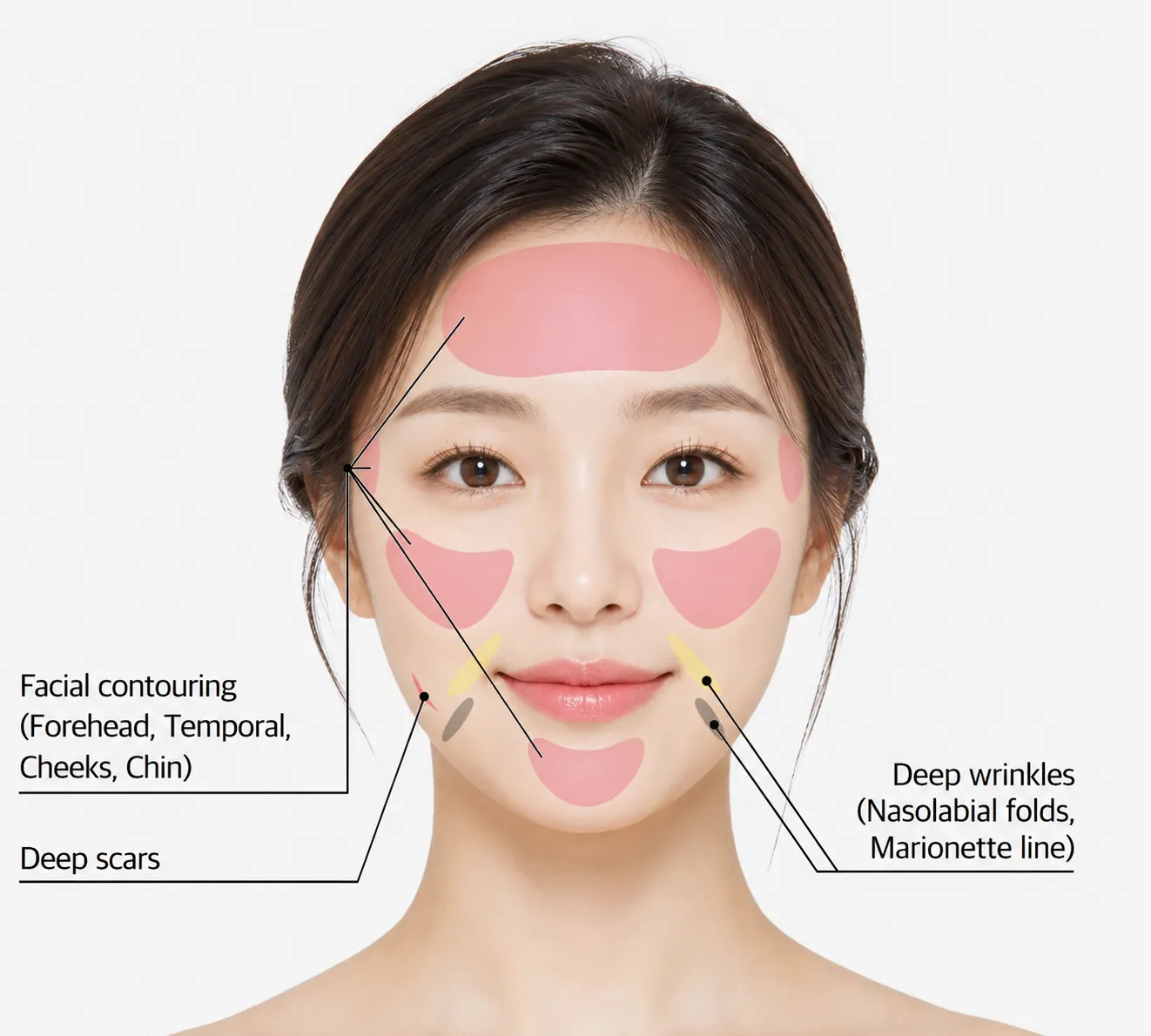
Do not use on areas with thin skin, such as under the eyes or on the lips.
Juvelook Volume is a product inserted into the subcutaneous layer, so it may be visible if inserted into a shallow layer.
If you are concerned about fine lines or skin texture, we recommend Juvelook Skin or Juvelook Eye, which are injected into the dermis layer.
Product
Juvelook Volume Product Information
We disclose the ingredients and content of the products used exactly as they are.
Juvelook Skin and Juvelook Volume are different products.
Juvelook Skin is injected into the dermis layer at 50mg/vial (PDLLA 42.5mg, Hyaluronic Acid 7.5mg) to aim for the improvement of fine lines and skin texture, and
Juvelook Volume is injected into the subcutaneous layer at a dose of 200mg/vial to improve contours and deep wrinkles.
Recommended For
I recommend this to people like this.

The weight is the same, but
People whose faces look sunken

To get a filler treatment
Those who feel burdened

Temples and cheekbones are sunken
The person who looks shady

Unobtrusively
Those who want to gradually improve
Doctor's Column
Treatment Stories written personally by the Director
This is a text written directly by the Director who actually performs this treatment , detailing the principles and standards.

The Episode Difference
Why It's Different
Every process has its own reason for the EPISODE.
01
As is - To be - Design
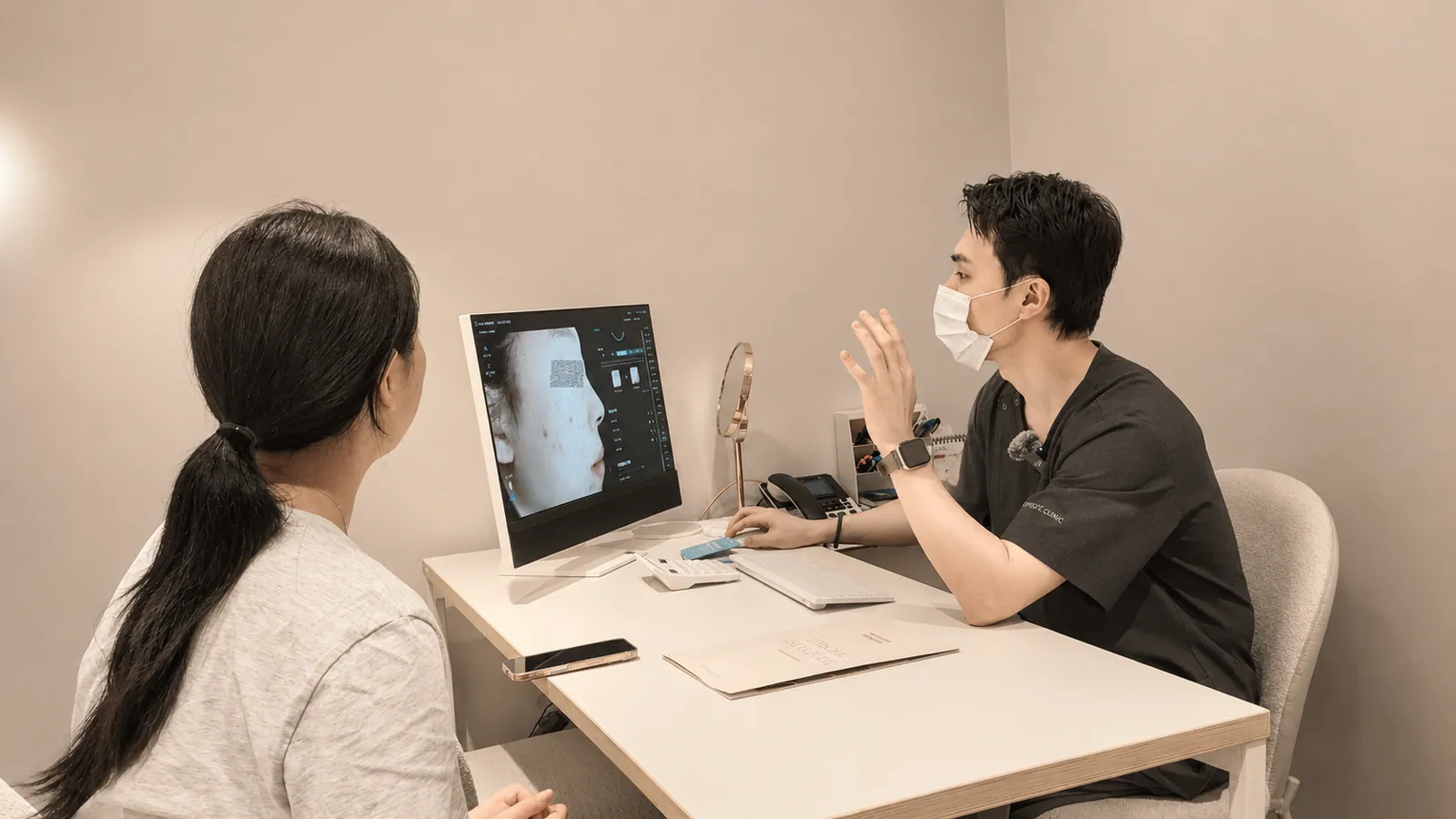
Analyze the extinguished area now,
To match the desired impression,
Plan the injection volume and sequence for each site.
02
Accurate product and capacity
I confirm it right before my eyes.
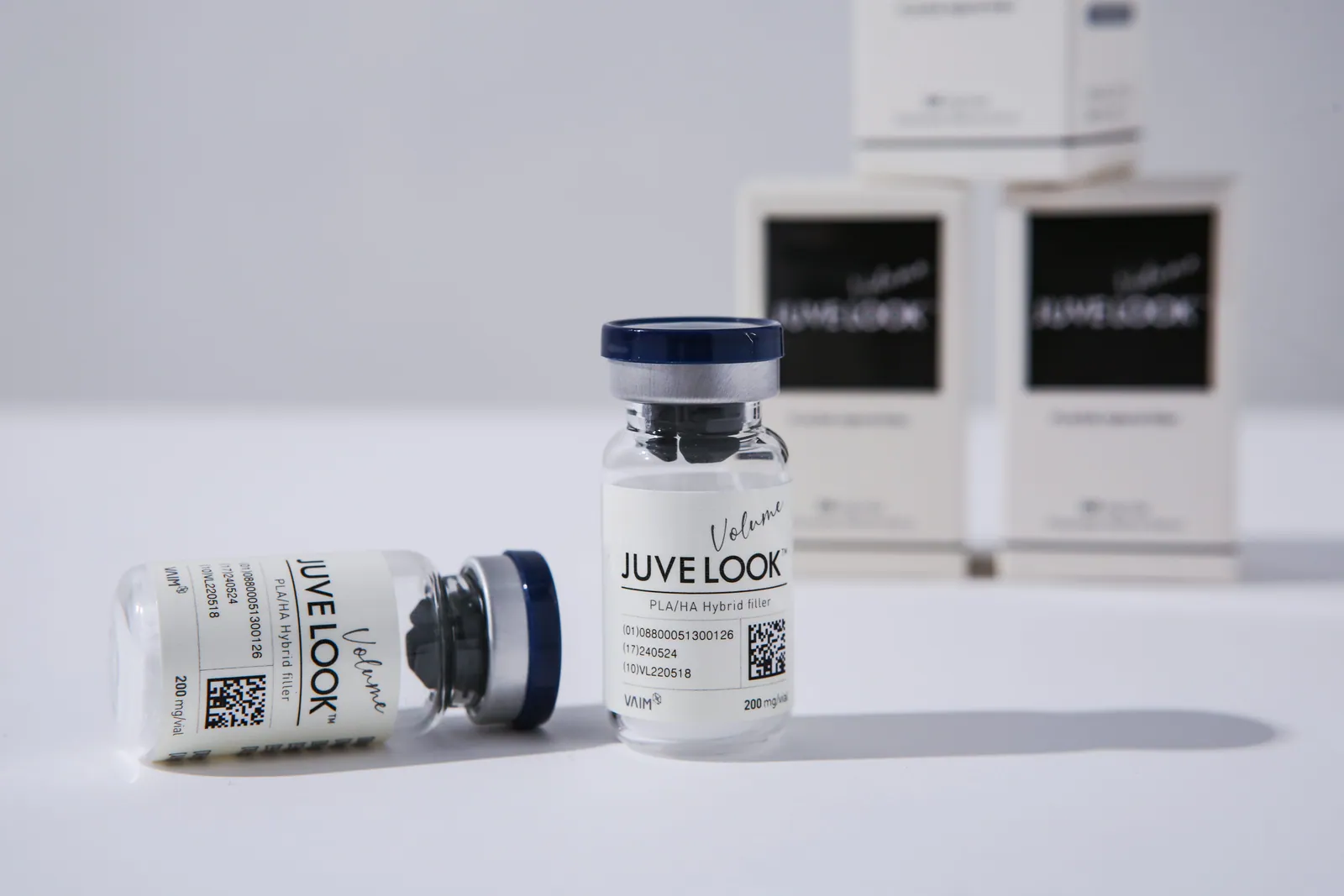
We prepare the product after verifying together whether it is genuine before the treatment , and We also show you the solution used for hydration and the volume used (in bottles, vials) exactly as they were.
RELIABILITY03
If you keep a record
The changes are more visible.

Since collagen is produced slowly over a period of two to three months, it is difficult to notice changes in the face that you see every day. Therefore, we keep a record of the products used and the injection amounts for each area in an online report, and compare this record when we see results.
RECORDSCare Process
Juvelook Volume proceeds through this process.

01
Anesthesia process

02
design

03
treatment

04
homecoming

05
Provision of treatment report
Some processes will be changed for the promotional treatment.
Notice
Please observe these points after the treatment .
-
1
The volume immediately after the treatment is due to the saline solution used to hydrate the product. It may feel like the volume decreases the next day as the moisture evaporates, but this is a normal process.
-
2
Juvelook Volume is a treatment performed three times at one-month intervals. Collagen begins to increase starting two weeks after the treatment and becomes most noticeable around eight weeks.
-
3
Please massage gently for 5 minutes, 5 times a day for 5 days. You must massage gently, as rubbing too hard can cause the particles to clump to one side.
-
4
Please avoid alcohol, strenuous exercise, saunas, and hot compresses for 24 hours after the treatment . Swelling and bruising may worsen.
-
5
Please avoid strong pressure on the treatment area, skin care, radio frequency, and ultrasound lifting for two weeks after the treatment . Time is needed for the area to settle.
-
6
Swelling usually subsides within 2 to 3 days, and bruising within 1 to 2 weeks. Injection marks can be covered with makeup starting the next day.
-
7
Please contact the hospital if severe pain, redness, heat, or a palpable lump persists at the treatment site. These are symptoms that require prompt examination.