


PCL Filler
PCL filler
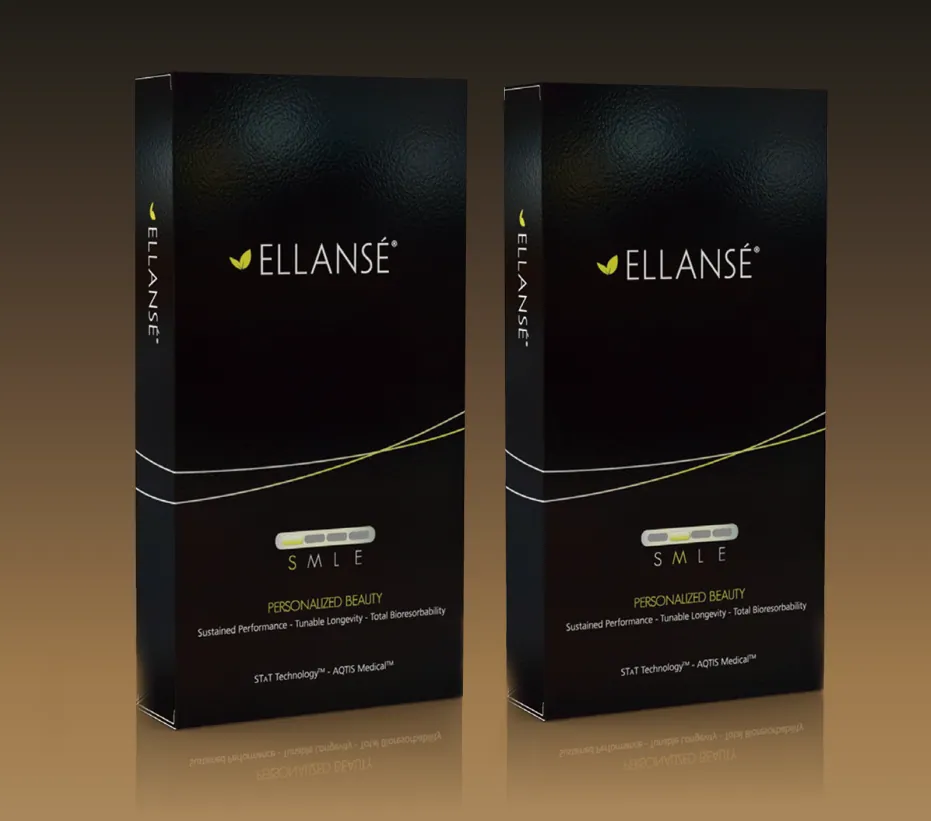
My collagen replenishes even after insertion.
PCL filler
PCL Filler
PCL (Polycaprolactone) is a material that has long been used as a surgical suture. It has been confirmed that it gradually decomposes and is completely absorbed within the body, and because it is so safe, it has also come to be used in cosmetic treatment.
PCL filler is a product consisting of very small, bead-shaped PCL mixed with a gel (CMC, Carboxymethyl Cellulose). Immediately after injection, the gel fills the sunken area, and subsequently, the PCL stimulates collagen production .
The way volume is maintained also differs. With hyaluronic acid fillers, the injected substance remains in place to preserve volume. With PCL fillers , your own newly created collagen fills the space. Therefore, it settles over time and lasts for a long time.
Why PCL Filler
Three differences in PCL fillers
Although they use the same name 'filler',
The way volume is created and maintained is different.
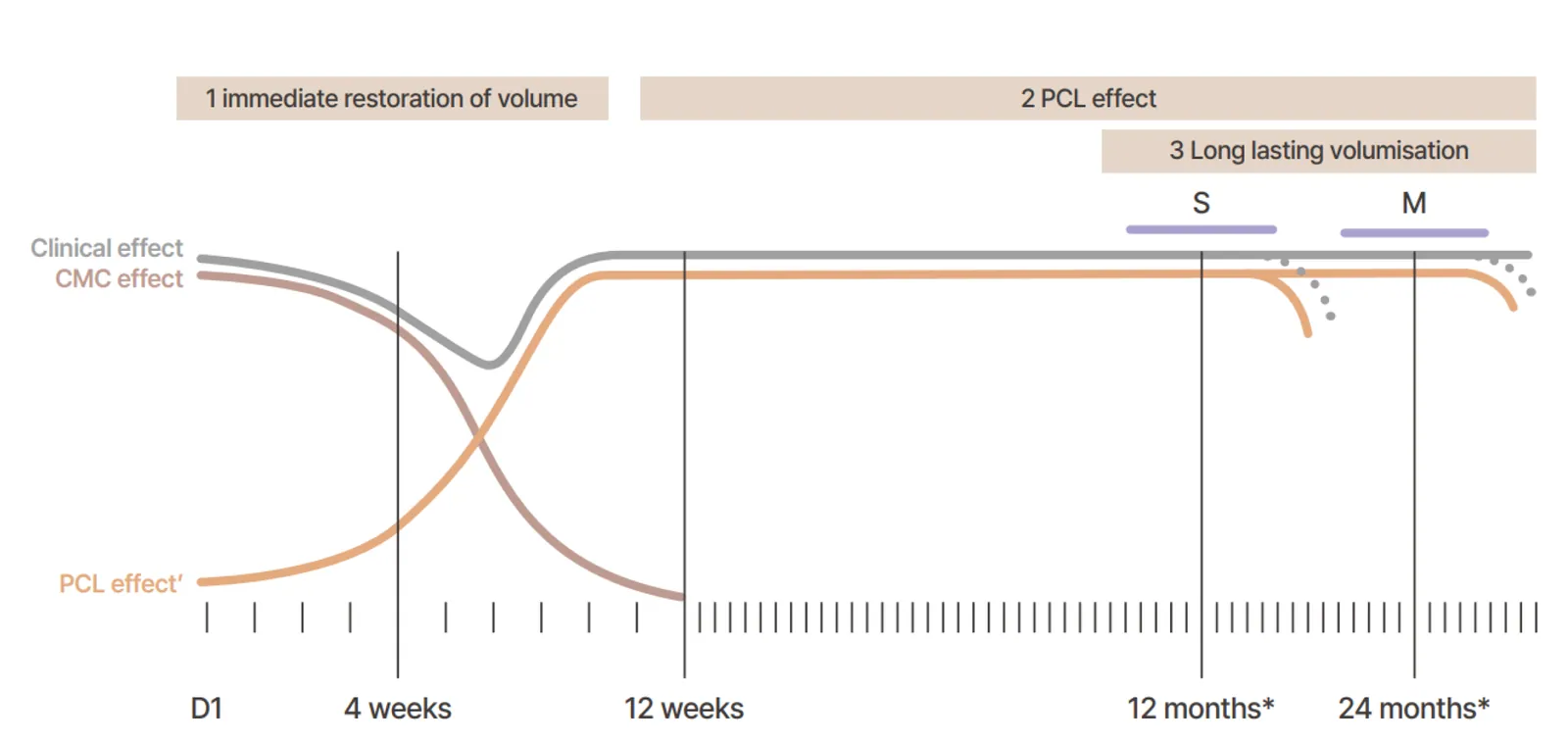
Immediate and long-lasting effects
In the early stages of the treatment , CMC gel fills the volume, and after 2 months, the new collagen created by PCL stimulation fills the volume.
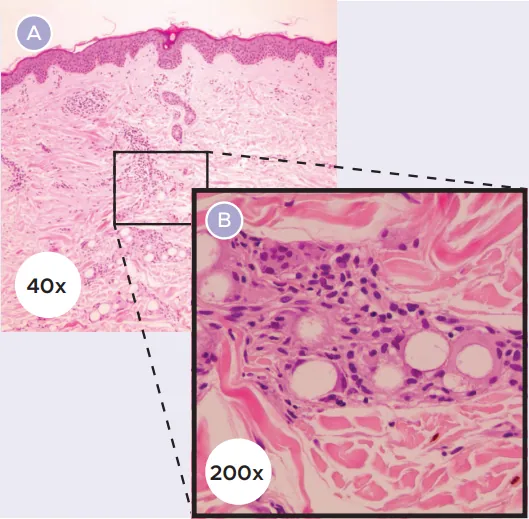
Elasticity also improves.
Type 1 and Type 3 collagen produced by PCL stimulation fills volume and supports the dermis, improving elasticity as well .
The figure shows PCL particles surrounded by collagen.
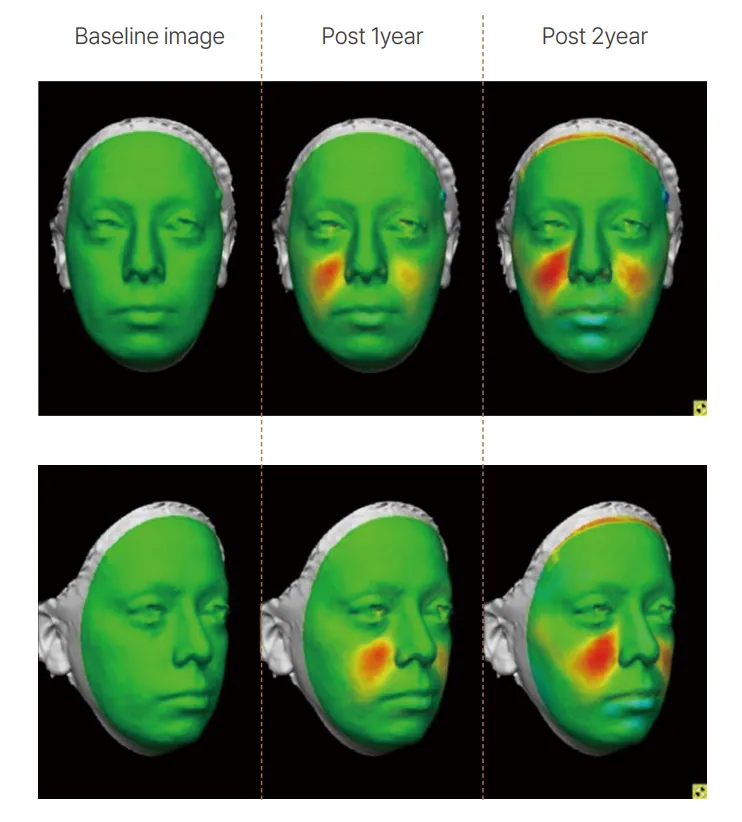
It lasts a long time.
Hyaluronic acid fillers typically last 6 to 12 months , while PCL fillers last for over 18 months . We recommend this for those who find it difficult to visit the clinic frequently or who want long-lasting results after a single injection.
How It Works
Principle of PCL Filler Action
As soon as I put it in
CMC gel fills the volume
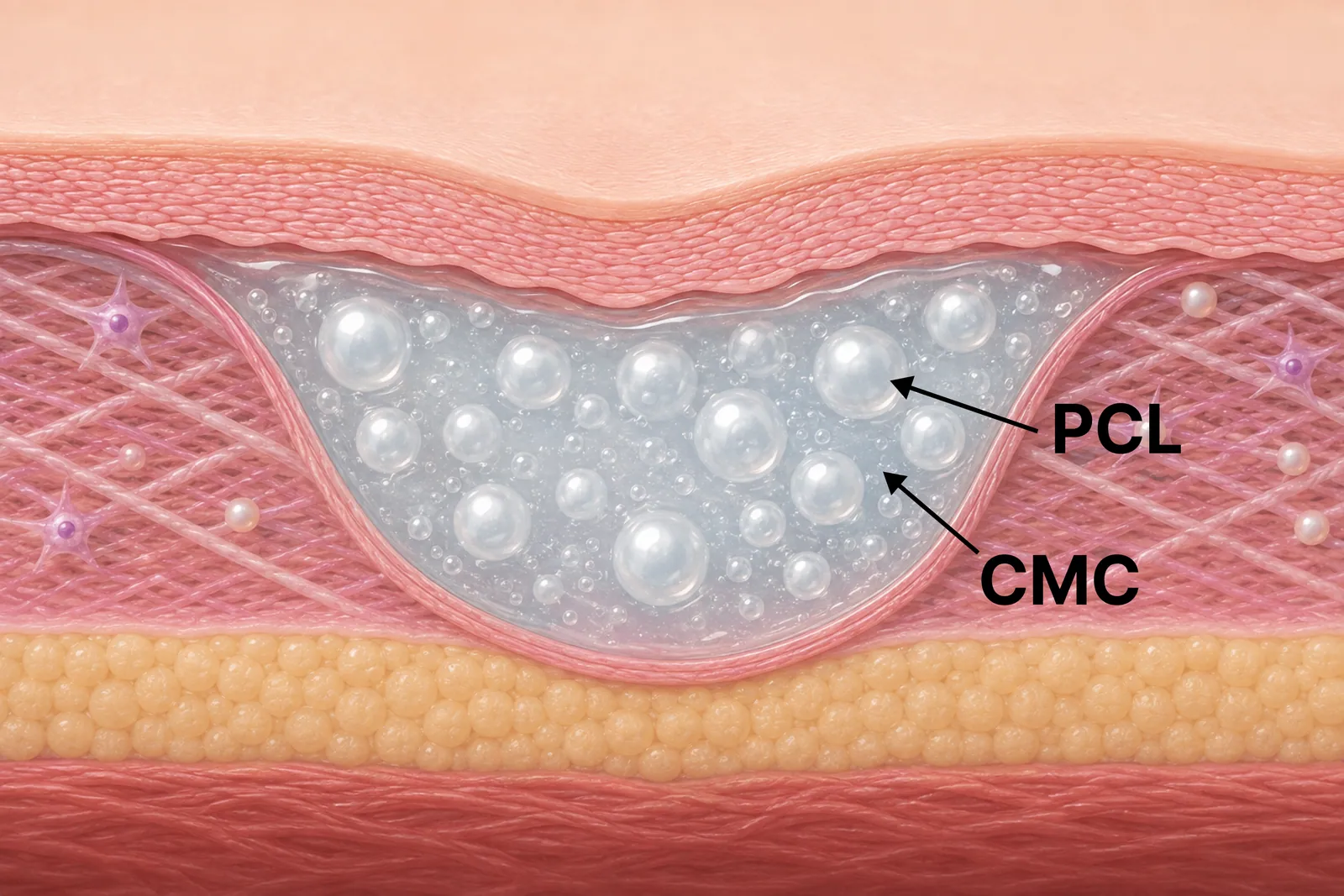
While the CMC gel is being absorbed
PCL particles stimulate collagen production
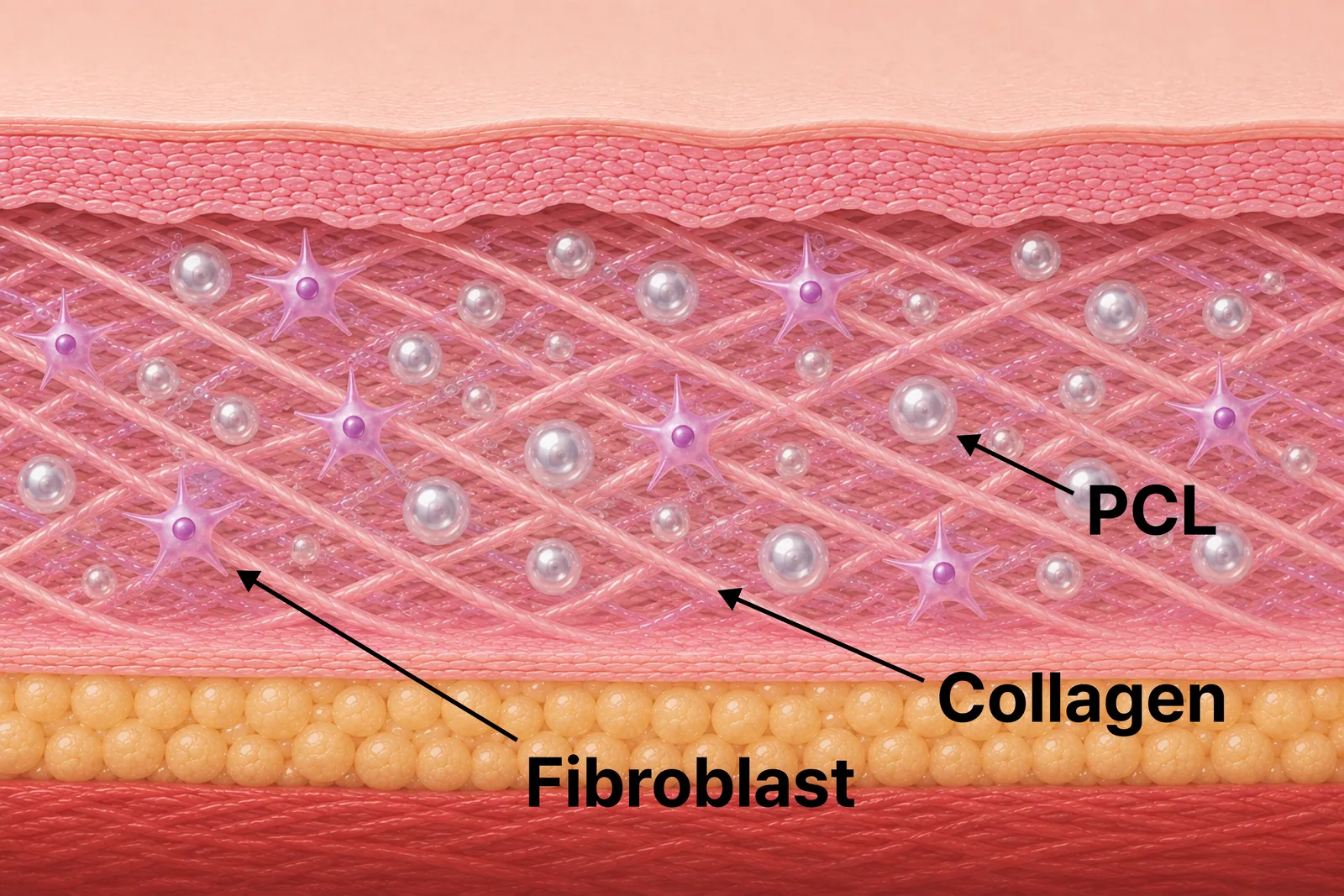
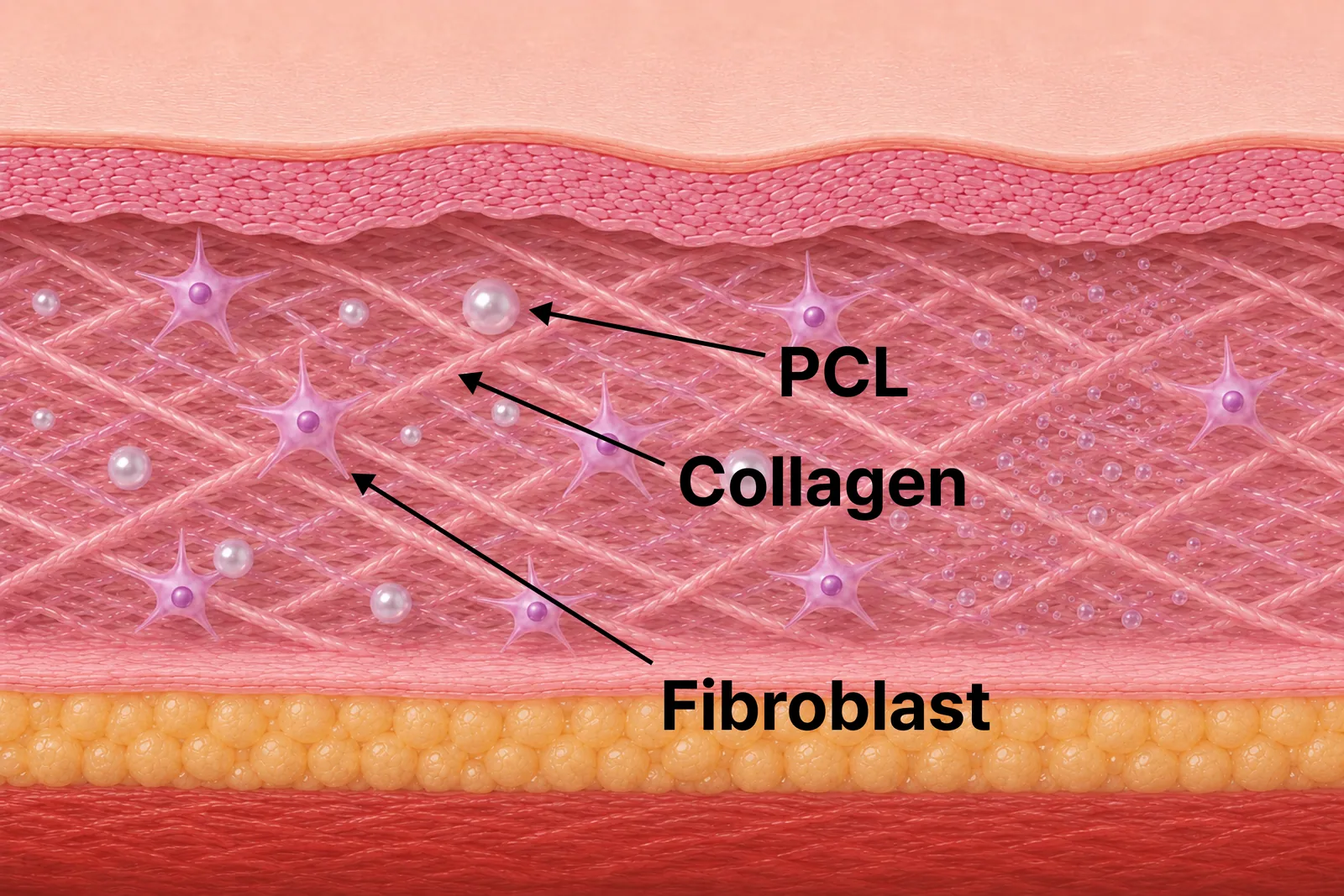
The newly formed collagen maintains volume
PCL particles gradually decompose and are absorbed.
Treatment Areas
PCL filler treatment area
It is mainly used when volume and contour are needed on large areas.
The layer and volume used vary depending on the area.
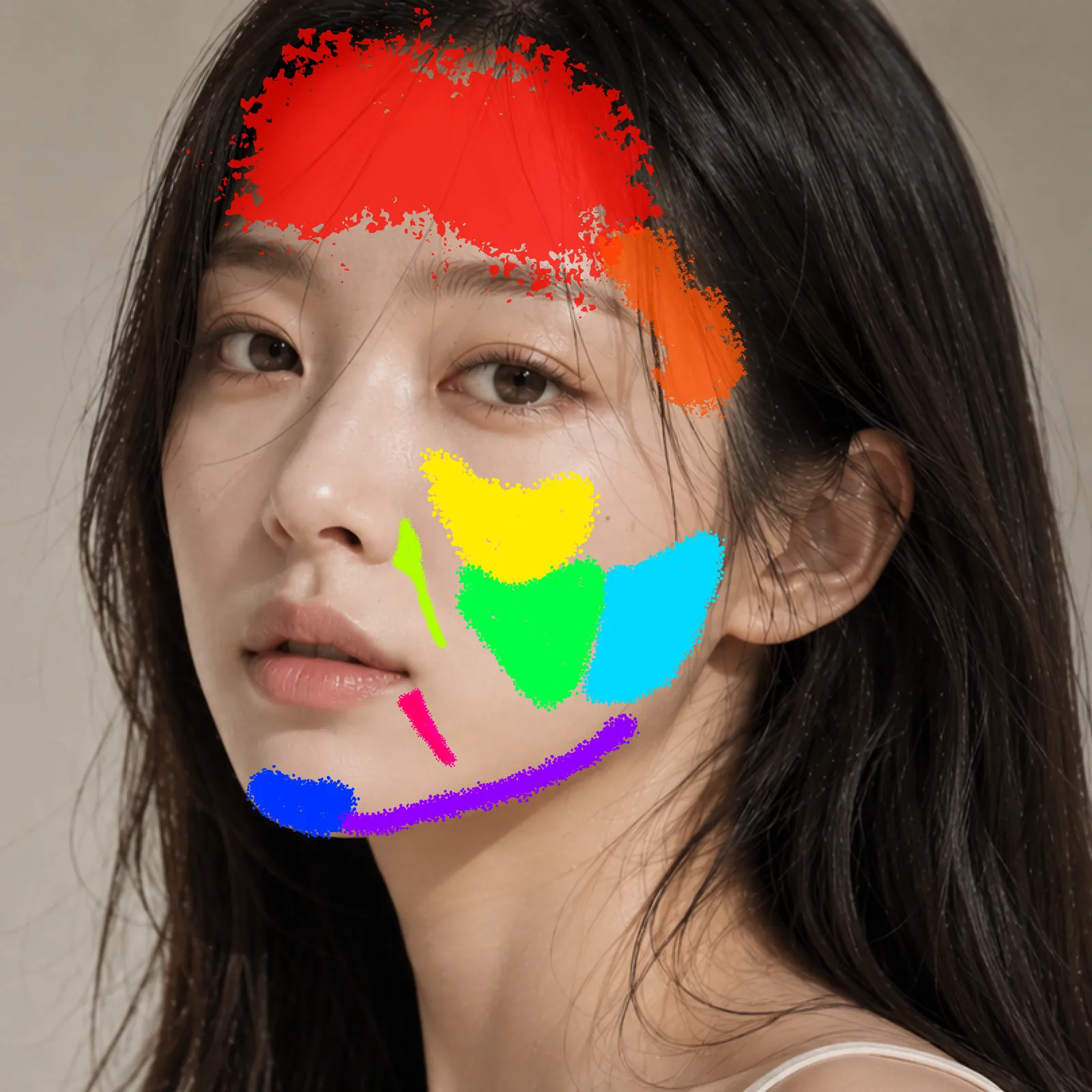
PCL fillers are not used for the lips and under the eyes.
This is because the skin is thin, so particles may be palpable. We recommend a soft hyaluronic acid filler for this area.
Recommended For
I recommend this to people like this.

It is difficult to come to the hospital often
For those who want a long-lasting treatment

Even if you get fillers repeatedly
For those who feel like they are losing weight quickly

Along with volume
For those who want to take care of their skin elasticity
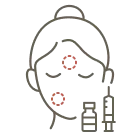
The forehead, cheeks, and temples are sunken
People whose faces look gaunt
The Episode Difference
Why It's Different
Every process has its own reason for the EPISODE.
01
As is - To be - Design
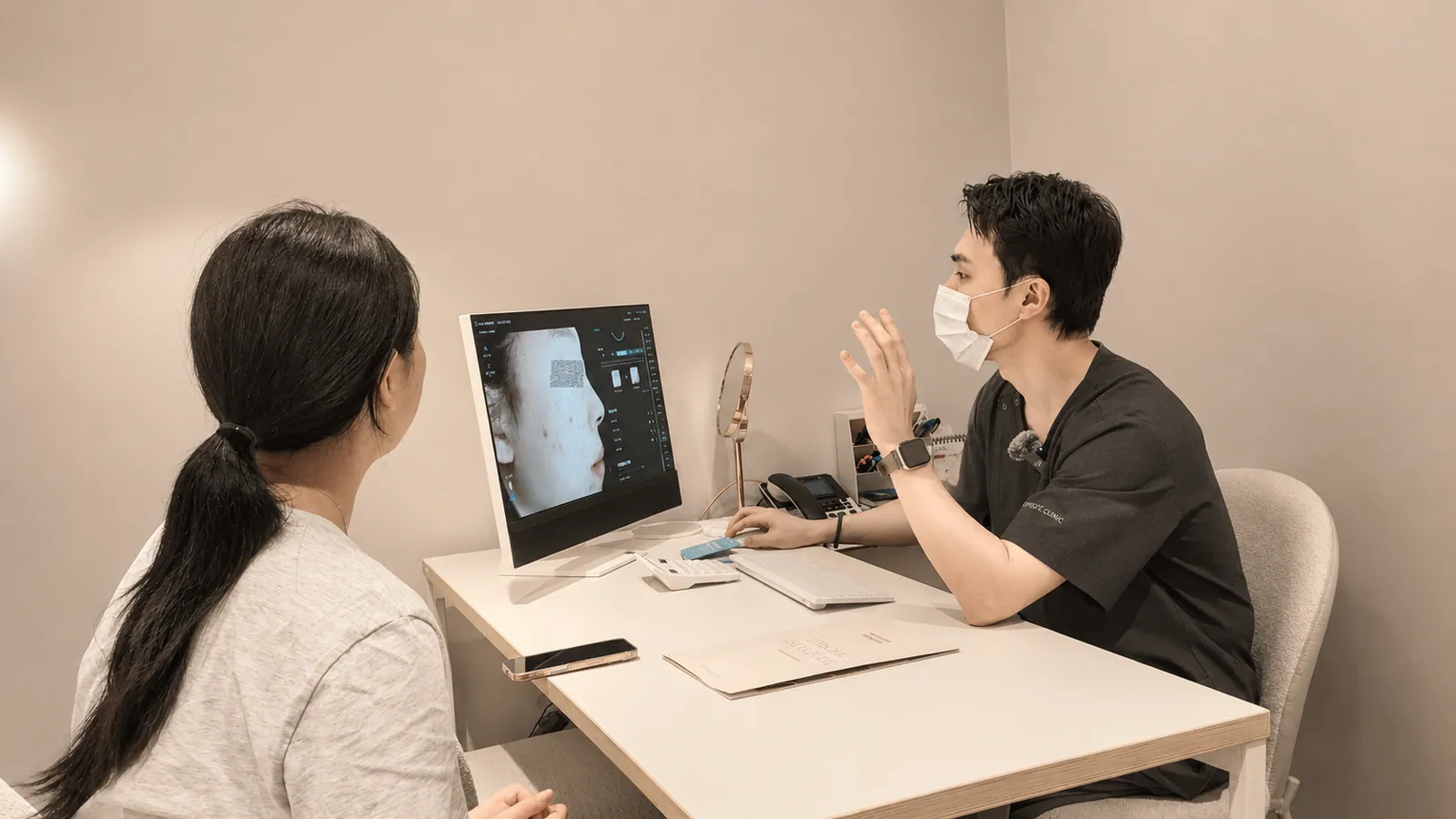
We analyze your face, listen to your desired shape, and design accordingly.
ANALYSIS02
Accurate product and capacity
I confirm it right before my eyes.
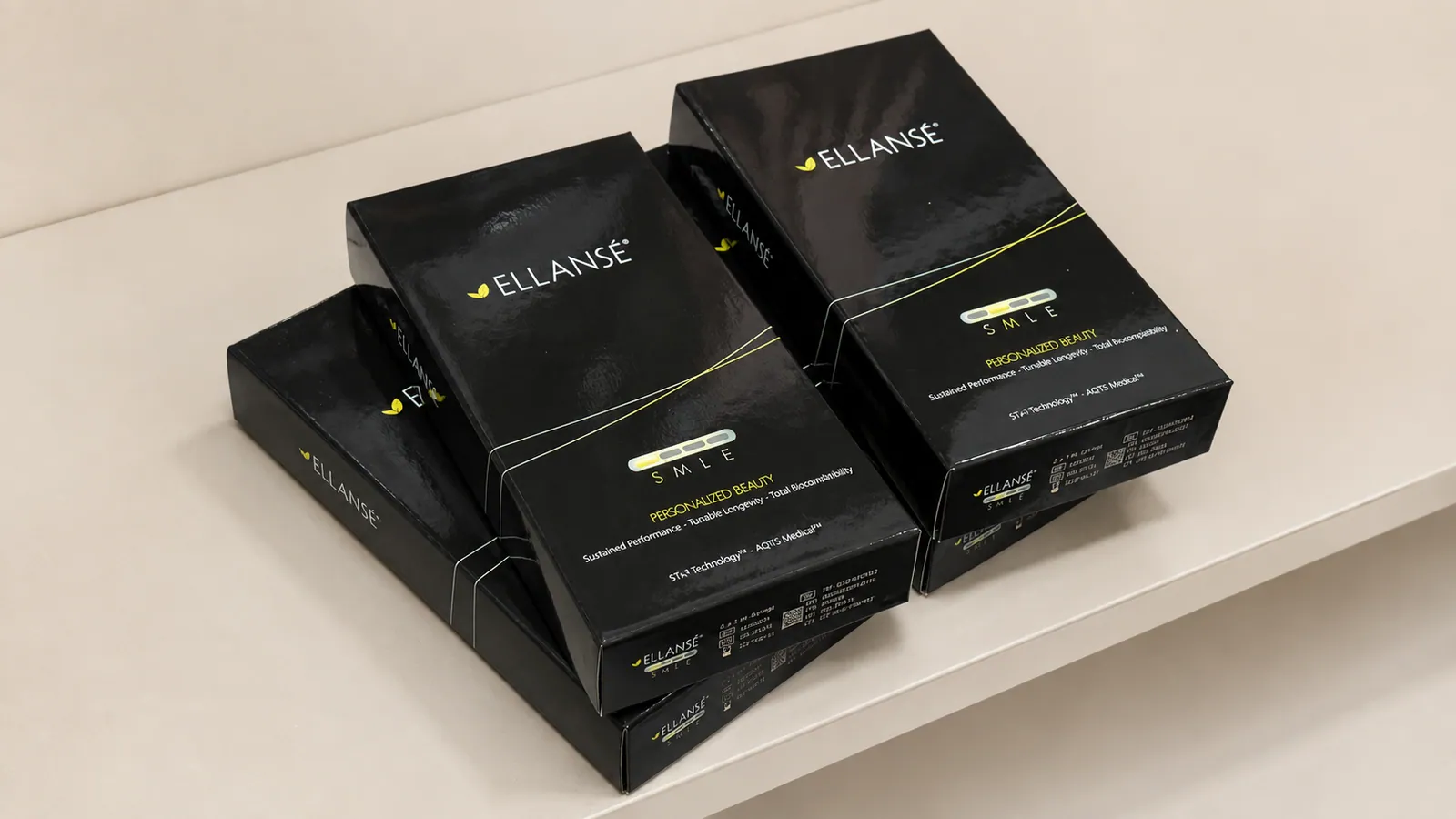
Before the treatment , check together to ensure the product is genuine, then open it, and We also show you the amount to be added (cc) exactly as it is.
RELIABILITY03
If you keep a record
The changes are more visible.
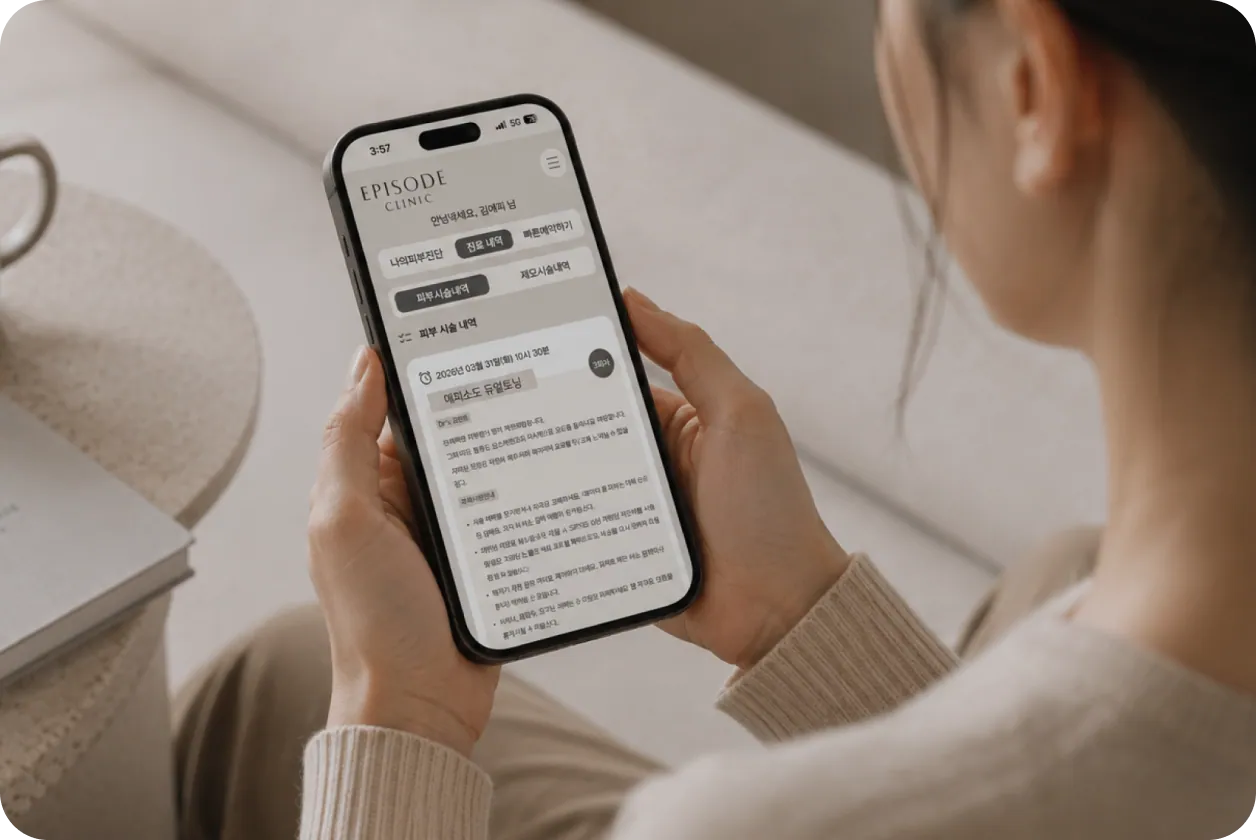
Since this is a long-lasting treatment, it is a good idea to keep a record. Leave a record of your treatment and facial changes as an online report. You can see for yourself how it has changed over the past few months.
RECORDSCare Process
PCL filler is processed in this way.

01
Anesthesia process

02
design

03
treatment

04
homecoming

05
Provision of treatment report
Some processes will be changed for the promotional treatment.
Notice
Please observe these points after the treatment .
-
1
Please do not touch or rub the injection site vigorously on the day of the treatment . It needs time for the shape to settle.
-
2
Please avoid alcohol, strenuous exercise, and saunas for 24 hours after the treatment . Swelling and bruising may worsen.
-
3
Please avoid strong massage, skin care, and hot compresses on the treatment area for two weeks after the treatment . If additional massage is required, we will provide separate instructions after the treatment .
-
4
Swelling usually subsides within 2 to 3 days, and bruising within 1 to 2 weeks.
-
5
The volume immediately after the treatment is due to the gel, so it will decrease as some of it is absorbed. Afterwards, as collagen fills in, the final appearance will emerge over a period of 2 to 3 months.
-
6
Unlike hyaluronic acid fillers, there is no dissolving agent. Therefore, we recommend injecting a smaller amount than necessary initially and supplementing it after observing the results.
-
7
If you experience severe pain, paleness, or changes in skin color at the treatment site, please contact the hospital immediately. These are symptoms that require prompt action.